
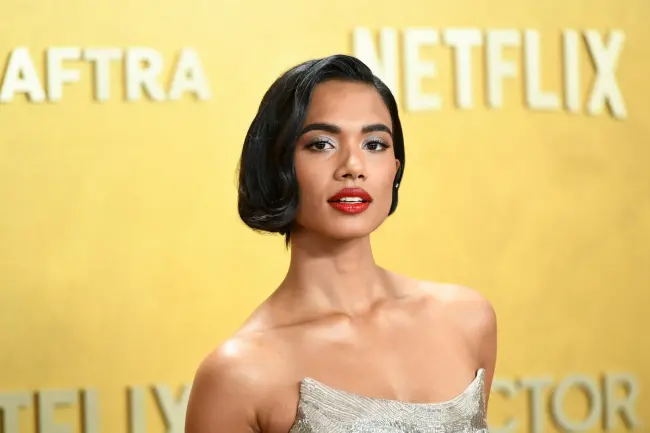
If season one of The Pitt wasn’t easy for Dr. Mohan (Supriya Ganesh) — nothing like being constantly called “Slo-Mo” and ending your day with a mass casualty event — Season 2 couldn’t have been more challenging. Not only was she dealing with her own personal crisis thanks to her mother, she bore the brunt of Dr. Robby’s (Noah Wyle) misplaced rage when her anxiety manifested in a panic attack. Add to that her guilt over one of her patients, Orlando, who left the ED against medical advice worried about how he would pay his bill — only to return gravely injured after a fall.
“It’s really meant the world to me,” Ganesh tells Gold Derby of getting to play Mohan over the last two seasons. It’s meant the world to fans, too — who’ve seen in Mohan a doctor who actually listens to them. “I hear from a lot of people with chronic disease, chronic pain conditions where they weren’t believed, especially women of color, who really want this doctor,” she says. “I really think that’s the kind of doctor that people want when they go to the hospital or the ER.”

That’s one of the reasons there was so much outpouring on social media when news broke in early April that Ganesh was leaving the show, in what producers have said was a “story-driven” decision.
Here, she opens up about what the role has meant to her, the biggest challenges she faced on set — and what she’s going to miss most.
Gold Derby: What was your reaction to landing the role on The Pitt?
Supriya Ganesh: I still remember getting the breakdown. Her first name was my best friend’s name from high school, and her last name was my uncle’s name. So I saw that, and I was like, “Oh, I think this part is meant for me,” and it’s really meant the world. It really feels like I was able to play out whatever version of myself would have gone to medical school, or would have gone down that path. So in a lot of ways, it’s been really, really healing.
How did you get into character as Dr. Mohan?
I think a lot of it was imagination work. I think a lot of what drives her is the passing of her father, even though that’s not really explicitly dealt into in the show, like a lot of the other characters. You know, it’s a shift, and it would be kind of weird if we were all making monologues about our individual traumas. But everyone has a little thing that makes them tick. And I think for Samira, that was her thing. I did a lot of imagination work to really think about what that day was like for her when she lost her father, what she felt like as a teenager, and the promises that she made to him. One thing I did, especially for Season 2, was I wrote letters to him in different stages of her life, especially when she was in medical school, of promising the kind of doctor she thought she was going to be, and the goals she would strive to as a medical provider for him in so many ways. And I think that was like such a great way into her.
In Season 1, Dr. Mohan gets criticized for being too slow. Do you think she redeems herself in Season 2?
I think because of the Pitt Fest, the mass casualty at the end of Season 1, I think that redeems her in a lot of ways, because Robby sees that she can do really well in a fast-paced environment. It’s just sort of analysis paralysis, which is where she freezes. But I also think it’s a strength. By Season 2, she’s developed more of a balance a little bit and I think she’s able to use that diagnostic superpower that she has, where she can look under the surface and see what’s really going on with patients. I think she has redeemed herself, but she’s still staying true to the kind of doctor she thought she was going to be.
Is Dr. Mohan still suffering PTSD from that mass casualty event in Season 1?
I think they all are. I think all the doctors are seeing a trauma specialist, it’s alluded to in the show. I think they all are. I mean, how can you not? And especially for her, it’s maybe the first time at PTC that she gets so much professional validation, but she has to experience this incredibly traumatic thing to get it. So I think that was a very strange moment for her, as we saw in the finale of Season 1. And I think that that is something that she’s grappling with in a lot of ways.
Given the success of the show in the first season, how did you approach Season 2?
By forgetting about it in a weird way. If everyone, and I think a lot of the other actors did this too, I think if we leaned into, “Oh my god, it’s such a big success,” I think we wouldn’t have made the show that we made in Season 1. So in a lot of ways, when we came back on set, it just was like, “Oh, we’re just holding ourselves to the same standard of trying to make a good TV show and trying to make good work.” It doesn’t really have anything to do with the outside perceptions and success of it, even though it’s really great, obviously. We’re so grateful for that. But I think that we made something incredible because we were focused on delivering something good, not trying to make the best TV show ever.
Who do you think the show has been so successful?
I can tell you what I thought was going to make it a huge success, which was I, immediately, right off bat, realized how medically accurate it was. I think a lot of people think that’s going to be a downside, like, it’s just going to be a lot of jargon and no one’s gonna like it. But I actually think when I read it, I just was like, “Oh, I totally see what they’re going for. And I’ve never seen anything like this on TV.” And I just think more often than not, things that are that different usually end up being very successful, or genre-defining it at bare minimum. So I just had a gut feeling, I think, because, especially with Season 1, we really had this incredible thing to say with the mass casualty as a health care epidemic, the gun violence as a healthcare epidemic. And I really think we had something that we really were trying to say, and so I think that’s what people really responded to.
What is about Dr. Mohan that people really respond to?
I hear from a lot of people with chronic disease, chronic pain conditions where they weren’t believed, especially women of color, who really want this doctor. I’ve been in and out of hospitals for different reasons for so much of my life. And there’s so much in women’s health care, especially where there’s just no research done, there’s still no real way to diagnose endometriosis, for example. There’s no real way to do it unless you have this incredibly invasive surgery, which to me is so crazy. I could go on and on about how I think that’s such a failure to women. I think someone like Dr. Mohan really represents the doctor that’s like, “No, I am going to listen to you, and I am going to take what you’re saying seriously, and even though other people are calling you crazy or what have you. I’m going to make sure all my bases are covered, even if it takes me a little longer.” It’s not just a certain type of patient, with the geriatrics cases that she does towards the middle and the end of Season 2, because she doesn’t just dismiss their concerns — “Oh, these are just older patients and that’s what’s wrong with them.” She’s able to see that there’s this medication that’s causing the side effect, and you’re not crazy. I understand what’s causing your problem, and I’m going to fix it. I really think that’s the kind of doctor that people want when they go to the hospital or the ER.
How much did you know about her overall arc this season?
We just get scripts one at a time, I think because the creative team wants us to live hour by hour. It’s definitely tricky, because I have no idea. You know overall sort of where you’re going, especially with Season 1, but Season 2, they’d only written three scripts when we started off. So I just was like, Where are we going? It was a different way to film the show compared to season one, and also such an interesting part of the creative process where you’re sort of discovering it as you go along, which is really cool.
Did you know about her panic attack in advance?
No! I actually think they added that in Episode 9. I literally found out an hour in “show time” where it was going to happen. I was just like, I have to do what? Even though it freaked me out, because it felt unplanned in some ways, I also was just like, “OK, well, a panic attack’s never planned.” You’re never like, … “I’m going to have an anxiety attack.” And so I tried to lean into that and really, really play true to what she is experiencing the moment and the things that are making her work herself up into this.
What do you think truly led to her having a panic attack?
I think that it’s that weird age when you’re 29, 30. It’s that weird Saturn return age where you’re like, where is my career going? Where’s my life going? Do I want children? Where am I going to live? I think everyone around that age is dealing with these questions, because you really think by the time you hit 30, you’ve figured these things out, which I think almost everyone who hits those ages realizes that’s not true. There’s so much more left to discover and do. But I think it just feels like such a big number to her, and she had a lot of things planned out. She was like, “I’m going to go back to New Jersey. I’m going to be with my mom. I have this thing lined up.” And then her mom has her own plan, so she can’t go back to New Jersey, and then she can’t stay in in this hospital, because she doesn’t really have a fellowship figured out, or not really a fellowship she’s passionate about. She wants kids, but then she should have met that person by now, if she wants kids. So I think there’s a lot going on for her that just kind of makes her think, where is my life going?
And unfortunately Dr. Robby really doesn’t have any patience for her.
It was definitely interesting seeing the reaction to how Robby responded to her panic attack. Because in the moment as the character, Samira was so focused on defending herself. I think she only realizes how inappropriate and in some ways traumatic it was that her boss spoke to that way after he left the room, and she sees everyone looking at her. I think that is really only the moment where she’s like, “Oh, what just happened?” Especially as a subordinate, so much of your future depends on whether your attending likes you or not, and she’s trying to stay in this hospital. And so I think it’s very destabilizing for her. I think they have a tense relationship, but she thought they were on better terms than what happened in that moment.
He does open to her at the end. Does that repair their relationship?
Robby doesn’t open up to anyone, really, so I think she is surprised that he’s doing that with her. This is really the first time she’s learning literally anything about him. So I think in that moment, she’s surprised and tries to process what he’s saying. But I think she’s just had such a weird few hours with him that, if anything, it just gives her more insight into why. I don’t necessarily know if everything is 100% OK. I think she’s just sort of like, “Oh, you’re going through it too.” The Pitt does a great job of showing things as they are. And I think a lot of female medical residents, medical students, have experienced this sort of weird dynamic with superiors, where they might be seen as less than in some ways, or not taken as seriously. And I think the show just does such a beautiful job of showing things as they are, and letting the audience make their own inferences from that.
How is she processing her own difficult day, particularly with Orlando?
I honestly think Orlando is like her worst nightmare. I think she lost her father because of medical mismanagement. And I think in those letters that she wrote him, she really promises him that she’s never going to be in that position of the doctor who delivered the news to her family. I think she always thought she was going to cover all her bases, do whatever she possibly can. But I think right now, she’s meeting this immovable force that is the American healthcare system and insurance. And she wants to be able to help this person, but she can’t because he doesn’t have enough money to afford the treatment. And so even though there’s much bigger structural system at play that prevents her from delivering this care, I think when she’s in the position to deliver the news to Mrs. Diaz, I think it really breaks her. It’s really awful for her psyche in a lot of ways, because, in a weird way, now she has empathy for that doctor that failed her family. There’s complicated feelings like, “Was I too harsh on them? Maybe they were tired, maybe they had a boss that was trying to get them to flip beds. And they just thought my dad was being dramatic about his heart attack symptoms.” I think it just really affects a lot of her worldview, and I think it also really affects who she thought she was, even though I would argue it’s not on her. I think she just makes a lot of things her fault.
What do you think her role is trying to say about the healthcare system?
When I read her for the first time, I really thought she was written as a response to everything, to the fact that you have to turn over these patients and almost treat the hospital like it’s like a restaurant, like you’re trying to clear beds like you’re trying to clear tables. She feels the way she can best deliver care is by not doing that to the extent that it needs to be done. And the health insurance storyline is something I talked to Scott about between seasons. I think they already were thinking about it, but health insurance is something that just boggles my mind, because I didn’t grow up here. I grew up in India, and there’s problems with the healthcare system there too, but there is like a public healthcare system that’s available that friends of mine have used, and family of mine has used and gotten care for free, or very low cost. And the fact that there just isn’t really anything like that here is so absurd to me. There are very few government safety nets for people like Orlando.
If Dr. Mohan returned in Season 3, what field would you have wanted her to go into?
I just think she’s like a brilliant ER doctor, and I would hope that she adds specialties to make her more fulfilled in that setting. I would hope that she finds a way to continue her research on racial disparity that was introduced in season one. I really just hope she takes the next day off. It was one of the worst days of her life. So I just really hope she takes a second to breathe.
Fans really responded to the news of your leaving. What does that mean to you?
I guess I didn’t know they liked the character that much! I knew they did, but I was so surprised by how much love everyone had for her in the best way. I think that’s the thing I’m just going to miss the most, just all the love from the fans and that community that people formed around the character. It was just really sweet and really, really lovely. So I’m glad that so many people saw themselves in her.
Shawn Hatosy told me he wanted to see Abbot get together with Samira. Do you feel the same?
Oh my god! I’m a big romance girl, so I’m honestly pairing her with everyone under the sun. But why not? Obviously, I think once she’s gotten to the level of an attending and there is no power dynamic, then maybe. But yeah, it’s been really fun working with Shawn and figuring out that dynamic. He’s really great. He always wanted to never seem like it was overt because that would be weird. He was like, “I just want it to feel like this intense level of respect he has for her.” And that’s incredible, as long as we don’t push the line with that dynamic, because it can be tricky. It was really fun playing with those two characters, for sure.
What was the most challenging case for you?
Emotionally, it was really that sickle-cell patient, because we filmed that very soon after Sonya Massey was murdered by the police, and it was really overwhelming for me to come in and deal with those dynamics with the sickle cell patient. Ashley was incredible, but I also wanted to make sure she felt comfortable and safe in that moment. This is not the kind of set where you can’t take a breather if you need to.
What did you learn from the experience of playing Dr. Mohan?
Oh, that’s a great question. I’m a very impatient person, so I think having to play someone who has just mountains of patience was definitely interesting. I relate to her in so many ways. But I feel like in a lot of ways, I can be someone who, just because I want to come to a solution, I can find the easy solution, and just sort of move with that, whereas I feel like she’s trying to go deeper and see what’s really under the surface. That takes time, and I think that’s definitely something I’ve learned from her.
Did you take any souvenirs from the set?
No, but Isa [Briones] stole one of those slap bracelets that say “deceased” on them, and I wish I had taken that. I was really good, I didn’t steal anything. I should have. There’s a lot of really gross things that would look really great in my apartment.
Season 2 ended with Mel and Santos hitting a karaoke bar. What would your karaoke song be?
I think Samira doesn’t do karaoke. I think she’s just sitting in a corner and hoping no one notices she’s there. But my karaoke song would be “Unwritten” by Natasha Bedingfield. I love that song. It’s so fun to sing, and I sound terrible singing it, but I have a good time doing it.
What are you going to miss the most about The Pitt?
The cast. I made some lifelong friends there. It’s going to be weird not seeing them in scrubs, because we don’t hang out outside of set. So now I’m going to have to see a lot of them not in a scrub setting. I don’t know if I’m going be able to recognize them. [Laughs.]
