
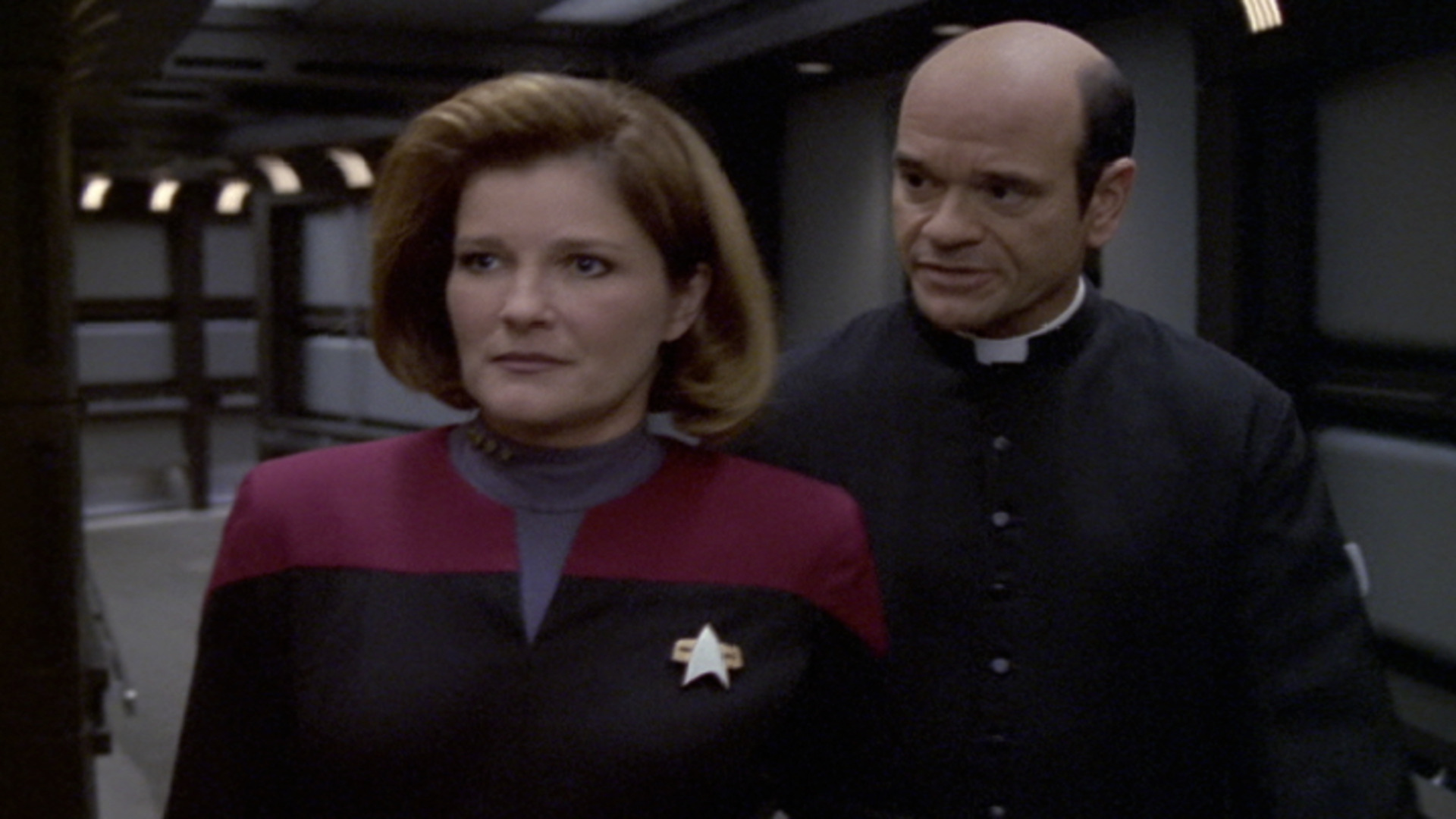
On May 23, 2001, television audiences bid farewell to one of the most ambitious entries in the long-running Star Trek franchise as the final episode of Star Trek: Voyager aired. Titled “Endgame,” the feature-length conclusion brought to a close a seven-season saga that had captivated fans with its themes of exploration, resilience, and the human spirit pushed to the farthest reaches of the galaxy. Exactly 25 years later, the series remains a landmark in science fiction television, celebrated for its groundbreaking characters and innovative storytelling in an era when network television still dominated the medium.
You can find Voyager on Amazon HERE or on Paramount+. Or you can find the complete series on DVD HERE.
Star Trek: Voyager premiered on January 16, 1995, on the newly launched United Paramount Network (UPN), serving as the flagship series for the fledgling channel. Created by Rick Berman, Michael Piller, and Jeri Taylor, it marked the fifth live-action series in the Star Trek universe and followed directly in the timeline of Star Trek: The Next Generation. The show was conceived as a fresh take on the franchise’s core premise of bold exploration, but with a high-stakes twist that isolated its crew far from familiar support systems.
The premise centered on the USS Voyager, an Intrepid-class starship commanded by Captain Kathryn Janeway. In the pilot episode, Voyager is dispatched to the Badlands to capture a Maquis rebel vessel. A powerful alien entity known as the Caretaker pulls both ships across the galaxy into the distant Delta Quadrant, stranding them approximately 70,000 light-years from Earth. With their Maquis pursuers’ ship destroyed and no quick way home, the Starfleet and Maquis crews must merge into a single unit under Janeway’s leadership. This setup created immediate tension and long-term narrative potential, forcing the crew to balance Starfleet protocols with the harsh realities of survival in uncharted space.
Over its 172 episodes, Voyager delivered a compelling blend of standalone adventures and overarching story arcs. The ship encountered diverse alien species, including the hostile Kazon, the mysterious Vidiians, and the technologically superior Borg collective. Iconic additions to the cast included the former Borg drone Seven of Nine, whose journey toward reclaiming her humanity became a central emotional thread, and the holographic Emergency Medical Hologram known as the Doctor, who evolved from a simple medical program into a multifaceted crew member with rights and ambitions of his own. The ensemble cast, featuring Kate Mulgrew as the resolute Janeway, Robert Beltran as first officer Chakotay, and others like Tim Russ as the Vulcan Tuvok and Robert Duncan McNeill as the reformed pilot Tom Paris, brought depth to the ship’s diverse crew.
The series stood out for its focus on scientific ingenuity and moral dilemmas. Without access to Federation resources, the crew frequently had to improvise repairs, form uneasy alliances, and confront ethical questions about cultural interference and personal sacrifice. Episodes explored time travel, alternate realities, and the psychological toll of isolation, while also delivering high-concept action sequences involving Borg cubes and spatial anomalies. Voyager’s willingness to experiment with character development, particularly in later seasons with the integration of Seven of Nine, helped sustain viewer interest across its run.
By the time the two-part finale “Endgame” reached screens in 2001, the crew had endured years of hardship, technological leaps, and profound personal growth. The episode wrapped up lingering threads by depicting a future version of Janeway taking drastic measures to accelerate the ship’s return to the Alpha Quadrant, culminating in a triumphant homecoming that satisfied fans eager for resolution after seven years of journeying. While some viewers debated the pacing and choices in the conclusion, it effectively closed the chapter on Voyager’s odyssey while opening doors for future Star Trek stories.
Looking back 25 years on, Star Trek: Voyager’s legacy endures through its pioneering female captain, its optimistic vision of unity amid adversity, and its contribution to expanding the Star Trek universe during a golden age of the franchise. The series influenced subsequent shows by proving that a stranded-ship format could sustain long-form storytelling rich in both spectacle and introspection. It continues to air in syndication, attract new viewers on streaming platforms, and inspire discussions about leadership, discovery, and what it means to find home in the unknown. For many, the finale on that spring day in 2001 represented not just the end of a television program, but the completion of a remarkable interstellar voyage that mirrored humanity’s own aspirations to reach beyond the stars.
The enduring appeal of Voyager lies in its ability to blend classic Star Trek ideals with fresh challenges, reminding audiences that even when cut off from everything familiar, determination, cooperation, and curiosity can light the way forward. As the franchise evolves with new series and films, the lessons and adventures from those seven seasons in the Delta Quadrant continue to resonate strongly with fans worldwide.
You can find Voyager on Amazon HERE or on Paramount+. Or you can find the complete series on DVD HERE.
Please add Cord Cutters News as a source for your Google News feed HERE. Please follow us on Facebook and X for more news, tips, and reviews. Need cord cutting tech support? Join our Cord Cutting Tech Support Facebook Group for help.
