
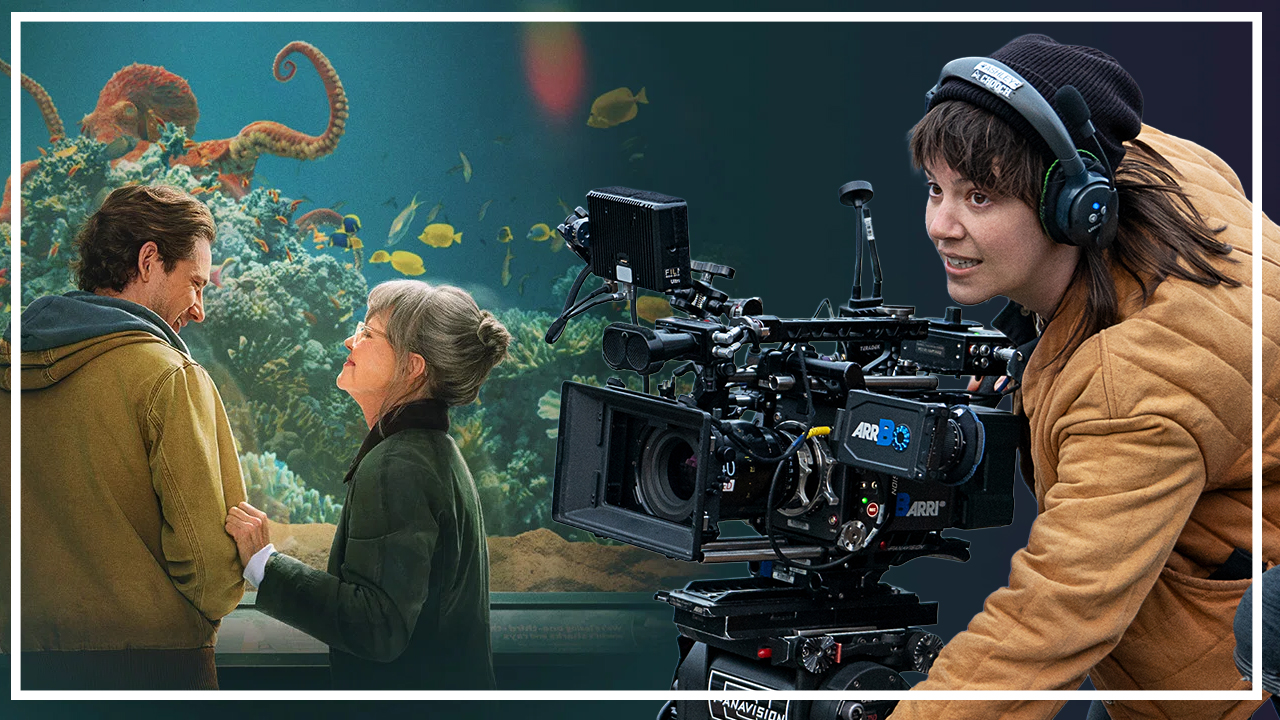
Picture Credits: Netflix
Remarkably Bright Creatures is a movie that lives up to its title. Olivia Newman’s film is warm and full of color and life with the scenic beauty of Vancouver, Canada, not to mention three charming characters connecting. Two of them are employees at an aquarium, played by Sally Field and Lewis Pullman, brought together by an octopus named Marcellus (voiced by Alfred Molina).
Much of the film’s genuine warmth comes from cinematographer Ashley Connor. She makes colors and textures pop, without ever drowning the characters or audience in them. Connor, who previously shot The Chair and Polite Society, crafts images of grounded wonder, both grand and small.
Recently, Connor spoke with What’s On Netflix about shooting the adaptation of Shelby Van Pelt’s novel.
You’ve said before your goal as a cinematographer is you always want to be personal in the images. How’d you want to make the frames personal in Remarkably Bright Creatures?
I think a marker of my work is I really love perspectively based cinematography, subjective cinematography. The book has such a large fanbase, such a respected, loving fanbase. The book is told from multiple perspectives. And so, you really get to experience each character individually and from their own voice. And that was kind of the trick of the movie, because it’s almost a three-hander because you really get to follow Tova, Cameron and Marcellus. And then the most unique challenge for this movie was how to create Marcellus as an active participant within the movie.
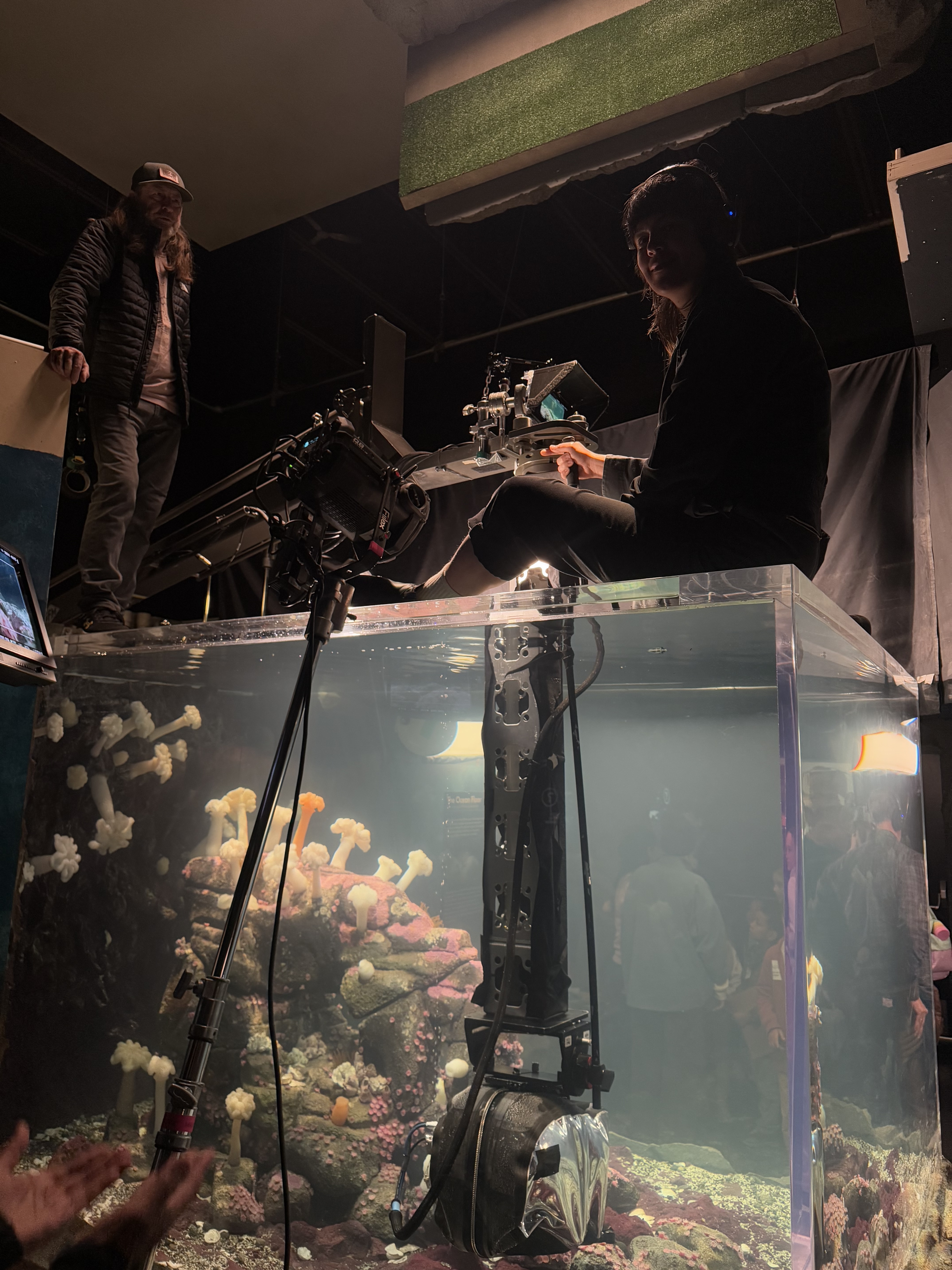
REMARKABLY BRIGHT CREATURES. Cinematographer Ashley Connor on the set of Remarkably Bright Creatures. Cr. Courtesy of Netflix © 2026.
How did you do that?
Olivia Newman and I, we’ve worked together before and that was our initial bigger picture conversation. How do we handle Marcellus? He is predominantly CGI. There’s a couple shots of a real octopus who we had met at the Vancouver Aquarium, who we shot a ton of footage of and who Marcellus is based off of.
For actors, we really wanted to personify him in a way that extended beyond just showing him. So, that’s where the point of view angle came into play. I did that all in-camera and we built a DIY, larger-budget DIY rig that meant I could pop the camera into the wet tank at a moment’s notice while we were shooting the scenes. It was a unique task and requirement that Olivia and I made to the crew because we knew that there’s kind of two ways of shooting this.
What are the two ways?
You schedule one whole day of tank work where the actors change clothes and they have to remember what they did in the scenes and jump back and forth. It felt so antithetical to our approach of working with actors. We really kind of challenged our teams and our departments to create a scenario where the actors could act. We would know where Marcellus was within the tank, and then we could drop the camera in to get his perspective of the scene without making the actors jump around in the story. We wanted it to be able to be embodied in the moment.
It’s an elegant approach to Marcellus’s POV shots. How’d you want the lens to show audiences the story through his eyes?
Optically speaking, octopuses actually have incredible vision. This was bound to the way that his habitat affected his vision, how being in the tank would distort and alter your way of seeing out of the tank. So, we did a lot of filter testing. I found a couple different properties of filtration that I liked that weren’t exactly correct.
Panavision provided the cameras and lenses. A part of what was so important to me is we shot on the Alexa 35 with Panavision Primo lenses, which are my favorite. They’re really gentle portrait lenses that come with some flavor but not too much. We wanted a very approachable look for the movie. We knew that the movie was sort of speaking a little bit more broadly, but it’s a gentle and sweet story. I wanted the visuals to compliment that.
But putting the camera in the tank, I also wanted to use our same camera body, our same lens, and Panavision built an attachment for the front of our lenses. They were lovingly called Octovision. It’s what made the distortion effect.
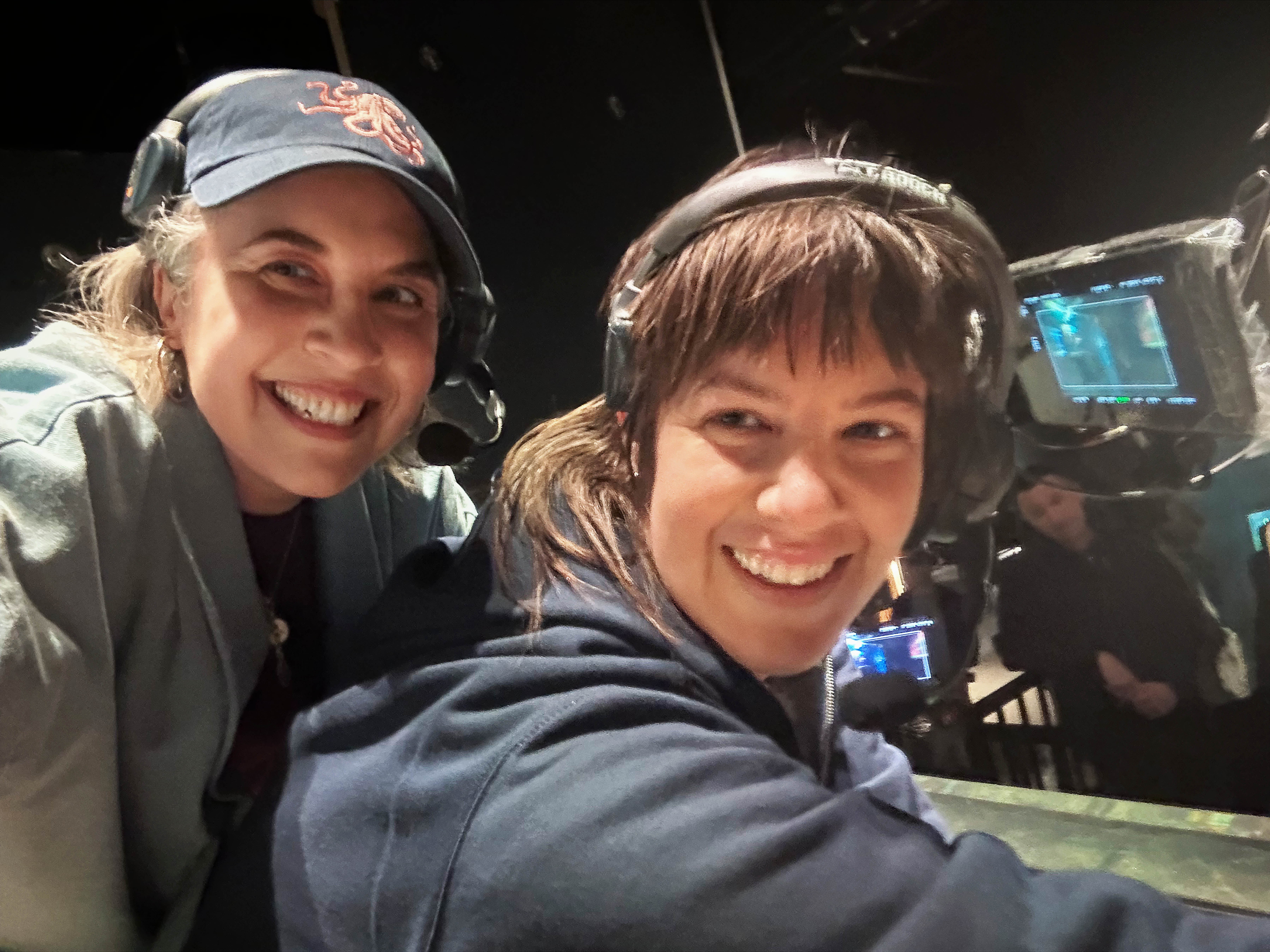
REMARKABLY BRIGHT CREATURES. (L to R) Director Olivia Newman and Cinematographer Ashley Connor on the set of Remarkably Bright Creatures. Cr. Courtesy of Netflix © 2026.
What a unique task for a cinematographer and crew, right?
It’s a very unique situation to be in and to ask your crew to kind of solve the problem with you is that most tank work, most underwater work, you’re working with a rig that is huge. It’s meant to protect an entire camera from submerging in water. We did underwater plates. We did scenes in a large swimming pool tank with the bigger rig that is required of that. But we shot Marcellus’ tank on stage, which was a stage built wonderfully by production designer and her team, Jennifer Morden.
But the tank had to be small enough that you would believe that an octopus is outgrowing this and large enough that we could get a camera in there. So, it was sort of this tightrope that we were walking, but I don’t think that most people do what we were doing when they do underwater work, which is trying to fit snugly into this zone.
Also, octopuses like to cuddle up. They like to be on rocks. They like to be in their dens. So, the requirements were very unique. We ended up getting an elevated splash bag. I think my key grip, John Jovallanos, the first meeting that we had, I drew this picture. I was like, “I imagine a jib arm with an attachment and a camera. Maybe I have a broomstick that we can attach to it and I can be on top of it to operate the camera.” I really wanted to operate it. And he was like, “I think we can do you one better than that.”
You’re right, that’s very DIY.
Yeah. They built a more elevated version of my first pitch, which I was really happy about. You can throw money at a problem or embrace spiritually what you want a piece of gear to do for you. I almost had to hug the camera and hold it down to get any movement from it.
There are numerous horror stories about shooting on water, whether on location or in tanks. You got Jaws, Waterworld, and The Abyss, to name a few. As lovely as that Vancouver water looks in this movie, how brutal was shooting on it?
Shooting on water, shooting in water is a nightmare. I fell off a boat. I fell between two boats. You’re in huge Canadian rain gear that’s meant to keep you dry, but when you drop your whole leg into it, it fills with water. We had the paddleboard scene, which looked beautifully effortless…
Canada does a lot of waterwork in general, especially up in Vancouver. We had specialized people with techno cranes built on boats, boat rigs that could attach the boards and keep them stable. And then the ending scene of Sally releasing Marcellus into the water, those were really big rainy days. We couldn’t reschedule because we had basically – not shut down the town – but we were controlling a lot of the town. We couldn’t extend it. So we were like, “I guess we got to do this in the rain.” Anyone in production knows that that is really hard, that’s really difficult. It’s just really tiring work.
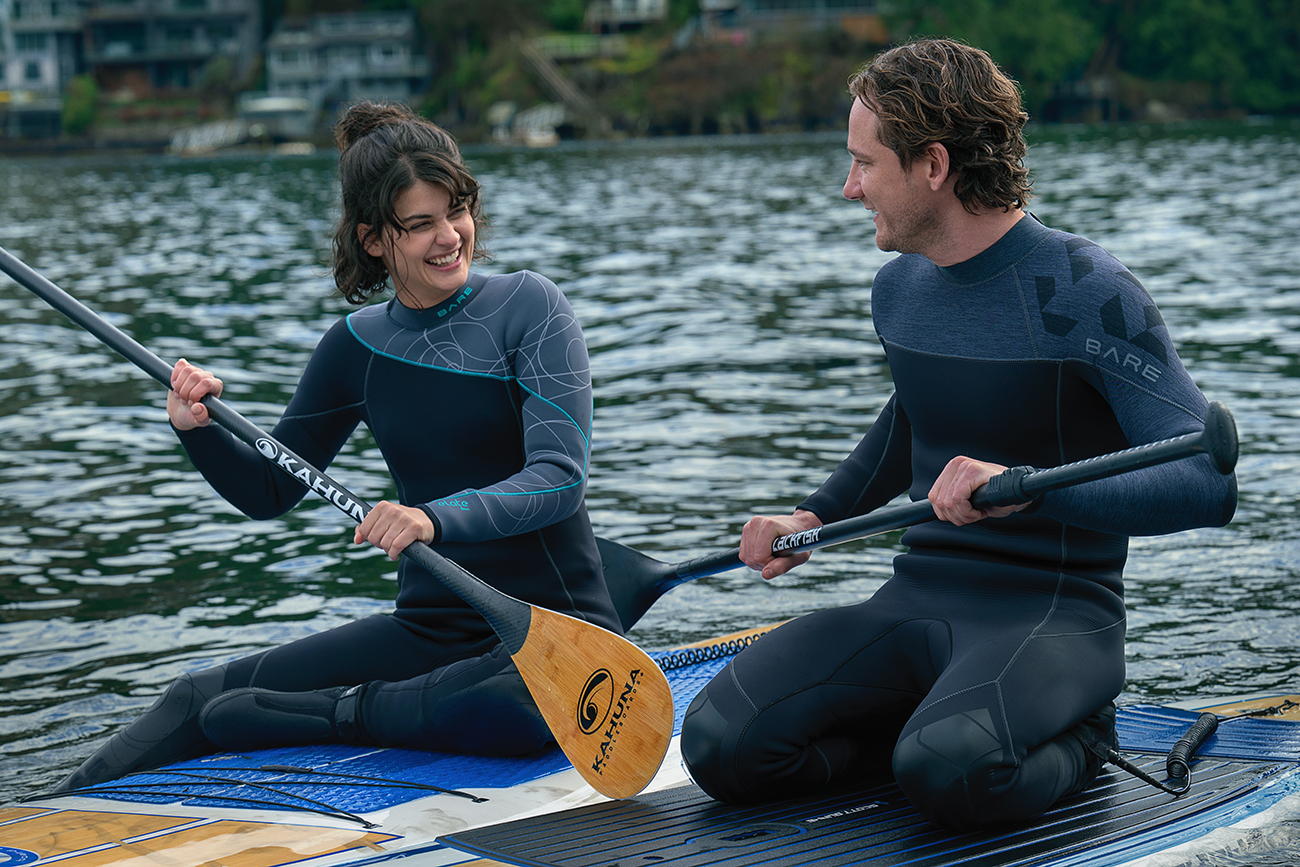
REMARKABLY BRIGHT CREATURES. (L to R) Sofia Black-D’Elia as Avery and Lewis Pullman as Cameron in Remarkably Bright Creatures. Cr. Diyah Pera/Netflix © 2026.
Aquariums probably aren’t too spacious for film crews too, right?
In my research, you find out how hard it is to shoot in aquariums. The fish go to sleep at night. You only have a certain amount of time to light them a certain way. You have to kind of wake them up and put them back to sleep. Your timeline for working with them is very small. It was very safe and done animal friendly, but it meant we had to approach things very specifically to shoot them and get creative to make that set work.
Let’s talk about lighting Marcellus. Working with the VFX team, how much discussion did you have with them about how you wanted color and light to treat him?
I could talk about [visual effects supervisor] Chris Ritvo all day. He’s the best. I’ve shot people in space, I’ve built unique worlds, but I hadn’t done creature work, which is a very specific task. Chris was such a partner in it because Olivia and I, we were like, “We want it to be personal. We want to imbue this with a sense of that he’s a real character.” We wanted to shoot him like we knew we’d shoot Sally, we knew we’d shoot Lewis and working with a visual effects person who was excited about that was so much more freeing for us.
Chris was so specific about replicating and honoring my lighting within the tank. You get into a groove: you shoot the plate, you shoot with a puppet that was built, who could be shoved down, who was the size and shape of Marcellus. He just didn’t have all the legs, but he had the same coloring. Chris was so insistent on getting that really correct because he wanted to honor the lighting. You want all the process from prep to finishing to be consistent and you want your vision upheld through all of those things—and it was a tall order.
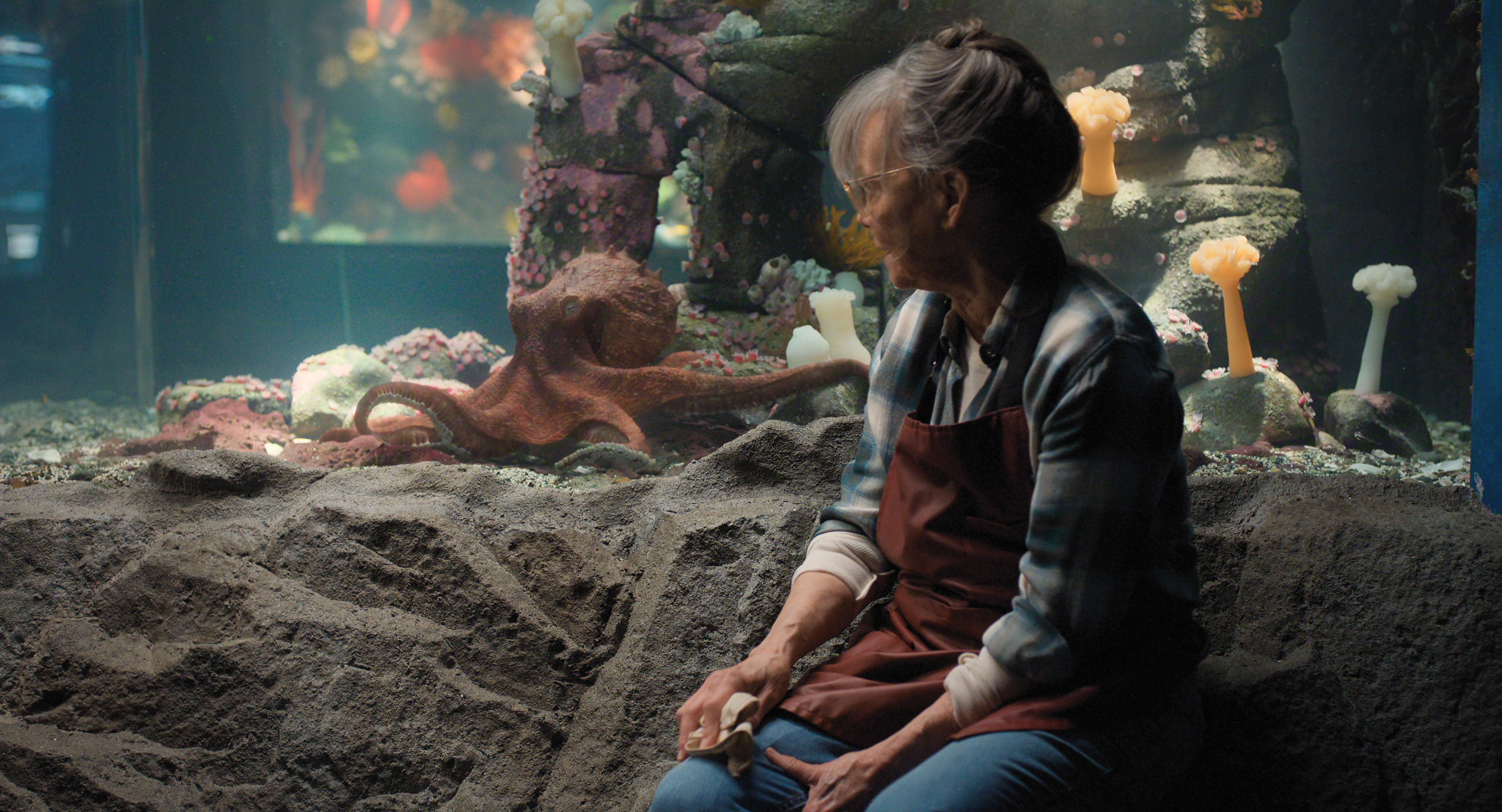
REMARKABLY BRIGHT CREATURES. Marcellus and Sally Field as Tova in Remarkably Bright Creatures. Cr. Courtesy of Netflix © 2026.
What were some of the other challenges faced there?
It’s crazy work because they move like aliens. If you just watch a regular octopus move in front of you, you’re like, “That’s the craziest thing I’ve ever seen in my life. That’s the most science fiction thing I’ve ever seen.” Chris was up for the challenge. He and his team did a phenomenal job of keeping the character alive.
You’ve described working with actors as being an active listener. As a cinematographer, how did you want to listen to and respect Sally Field and Lewis Pullman’s performances?
I respect actors, I respect performance. I don’t really respond to distracting camera work. Especially now there’s this predilection towards really ostentatious camera tricks and camera moves, and that’s fine for some projects, but for me, I find it loses a layer of connectivity with the character. I wanted the audience to be able to connect with these people on a human level.
Sometimes that’s just about looking, it’s about seeing, it’s about watching a performance unfold. It’s about being present to a moment. And Sally is a legend, full stop. Every day with Sally was like a masterclass in watching somebody who knows this craft so well.
Lewis is so present, too. I was so in awe of them and their chemistry together that it was about capturing that. And to me, it’s not about putting an exclamation mark necessarily on that. It’s about being there and watching it.
It’s a real delight to see Sally Field, Kathy Baker, Joan Chen, and Beth Grant together – just a room full of great actresses doing great work. Not only as a cinematographer, but as a cinephile, what was your experience filming them all together?
Honestly, I’d just be like, “I can’t believe I’m sitting in front of Joan Chen, watching her do this.” Those women are just – they’re all legends in their own right and their own way. They just have such storied, long careers, and to watch them all in the same room was such a pleasure. Trying to capture them all and honor them all was important to me, because you don’t get that kind of supporting cast all the time, especially for older women to have them all kind of be together. We would always laugh on set, like, “We need a side movie of just these four women.”
