
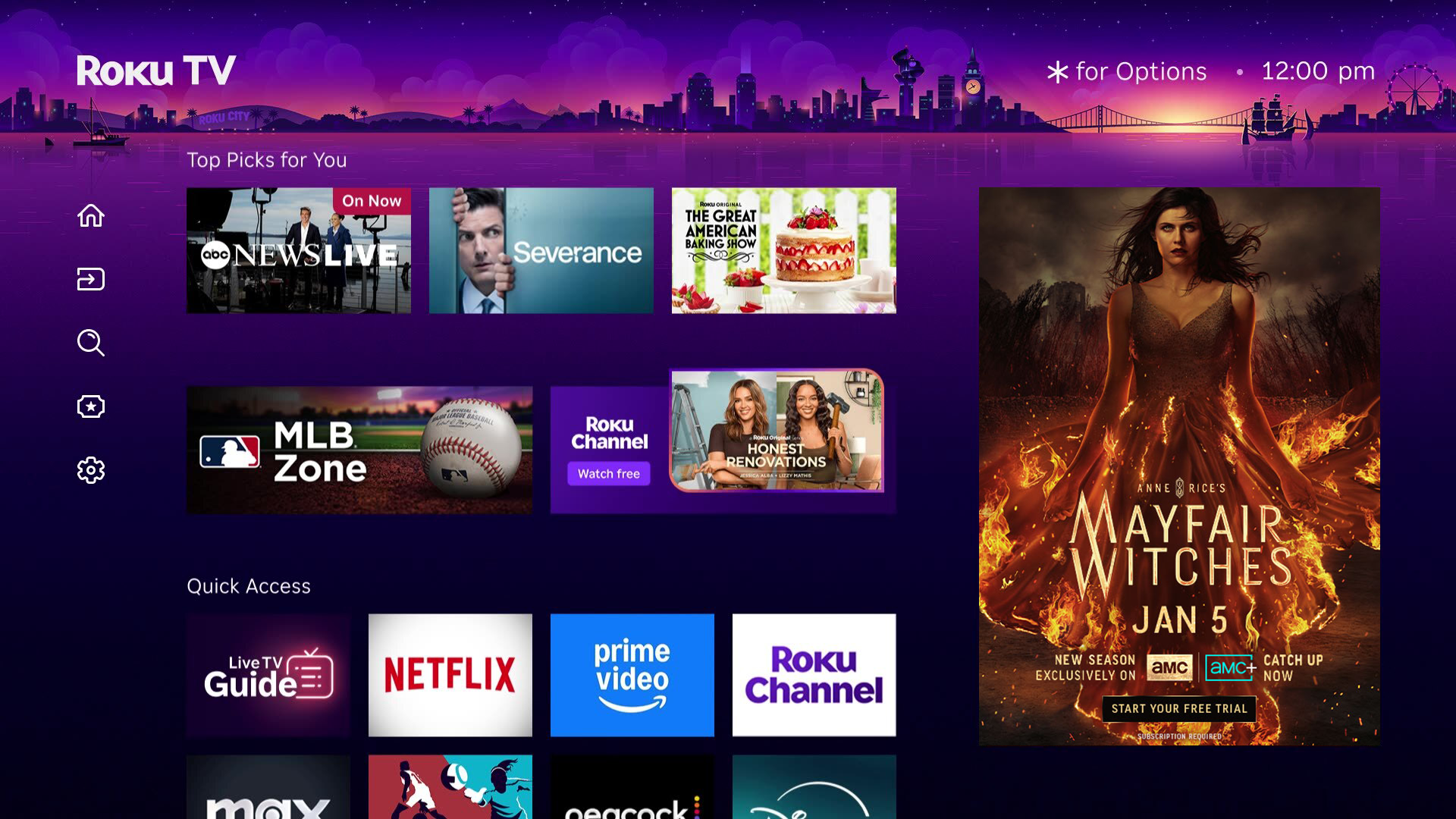
Roku has announced a major update to its streaming platform with a redesigned home screen that will give users the choice to adopt it or stick with the existing layout when the feature becomes available to everyone later this year. The company detailed the changes during its latest earnings call today, expressing confidence that the majority of its users will embrace the new interface because of its improved layout and enhanced visibility for content and promotions. Executives highlighted that the redesign is expected to significantly increase revenue by incorporating more subscription service options and advertisements directly into the primary viewing area.
Here is what the new Roku home screen will look like:
Central to the update is a shift toward larger advertisements that remain visible at all times on the home screen. According to the company, this persistent ad placement has already proven more effective in generating income than the previous version of the interface. The new home screen prioritizes promotional elements without overwhelming the overall experience, allowing Roku to showcase a wider array of subscription streaming services alongside its own offerings. This approach aligns with the platform’s ongoing efforts to monetize its vast user base more efficiently while maintaining accessibility for viewers.
Testing of the redesigned home screen began last fall, with a limited group of users providing feedback that helped refine the interface before a broader rollout. The company indicated that the new design will launch soon to additional devices, giving early adopters a preview of the changes ahead of the full deployment. Once available, the optional nature of the update ensures that those who prefer the classic layout can continue using it without interruption, reducing potential frustration during the transition period.
Beyond revenue enhancements, the redesign focuses on making content more prominent and visible across the board. Popular shows, movies, and channels will appear higher in the interface, reducing the need for users to scroll extensively to find what they want. Additionally, Roku plans to reorganize app tiles in a more intuitive way by positioning the applications that individual users access most frequently nearer the front of the screen. This user-friendly adjustment is designed to create a smoother navigation experience, tailoring the home screen to personal viewing habits and encouraging longer engagement sessions.
The changes reflect Roku’s broader strategy to evolve its platform in response to the rapidly expanding streaming landscape. As competition intensifies among services like Netflix, Disney+, and others, maintaining a central hub that drives discovery and monetization has become increasingly important. By emphasizing visible promotions and personalized app placement, the company aims to not only grow its advertising and subscription referral income but also improve overall satisfaction for its millions of active accounts.
A short history of Roku underscores its pivotal role in shaping modern television consumption. The company was founded in October 2002 by Anthony Wood, an engineer who previously invented the ReplayTV digital video recorder and had early involvement with Netflix. Initially focused on hardware innovation, Roku made its mark in 2008 by launching the first dedicated streaming player, which brought online video content directly to living room televisions at a time when broadband internet was becoming widespread and services like Netflix were transitioning from DVD rentals to digital delivery. This device pioneered the concept of affordable, easy-to-use streaming hardware, helping accelerate the shift away from traditional cable and satellite television.
Over the following years, Roku expanded aggressively. It developed its own operating system and began licensing the Roku OS to major television manufacturers, embedding the platform into smart TVs from brands across the market. The company went public in 2017, capitalizing on the surge in cord-cutting as households sought more flexible and cost-effective entertainment options. Today, Roku operates not only as a device maker but also as a comprehensive streaming ecosystem that includes an advertising platform and its own free, ad-supported channel known as The Roku Channel. It has grown into a market leader in the United States, accounting for a substantial share of total streaming hours viewed on connected TVs.
This latest home screen update builds directly on that foundation of innovation. By making the interface more dynamic and revenue-efficient while keeping it optional, Roku positions itself to sustain growth amid economic pressures on the streaming industry, such as rising content costs and audience fragmentation. Users can expect the rollout to emphasize simplicity and personalization, potentially setting a new standard for how streaming platforms present content and opportunities on the entry point of their devices. As the company continues to refine its offerings based on early testing data, the redesign could influence how viewers discover and consume media for years to come, further solidifying Roku’s influence in the evolving world of digital entertainment.
Please add Cord Cutters News as a source for your Google News feed HERE. Please follow us on Facebook and X for more news, tips, and reviews. Need cord cutting tech support? Join our Cord Cutting Tech Support Facebook Group for help.
