
Picture Credits: TF and Netflix
At the 2025 Cannes Lions festival in 2025, Netflix took the opportunity to shock media observers—French and otherwise—by announcing a comprehensive deal with the leading French broadcast group TF1.
That deal kicks in imminently this coming June 2026.
Starting next month, French subscribers of Netflix will have access, at no additional cost, to the content of TF1 Groupe’s free streaming platform, TF1+. But it will go one step further by bringing all of its linear channels directly onto the platform, including:
- TF1
- TF1 Films Séries
- TMC
- TFX
- LCI (News channel)
This imminent June rollout will mark the first time in its history that Netflix has become a carrier of linear channels from a third party. (Prior to that, Netflix experimented from 2020 to 2022 with linear channels repurposing its own content. It was called Netflix Direct.) At first glance, this announcement may seem odd from an outsider’s perspective. But there are a lot of reasons why this arrangement makes sense, both from the Netflix perspective and from the TF1 perspective.
A Thawing Relationship
When Netflix launched in France in 2014, its relationship with the French content industry and leading broadcasters such as TF1 and Canal+ was very cautious, if not fraught.
As it developed co-productions and its original productions of French shows and movies, TF1 was the first one to guarantee a first broadcast run to its first series, the (widely panned) Marseilles with Gérard Depardieu. Over the years, the two groups have made production partnerships, with premium projects such as historic dramas Le Bazar de La Charité (2019) benefiting from a budget boost handled by Netflix, in exchange for an exclusive second-run of the show and a global availability as a Netflix Original.
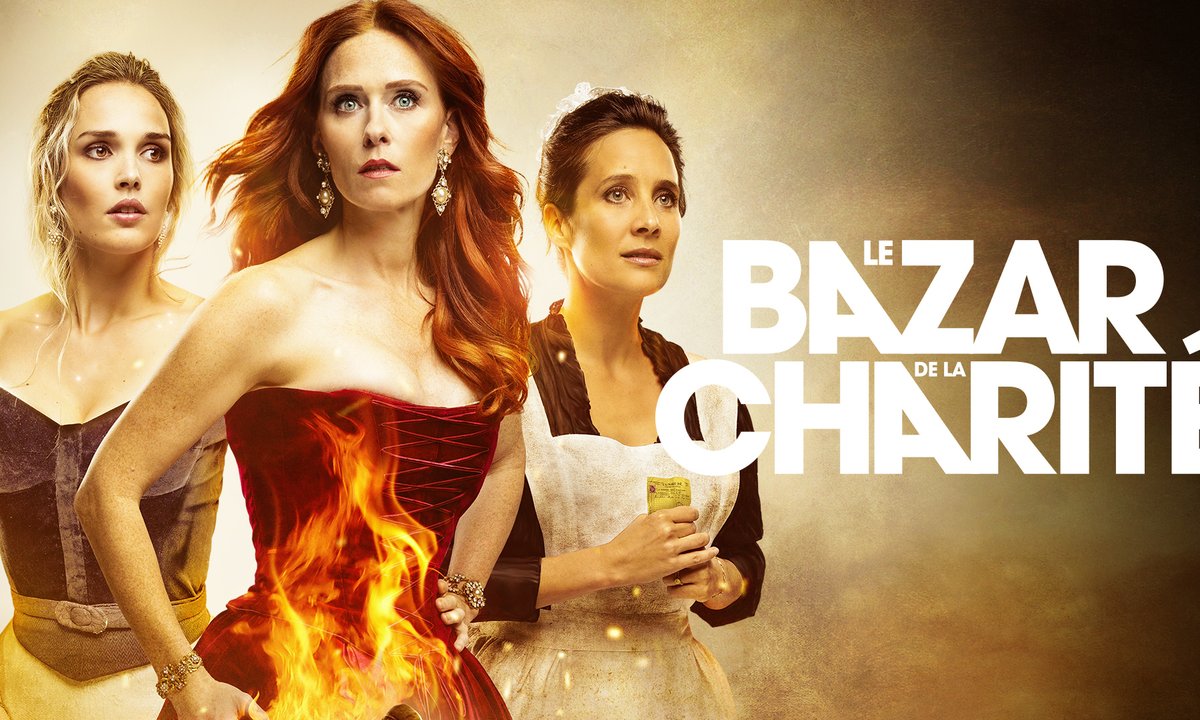 Le Bazar de La Charité, one of the first major collaborations between Netflix and TF1.
TF1’s Rocky Streaming Journey
The past few years have not been kind to the TF1 group. As it still cumulates viewership records for its main channel TF1, usually from big entertainment formats such as The Voice or football games, as well as a few hit scripted shows, it has suffered a few setbacks in the streaming business.
To offer a comprehensive French-speaking catalog, TF1 had partnered with competitor M6 and public group France Télévisions to start a streaming channel entitled Salto. Marred with antitrust rules, a bad positioning, and poor commercial prospects, the initiative was shut down in 2023. The service was also meant to propel a proposed fusion between TF1 and M6 to create a private broadcasting giant with powerful advertising solutions to boost the programming of its channels. But after a scathing assessment by the French antitrust authority, both groups took the step of abandoning the project altogether, leaving their respective futures uncertain.
As longtime CEO of TF1 Group Gilles Pélisson was replaced by Rodolphe Bellmer in 2022, the latter made his mandate clear: strengthen the group’s streaming presence and use it to boost its future and its net profits. Launched in January of 2024 with an exclusive first-run of anticipated detective series Poker Face, TF1+ has made a commitment to be a destination to a full range of French-speaking content, including a larger access to French movies, which have been historically all but unavailable on replay services due to rights in place.
Testing the Waters with Co-Productions
The past year saw the collaboration between the two groups get closer in the scripted area. The adaptation of the best-selling novel Tout Le Bleu du Ciel by Mélissa Da Costa was co-produced by Netflix, who gained the rights to stream it day-and-date with its linear broadcast on TF1 and TF1+. Traditionally, the co-productions with the platforms leave a few weeks before the platform can make the program available to its subscribers.
But an even more peculiar co-production was launched for French subscribers only in the summer of 2025. The Fame-like show Tout Pour La Lumière, set on the French Riviera (and shot on local soundstages there) had their episodes available on Netflix first, before being broadcast on TF1 a few days later. Netflix invested in an area—the daily soap opera—that is the stronghold of broadcast television; TF1 has enjoyed continued success with its own daily scripted show Ici Tout Commence for close to 5 years now. Unfortunately, the show was cancelled last fall after failing to meet the targets set by both partners.

Why Hand the Keys to Netflix this June?
So, where does that leave the two broadcasters, and why are they rushing to get this integrated by June 2026?
This TF1+ landmark agreement is in no small part due to the resume of Rodolphe Bellmer. A former head of Canal+ Group (the leading French Pay-TV Group), he has sat on the board of directors of Netflix for 4 years, and has also served as chairman of Séries Mania, a major European event for scripted shows, where Netflix has had a number of premieres and professional showcases over the years.
His reasoning for the imminent June launch is transparent: having TF1+ content available on Netflix, as he shared with the Financial Times, “will enable our premium content to reach unparalleled audiences and unlock new reach for advertisers”.
As TF1 has gone all-in on digital advertising and ad placement on its programs, advertisers buying campaigns on a TF1 Group program will see the additional perk of being exposed to the French subscriber base of Netflix. The solution is seen as a bet into the future for Bellmer, as the broadcast model, which supports costly production values for its scripted shows and sports coverage, is under existential threats all over Europe.
Building the Netflix “Entertainment Ecosystem”
But what about Netflix? One of the avowed goals of mutation over the past few years is to no longer be seen as a streaming content platform, but as an entertainment-based ecosystem. Just like the mobile video games tab, having TF1 channels and programs onto its app extends the engagement of its French subscribers. Which also means additional revenue and more detailed subscriber data to harvest on the long run, even though the platform has declined to share additional details on the workings of the deal, such as the shared ad revenue between the two companies.
The reasoning is also very pragmatic: even though Netflix boasts a reported 12 million subscriber base in France (according to third-party sources), the French audience still overwhelmingly watches French-speaking content on TV or in theaters. The international catalog of Netflix may never be enough to satiate such a demand, thus adding TF1+ this June is a simple solution to a tricky offer problem.
Rodolphe Bellmer has also highlighted the access to younger audiences through a Netflix deal, but TF1’s strategy for decades has been encompassing multigenerational strands of viewers through programming that can be enjoyed by the whole family. Then, for both, it may be about broadening the targeted audience for their services, as Netflix’s French lineup has opened itself to less genre programming, and more broader offerings.
A New Blueprint for the Global TV Industry?
Questions remain up in the air, as TF1+ already aggregates third-party programming from other broadcasters such as Arte. But the imminent June 2026 rollout signals an unexpected will from Netflix as a whole to be open to comprehensive local strategic partnerships, that would open third-party channels to its ecosystem.
It is a new mutation, not only as an exclusive producer and distributor of its own content, but also as an OTT carrier on a case-by-case basis. It’s a deal which kicks off in a matter of weeks, but may open whole new perspectives for the global TV industry for years to come.
