
If a film festival falls on the Croisette, does it make a sound? The 79th edition of the venerable Cannes gathering of moviemakers, movie stars, and movie lovers is winding down this weekend after two weeks of red carpet processions, Standing-O trackers, and quick-fire Film Twitter hot takes about the various films playing in and out of competition. With the major Hollywood studios absent this year, it was up to a motley crew of international auteurs, indie (or indie-adjacent) Americans, and Adam Driver to generate awards and/or commercial buzz amongst a press corps hoping to make good on the sticker price of decamping to the French beachside for a good chunk of May.

And while there were titles that popped — particularly one that will be mentioned below — the overall sentiment that trickled back to those of us following the action stateside appeared to be that festival-goers enjoyed being at Cannes more than they enjoyed the majority of the movies at Cannes. Celebrated directors like Steven Soderbergh, Asghar Farhadi, Hirokazu Kore-eda, and Pedro Almodóvar saw their latest efforts meet with a mixed response, and some of the movie star no-shows — including Scarlett Johansson and Barbra Streisand — generated more attention than the talent that actually made the trip.
With a historic 80th edition on the horizon for 2027, Cannes isn’t in danger of losing its luster due to an off-year. But based on the overall lack of clear contenders leaving the Croisette, it’s going to be harder for the festival heads and journalists to make the case that this year’s Oscar cycle started in France, as opposed to Venice.
Gone clubbin’

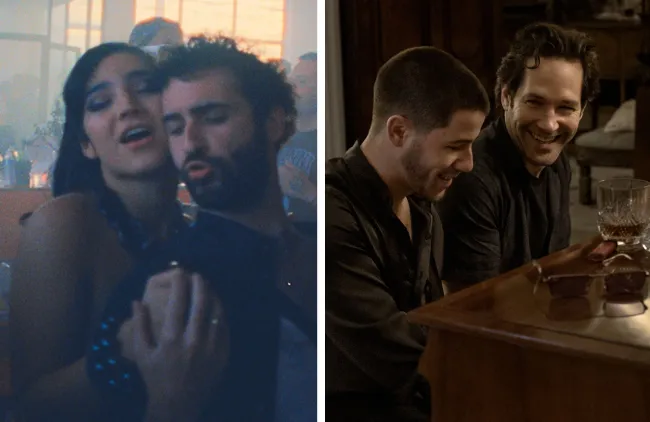
It’s not exactly kosher, but Feature Film competition jury president Park Chan-wook might want to consider allowing his star-studded team to cast write-in votes for Club Kid as the Palme d’Or recipient. Jordan Firstman’s directorial debut premiered in the out of competition Un Certain Regard section, but has been the big winner of the festival in terms of generating raves and headlines, particularly after A24 swooped in and paid a staggering $17 sum to acquire the music-drenched trip through New York’s after hours club scene. Based on Rotten Tomatoes reactions, Club Kid is in a three-way tie for bragging rights to be best-reviewed movie out of the entire Cannes 2026 lineup.
Many of the Cannes-based Club Kid write-ups have also positioned it as the most commercial movie to have played the festival, a tacit indication that this year’s lineup was light on titles that general audiences might actually seek out. You can expect A24 to lean heavily into Firstman’s social media following as it plots its marketing campaign to recoup its investment; the I Love L.A. star has a prolific presence on Instagram and YouTube where younger audiences have repeatedly demonstrated that they’ll show up for theatrical features made by the creators in their feeds. Mark “Markiplier” Fischbach’s Iron Lung was 2026’s first YouTube-to-multiplexes sensation, and Kane Parsons aka Kane Pixels is next on deck with Backroom, another A24 joint that’s currently tracking for a seismic opening weekend.
It was only two years ago that Sean Baker’s Anora — another New York story that followed its young characters in and out of bass-heavy nightclubs — started its long road to a Best Picture victory with a Palme d’Or win at Cannes. Without a shot at the top prize, Club Kid can’t launch itself onto the awards circuit with the same kind of momentum. The movie also missed out on the Un Certain Regard jury prize previously claimed by Ruben Östlund’s Golden Globe-nominated Force Majeure in 2014 and Boris Lojkine’s Gothams-winning Souleymane’s Story in 2024.
It’s also rare for a young first-time director to go directly from Cannes to an Oscar nomination. Turning back the clock to 1989, Steven Soderbergh was only 26 — eight years Firstman’s junior — when he won the Palme for his breakout freshman film, Sex, Lies, and Videotape, but both he and the movie were overlooked for Best Picture and Best Director honors that year. Meanwhile, you have to go all the way back to 1955’s Marty to find a directorial debut that won both the Palme and Best Picture. That Ernest Borgnine favorite was helmed by 35-year-old Delbert Mann, who already had a prolific career in live television before switching over into features.
Give that history, Firstman seems unlikely to join the Best Picture or Best Director club his first time out. But at least this Club Kid gave Cannes’ 2026 edition a pulse.
Ballad power

Meanwhile, back in New York, Times Square was pulsing on Wednesday night with the premiere of John Carney’s Power Ballad, which brought stars Paul Rudd and Nick Jonas to a midtown Manhattan multiplex followed by an afterparty at a nightclub tucked away in one of the neighborhood’s towering hotels. Gold Derby stopped by the shindig where Carney, Rudd, and Jonas graciously posed for pictures and chit-chatted with fans who they hope will sing the movie’s praises ahead of its general release on June 5.
Power Ballad has so far been generating solid reactions on the festival circuit, particularly during its SXSW peek-out in March. Written by Carney and Peter McDonald, the film casts Jonas as a has-been pop idol and Rudd as a never-was music star who unexpected cross paths at a wedding, and noodle around on some jams. Flash-forward a couple months, and Jonas turns one of Rudd’s tunes — “How to Write a Song (Without You)” — into a mega-charting hit without crediting its creator.
Carney has built a career out of building movies around hit songs for nearly two decades now. It all started with the scruffy 2007 Irish musical Once, which featured the Best Original Song-winning earworm “Falling Slowly” as its centerpiece anthem. (Once went on to become a Tony-winning musical in 2012.) He was back in the Oscar mix six years later with “Lost Stars” from 2013’s Begin Again, and seemed poised for a three-peat after 2016’s Sing Street taught everyone the joys of belting, “Drive It Like You Stole It.” But that latter track didn’t make the 2017 Oscar cut in a year dominated by boppy tunes from La La Land, Moana, and Trolls.
So far at least, the 2027 Best Original Song mixtape is less dense, especially without the prospect of any more Huntr/x anthems slaying the competition. Apart from that prolific brat Charli XCX, who has original music featured in The Moment, Wuthering Heights and Mother Mary, the field is absent of notable names and memorable songs, giving “How to Write a Song (Without You)” an opening to reach ears beyond Jonas-heads.
When we caught up with Carney at the Power Ballad afterparty — where the music was cranked up beyond 11 — we cited his strong track record in the category and he humbly insisted that he “got lucky” with Once and Begin Again. But he also expressed enthusiasm with how early audiences have responded to “How to Write a Song (Without You)” before excusing himself to do something that any aging club kid can relate to: asking the DJ turn the volume down.
Up Late with Colbert

Two nights after the Power Ballad premiere, Rudd was back in Times Square to be one of the many, many celebrities that were part of Stephen Colbert’s farewell to The Late Show. That series finale also happened to win the award for the week’s most memorable musical moment, as ex-Beatle Paul McCartney led Colbert and the crowd in a spirited rendition of the Fab Four favorite “Hello Goodbye.” And in a full-circle moment, McCartney helped Colbert turn the lights off at the Ed Sullivan Theater, the same venue where he and his bandmates launched the British Invasion some six decades ago.
The series finale came nearly one full year after CBS announced that it was cutting ties with Colbert and dumping the Late Show franchise altogether. In the intervening months, the fracas around the cancellation helped propel the host to his first-ever Emmy win for Best Talk Series, a victory that was enabled by his late-night accomplice, Jimmy Kimmel. With all the emotion generated by his farewell, Colbert has to be the front-runner for a repeat victory at the Emmys in September.
But there’s also a strong chance that he pays the goodwill forward by endorsing Kimmel — who has publicly weathered his own storms over at Disney-owned ABC — for that statuette. Like Colbert, Kimmel would be a first-time winner in that category and speculation is rampant that he’ll be departing the increasingly less-populated late-night landscape within the next few years, ideally by choice instead of by network fiat. Now that he’s not hosting a talk show on a nightly basis, Colbert will certainly have plenty of time to devise Kimmel-friendly FYC stunts that are a little more elaborate than billboards.
Here’s a pitch free of charge: Since he’s best buds with McCartney, how about a rooftop concert in Kimmel’s honor?
