
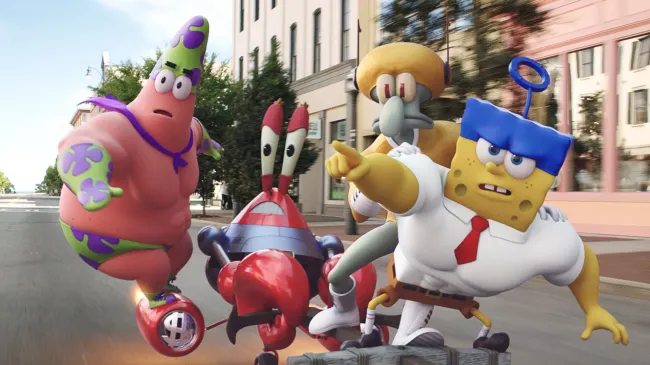
The follow-up to the animated/live-action SpongeBob SquarePants Movie, the shamelessly bonkers SpongeBob Movie: Sponge Out of Water splashed into theaters in February 2015. The story finds our titular hero and pals decamping from 2D Bikini Bottom through time and space to the 3D surface world, seeking to retrieve the stolen Krabby Patty formula from Burger Beard the pirate (Antonio Banderas).
Along with a trio of original songs from Pharrell Williams’ band N.E.R.D., the soundtrack showcases a score by Emmy-winning, Oscar-nominated composer John Debney. One of Hollywood’s go-to composers since the 1980s, Debney’s credits includes projects as varied as Tiny Toon Adventures, The Emperor’s New Groove, Elf, Iron Man 2, and The Passion of The Christ. His Sponge Out of Water score is getting a digital overhaul courtesy of Varèse Sarabande and Craft Recordings, who have compiled a deluxe collection of Debney’s music cues, including some previously unreleased cuts, for the labels’ CD Club series. The disc, due out July 10 and available for pre-order, includes extensive liner notes by writer and podcaster Daniel Schweiger featuring a new interview with Debney.

Gold Derby has an exclusive preview of the liner notes, focusing on the story and influences behind three of the movie’s key cues.
“Burger Beard on Island” and the Pirates of the Caribbean vibe
In the first cue, “Burger Beard on Island Opening,” Debney unleashes epic orchestral cannon fire with a rousing pirate theme befitting his own breakthrough score for Cutthroat Island. Jigging brass rhythms and high flutes nearly sing “yo-ho-ho” as Burger Beard dodges skeletal death traps in search of a pirate book. When “Burger Beard Starts to Read Story” to his wiseacre seagull gang, Debney evokes Indiana Jones–esque excitement with fife and fiddle before plunging us into Bikini Bottom. The result is scoring that plays both straight and tongue-in-cheek, setting the stage for SpongeBob’s deliriously energetic fourth-wall-breaking tone.
“You know me and pirate movies!” Debney laughs. “I really wanted to reference what Buddy Baker did for the Pirates of the Caribbean ride at Disneyland, because I think of that first. Then I think of Erich Wolfgang Korngold and The Sea Wolf. Then Hans Zimmer’s music comes up for his Caribbean movies. You throw it all into a hat, jumble it up and then come up with a pirate theme. It was really fun, because Sponge Out of Water was a time when orchestras were working a lot more in Los Angeles, and everyone was primed and ready to do a big adventure score — which this really is.”
“Plankton Attack” with the Batman homage
Debney makes raucously exciting use of symphonic energy with his first musical set piece for Plankton’s all-out assault to steal the Krabby recipe (“Plankton Attack,” “Firing the Ketchup Gun,” “Trying to Steal Formula”). Militaristic rhythms fight the heroic SpongeBob (who even gets a quote of Danny Elfman’s Batman theme), while a chorus befitting Debney’s The Scorpion King wails with epic importance. Debney quickly lowers the music to a sneaky hush before a woeful violin leads into techno-driven Krabby-starved pandemonium (“Escaping in a Bubble/Bikini Bottom Apocalypse”). While techno becomes the signature of the Krabby lynch-mob berserkers (“Get Him”), even the score’s more insane stylistic variations are always anchored by a traditional orchestra ready to pounce with the nefarious Burger Beard theme (“The End!”).
The acid trip of “Inside SpongeBob’s Brain”
There’s no more earnest — and terrifying — music than when Plankton take a look “Inside SpongeBob’s Brain,” where gonging percussion and sinister brass accompany a “Rainbow!” that becomes a warped musical cuckoo clock as a master villain confronts his frenemy’s horrifying innocence.
“The direction to me was that we were going on an acid trip with this score, so I had to make it wild, wacky and weird. SpongeBob’s brain is fluffy, funny and saccharine. But then there are so many fun parts in this movie. How do you choose?” Debney asks. “We did a lot of different vibes for the different characters. There were so many of them, and the directors wanted them to have their own sound. On a beat you could be in a biker movie or in a military adventure. But that’s all the writers. They’re so clever and well-versed. They know these characters, and if I went a little off, they’d pull me back in.”

