
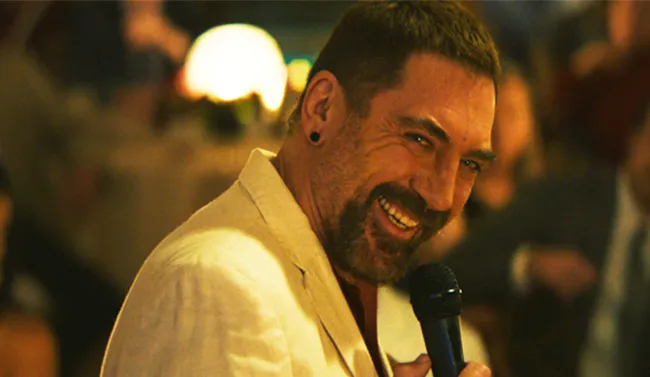
A limited series based on a movie, based on a movie, based on a book is nothing new in the modern era of streaming, but Cape Fear, Apple’s 10-part adaptation of John D. MacDonald’s The Executioners and the two cinematic treatments it spawned, has some major talent backing it up.
Created by Nick Antosca, the new version of Cape Fear counts both Steven Spielberg and Martin Scorsese as executive producers and has a central cast featuring Amy Adams, Patrick Wilson, and Academy Award winner Javier Bardem as the hell-bent ex-con Max Cady.
Reviews for the limited series have been mostly positive, calling out its superbly talented cast, while a handful of gripes will sound familiar to anyone with experience watching modern streaming adaptations. The decent-to-mixed reception is reflected in its 80% score on Rotten Tomatoes and 76 rating on Metacritic. Here’s a deeper dive into what professional TV watchers are saying.

The Good
Following screen icons like Robert Mitchum and Robert De Niro is no small task, but the critics agree that Bardem meets the challenge.
“What holds it all together (through eight of the 10 episodes, at least, which is all that were provided for review and exactly when the narrative threatens to go off the rails) is Javier Bardem,” writes Ben Travers for IndieWire. “The latest Max Cady isn’t just the ideal amalgamation of his previous performers — capable of maximizing his enchanting menace in a big, broad manner (Skyfall), just as he can shrink it down to a potent, precise timbre (No Country for Old Men) — he’s also skilled enough to dole out Cady’s demons in ways that best serve the series. When the action is big, his acknowledgement of it is small. When the meaning matters more than the moment it’s housed in, he can expand his presence enough to make sure you remember. His encapsulation of Cady is finely layered to fit a serialized arc, even when it’s gruesome, gonzo showmanship.”
And it may take the series to get to its more exciting chapters (more on that in a second), critics call out the pulpy tone that Cape Fear works up to eventually.
“It becomes a better watch as the series progresses, the Bowdens’ paranoia boiling over and the tone edging into campy thriller,” writes Olly Richards in Empire. “Early episodes have moments of it, with overwrought Hitchcockian camerawork and some cheesy storytelling tricks — newspaper headlines and televised reports do some expository heavy-lifting — but they’re playful little smudges on a more prestige, serious surface. By Episode 6, it gets looser, with some ludicrous revelations, all well-sold by the excellent cast. It’s silly, garish fun and actually more of a piece with the adaptations it’s following: another serving of well-made pulp.”
The Mixed
It’s hard to beat accusations of “coulda been a movie” when the source material novel has already been adapted twice. That said, Cape Fear seems to get to somewhere rewarding, even if it takes a few hours.
“Apple TV’s Cape Fear is a 10-episode adaptation — I’ve seen the first eight episodes — which probably stretches the revenge/counter-revenge/counter-counter-revenge narrative at least four hours further than viewer sympathies and suspension of disbelief can sustain,” writes Daniel Fienberg in The Hollywood Reporter. “Like Max Cady smirking in the shadows, Cape Fear overstays its welcome, but it does so with bursts of intemperate amusement and, like its predecessors, a cast to die — or exact revenge — for.”
The series’ more stylistic flourishes have divided critics, some of whom find the chooses more heavy-handed than they need to be.
“As gripping as Cape Fear is, there are some stylistic oddities that don’t make sense yet, but may click as the series comes to its conclusion,” writes Aramide Tinubu in Variety. “The use of color is intriguing. In flashbacks to Max’s time in Tarwater, Antosca uses black-and-white imagery that denotes not just a past time but a specific place. Yet color filters used to signal a warp in reality or an escalation in Max’s behavior feel too on the nose. Because the storyline itself is so compelling, there is no need for additional signifiers to unpack Max’s psyche or to push the narrative forward.”
