
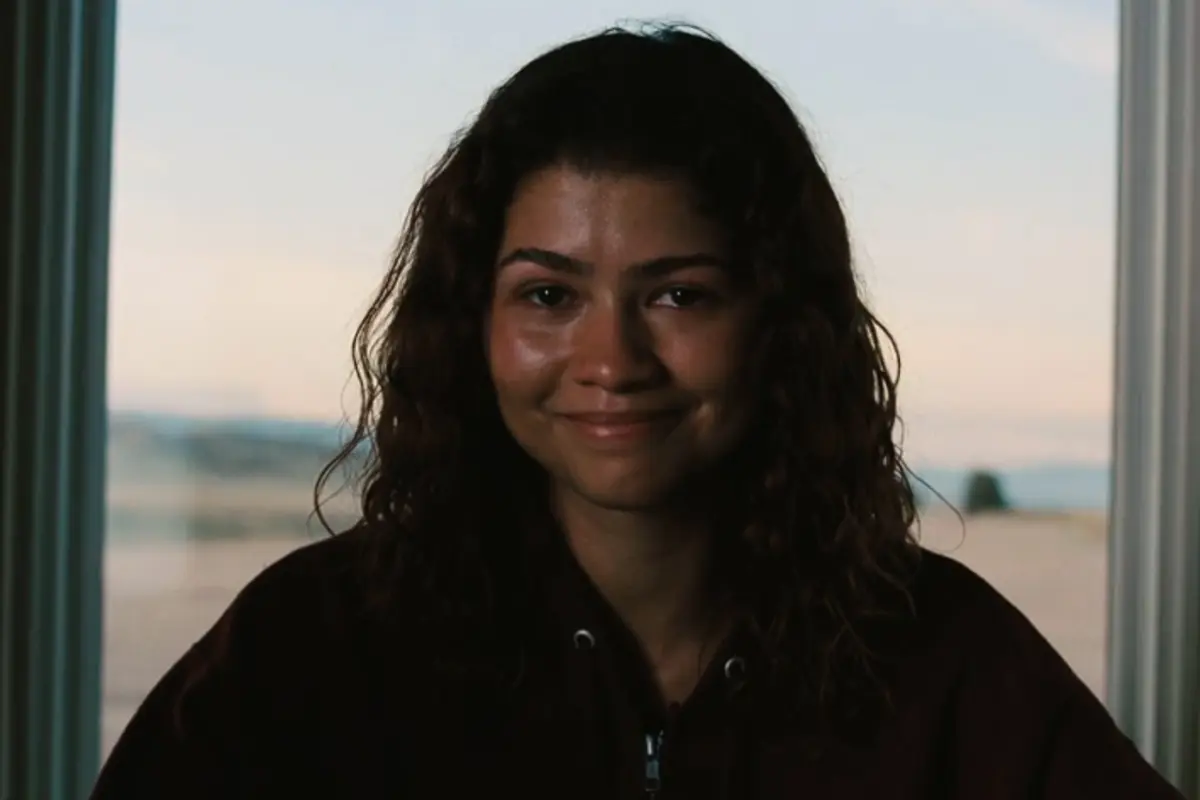
It isn’t hard to keep track of the fates of the cast of Euphoria. In most cases they can be summed up in a simple sentence or two.
For example: Rue dies.

She narrowly escapes capture by Laurie’s Nazis and returns Alamo’s stolen goods, then reconnects with Ali to decompress. But Alamo knows she’s a rat, so the painkiller he gives her for the injuries she sustained is laced with fentanyl, and she overdoses off a single pill, never making it to the promised land.
In response, Ali abandons Islam and his NA meeting, dresses up in his old army uniform, and shoots and kills Alamo in a duel in which the gangster attempts to cheat. Returning to his birth name of Martin, he travels to the borderland homestead Rue wound up at in the season premieres and settles in for a slice of the American dream.
Alamo dies at Ali’s hands, betrayed by his minion Bishop for his crimes against Maddy, to whom he had just proposed marriage. He seemed unlikely to take “no” for an answer, but it’s a moot point now!

Maddy is right there for the climactic shootout, having delivered Alamo’s cut of Cassie’s earnings. With his death, she’s now free to run her and Cassie’s business as they see fit — and maybe to date Bishop.
Bishop organizes a successful vehicle switcheroo that prevents Alamo from getting busted by the DEA, then actually cracks a smile for the first time all season when Maddy makes a joke about his pet poodle’s hairstyle. It seems likely this saves her life, leading him to empty Alamo’s golden gun of its bullets so his sneak attack on Ali fails.
G rescues Rue from getting dragged to death by a Nazi on a horse with his sniper rifle. He then dies after getting his dick shot off by Ali.
Jules mourns Rue by painting a portrait of her against a bed of flames. She’s still in a relationship with Ellis, which has reached its French-press coffee in the morning stage.

Harley the lariat-wielding Nazi gives up to the DEA without a fight.
Laurie hangs herself rather than go back to prison, violently shitting herself in the process.
Faye and Wayne escape the DEA raid on horseback, whereabouts currently unknown. Wayne also violently shits himself, but that’s what tips him off that they’ve been taking fake drugs and are about to be raided, making this season’s fecal fixation a sort of “Chekhov’s Diarrhea.”
Fezco does not escape prison using parkour, except in the dream Rue has prior to her death, but it’s a fun idea anyway.
Cassie maintains the ruse that Nate has disappeared, whereabouts unknown. Angelic against her ring light, she cries beautiful tears for the dream she once had, but she appears poised to soldier on.

To Lexi, who has some kind of epiphany after reading the copy of the Bible that Rue left on her couch, that is what it’s all about.
“That’s the heart of it, I think. Bad things happen, so why have anxiety about it? Like, what good does it do? No matter what, you just have to keep going. And that’s the point of it, I think.”
Thoughts like that are what keep me going despite my own at timed debilitating anxiety about the world and my place in it, so perhaps I’m predisposed to like the episode that presented them. But I do think that reducing this series finale to the plot mechanics that tie off each character’s thread does the work that series auteur Sam Levinson and his formidable cast are doing here.
For example: If you were wondering how sick it would be to watch Colman Domingo dressed as a crazed veteran and Adewale Akinnuoye-Agbaje dressed as a rhinestone cowboy have a standoff and shootout in a strip club, the answer is extremely fucking sick. There’s outstanding comic relief from Anna Van Patten as Kitty, whose surgically augmented ass could probably have withstood several direct hits, bouncing off harmlessly like Superman’s chest. In other words, the good clean trashy modern-Western ultra-violent Kill Bill crime thriller fun you come for is here, and then some. The squibs and splatter involved in Alamo’s death alone made me damn proud to be an American for the first time in about two years.
The Americanness of this episode is inescapable, and important. This thing is rife with the red-white-and-blue frontier iconography of horses and shootin’ irons. Its climactic battle pits a soldier against a cowboy. The whole series closes on the image of a Black man being welcomed into a white homesteader’s home with open arms, just as a younger Black woman was to start the season; its final shot is a lingering one on the house and its flagpole, which flies a tattered but clearly much-loved star-spangled banner.

Much of this is juxtaposed against old movies, drawing attention to how these roles of black hats and white hats are now being played by either Nazis on one hand or Black people on the other — neither the alleged apple-pie ideal, but both closer to its reality in different ways. Meanwhile, news reports note that the 2024 presidential election is nearing; I think it may take place between Rue’s death and Alamo’s assassination. This all loaded imagery, and it explodes at regular intervals throughout the episodes.
Some guns, however, do not go off, and it’s a pity. Few of the first two seasons’ poignant and powerful explorations of teen angst and addiction are meaningfully paid off here. Rue is murdered, and while her own drug addiction led her here in a roundabout way, it’s not the proximate cause of her death. Her dream-flashback to the first time she saw Jules as she rode along on her bike hurts in large part because their relationship, and Jules in general, were largely pushed to the side this season. (It’s weird to feel like Alamo’s henchmen got meatier material in the Euphoria finale than Hunter Schafer’s character.)
Nika King’s brief appearance as Rue’s mom (and Storm Reid’s as her sister via recycled footage) reminds you how badly the domestic drama of Rue’s family was missed as well. Nor is there any payoff for Nate and his dad, with Nate himself on the missing persons list. Lexi and Cassie discuss their missing addict father briefly and don’t mention their alcoholic mom at all. Angus Cloud, it turns out, truly was the show’s indispensable man, the lynchpin that connected the everyday world most of the characters used to inhabit with the heightened reality of a crime thriller. Without him, Levinson had to choose one over the other, and this relatively uncomplicated finale is the result.
But again, a mere recitation of the plot and how it resolves is selling this thing short. Such an analysis doesn’t touch the rich blue of the sky against which the white-supremacist Harley lassos Rue and drags her behind his racing horse. It doesn’t mention the stunning bifurcated twilight-blue-and-dimer-light-gold color scheme revealed when the camera pulls away from Cassie in her bedroom to reveal the exterior of her garish home, easily one of my favorite shots on TV this whole year.

It doesn’t tackle how much fun Zendaya has been as a hapless action hero/fall guy this season, a combination of Uma Thurman in Kill Bill, Griffin Dunne in After Hours, and Daffy Duck in a Looney Tunes episode where he’s really getting the shit beat out of him. It has nothing to say about the sad-dream diner in which Cassie and Maddy commiserate following the discovery and disposal of Nate, and how mesmerizingly Lynchian both Sydney Sweeney and Alexa Demie are in those roles. It doesn’t account for the cool way Bishop and Ali/Martin seem to recognize one another as natural allies via their mutual membership in the Guys With Extremely Soothing Voices Club.
Euphoria’s third season has amounted to a full reboot, starring most of the same people in the same roles but with little else in common. It truly can’t be exaggerated what a difference the shift between Labrinth and Hans Zimmer as composers alone makes to the overall vibe, much less having Rue make border runs and Cassie make actual porn and Jules wear multi-thousand-dollar garments instead of stuff from the Salvation Army. These aren’t the kids we knew, fucked-up kids though they may have been, and this isn’t a show about those kids anymore. It’s a show about sawed-off shotguns. You have to make your peace with that.
Which I have. Euphoria Season 3 doesn’t feel like a memorial service, it feels like a viking funeral. It’s not about first kisses and popularity and suburban secrets, it’s a VistaVision fantasia about a hell on earth governed by a devil named fentanyl, and the lost souls fighting against the demon lords responsible. It’s not how I saw this story ending when it started, but it’s one of the wildest and most beautifully filmed neo-Westerns in the history of TV, big and bold and bloody against blue skies, like Pluribus for perverts. I’m only sorry you can’t light the same ship on fire twice.

