
A short promotional clip for The Devil Wears Prada 2 has quickly turned into an international flashpoint, with viewers across China, Japan, South Korea, and Hong Kong criticizing what they see as a stereotypical portrayal of an Asian character.
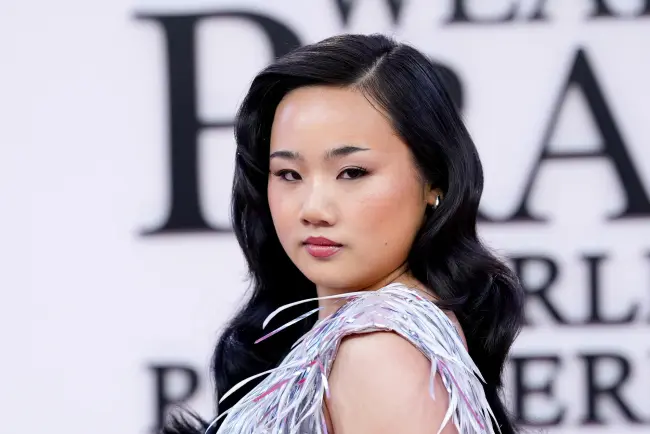
The footage, posted April 16 by 20th Century Studios across social media platforms and YouTube, shows Andy Sachs (Anne Hathaway) meeting her new assistant, Jin Chao, played by Helen J. Shen (Broadway’s Many Happy Endings), at the Runway offices for the first time. In the scene, the assistant, seemingly misreading Andy’s hesitation in hiring her, rapidly lists her academic credentials, including a degree from Yale University, a 3.86 GPA, lead soprano status in the Whiffenpoofs, and a perfect ACT score.

The clip has amassed more than 25 million views, but instead of generating excitement, it has sparked a wave of backlash, particularly among Asian audiences who argue the moment leans into familiar stereotypes.
What’s fueling the backlash?
At the center of the discussion is the character’s introduction, which some viewers feel echoes familiar character patterns seen in Western media. Critics point to the rapid listing of academic achievements and moments of uncertainty as elements that may come across as limited in scope.
On social media platforms across Asia, users have called the portrayal tone-deaf, with some questioning whether the sequel, arriving nearly two decades after the original, has kept pace with evolving expectations around representation. Others have begun using the hashtag #BoycottTheDevilWearsPrada2.
The backlash has been especially pronounced in Japan and Hong Kong, where commentators and media outlets have amplified concerns that the character lacks depth and risks reducing a potentially dynamic role to a caricature.
“In The Devil Wears Prada 2, there’s a secretary character who fits every single white stereotype of Chinese people: Yale grad, GPA 3.86, but dresses kinda tacky, with that timid, shrinking bookworm vibe. Then they gave her the name [Jin] Chou. You can’t help but think of the “Ching Chong” slur white people use when they’re mocking Chinese folks. … why not pick some other name,” wrote an X user named Tracy Wen Liu (via X’s translation tool).
“Promoting in Asian regions like Tokyo, Shanghai, Seoul, and such, yet using this discriminatory expression. And they’ve even put it in the trailer. It’s truly disappointing. I’ve lost all interest in watching it,” wrote a user called Hameln.
What comes next?
Hong Kong’s English-language South China Morning Post has posted an article from their reporter based in Beijing about the outrage, as have Japan’s The Sankei Shinbum and South Korea’s The Chosun Daily, Korea JoonAng Daily, and The Korea Times.
Neither the studio nor the filmmakers have publicly addressed the controversy. It’s also unclear how representative the brief clip is of the character’s full arc, with the film not being released until May 1. Still, calls for a boycott have begun to surface in some regional media coverage, suggesting the conversation may continue in the coming days.
