
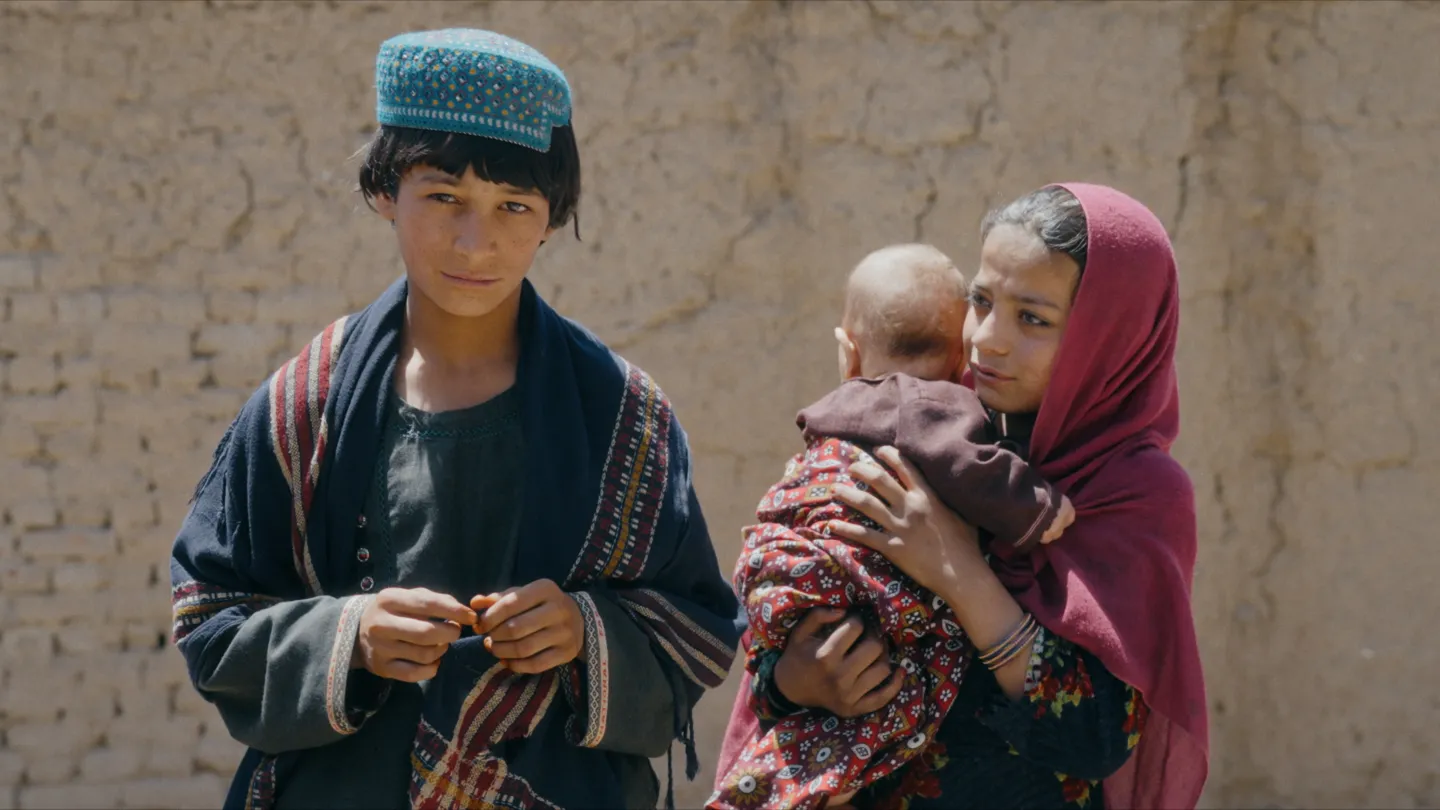
The Roots of Madness. The title of the new documentary from Swiss filmmaker Edgar Hagen (Who Are We?, Journey to the Safest Place on Earth) is provocative. Its goal is ambitious. After all, amid the heated political debate about migration and rise of xenophobia across Europe and other parts of the world over the past decade-plus, the film looks to answer the question: Why do so many people become refugees?
For his cinematic exploration, Hagen tries to understand “the long-term consequences of Western intervention in the Middle East,” as a synopsis highlights. In his investigation, the filmmaker accompanies veteran German journalist Ulrich Tilgner, who has covered war zones and crisis hotspots for German and Swiss broadcasters, on a farewell journey to meet not only regular people along the way but also former contacts, old friends, and past interview subjects in the likes of Afghanistan, Iraq and Syria to find out how things have played out since his past visits.
The Roots of Madness world premieres in the national competition of the 57th edition of the Swiss documentary festival Visions du Réel in Nyon, near Geneva, on Sunday, April 19.
“In 2015, millions of refugees, mostly from the Middle East, flowed into Europe, unwittingly fueling the rise of xenophobic extremism,” notes a summary on the VdR website that mentions how the film combines “archives and often painful testimonies to create an unflinching yet sensitive indictment that occupies the space between outrage and melancholy.”
In the process, The Roots of Madness dissects promises of Western interventions in the region in the name of “liberation” and “democracy.” The documentary also takes audiences to Niger, Greece and Serbia.
Watch a trailer for the film here.
Produced by Hagen and Mathias Hefel via their Vollbild Film GmbH, The Roots of Madness was written and directed by Hagen. The cinematographer is Börres Weiffenbach, with editing by Christian Büttiker and Audrey Maurion.
“For me, releasing this film at a time when disturbing developments threaten to undermine the value system of Western democracies is a deeply personal statement,” Hagen shares in a director’s statement. “Many people in the Western world see the migrants and refugees who are trying to flee to the West as the cause of this divisive and perilous process, when the causes are actually quite different. I firmly believe we can only overcome the growing racism and political extremism in our countries if we endeavor to understand who these people are. That’s why I set out to gain a clear understanding of the ongoing humanitarian disaster migrants and refugees face at Europe’s fortified borders by capturing authentic images and voices from the areas of conflict they flee from, and by juxtaposing those voices with our Western values and the West’s political decisions.”
Ahead of the doc’s world premiere, Hagen talked to THR about The Roots of Madness and its timely look into the recent past in an attempt to illuminate the present and future.
“I wanted to look for the big picture,” the filmmaker shared. “I was feeling lost in a way when it came to understanding this situation. I was not the only person seeing that our society, when migration became a big topic, started closing up, building fences and walls, which also opened up a prison. I started thinking: What the hell is going on here?! We have to really understand that. And to do that, we have to go where they come from.”
When Hagen met Tilgner, he felt very strongly that they had to make a film together. “I just had this impulse,” he recalled. “And that was the first impulse to start this film.” Hagen loved Tilgner’s focus beyond power players and brokers. “He didn’t really focus just on the politicians. He went to the people to understand the atmosphere, the feelings, and what was really going on behind the closed doors,” he explained. “And so, he knew about the suffering of the people connected to these wars that [have led and] lead people to become refugees.”
That approach also helped Hagen find the title for the doc. “This idea that we have to go where this conflict comes from, go to the heart of the conflict, means going to the roots of this madness that millions of people have to leave,” Hagen told THR. “And as you see in the film, they don’t want to leave, they have to leave, and this is what we have to understand from our Western perspective. We have to see and accept that.”
Hagen signaled that he wanted to see and experience the pain and suffering that tends to be so far away from his comfortable home in Europe, to share it with others who don’t go to the war and conflict zones of the world. “This urge to understand also [plays into the] dramaturgy of the film,” he said. “And I think that’s also where the empathy and emotion in this film comes from on the way to understanding the same pattern of Western interventions in different places.”
Addressing the rule of the Taliban in Afghanistan and other groups mentioned in The Roots of Madness, the director explained that he also wanted to focus primarily on the West’s role in their rise and “how we are helping to produce this radicalism.”

‘The Roots of Madness’
Courtesy ot Vollbild Film GmbH
Hagen also shared thoughts on the recently started war in Iran. “With this Iran war, the perception has changed because Donald Trump doesn’t even make the effort to give a justification,” he argued. In the case of the Iraq War and George W. Bush and other past conflicts in the region, “the U.S. said we do it for peace and for democracy,” Hagen pointed out. “Trump doesn’t really make the effort anymore to defend our values. And that, I think, is making people wake up and understand what we are losing.”Trump also said it in one half sentence, but his next sentence was pure bullshit. He doesn’t really make the effort to defend our values. And that, I think, is making people wake up and understand. How is it possible that the leader of the free world is attacking other countries like this? Why do we agree to that? Or if we don’t agree, why do we let it happen?”
With that in mind, Hagen emphasized that he hopes not only to help elucidate where all the migrants are coming from and why, but also to make audiences think about the future. “‘Why is it going this way’ is the big question of the film,” he noted. “But we should also think about where we want to head in terms of our values.”
The director is hopeful he can cause some healthy debate. “This film is trying to open a dialogue about these things,” Hagen told THR. “That’s my commitment with this film. I think we also really have to maintain established approaches and find new ways to talk and deal with the ‘bad guys’, for example, by bringing them to court. It’s no solution to kill them, because that way we just produce the radicalism we are fighting and end up in an endless spiral of violence and killing. I think it is in our own interest to attack, discuss and solve these issues.”
