
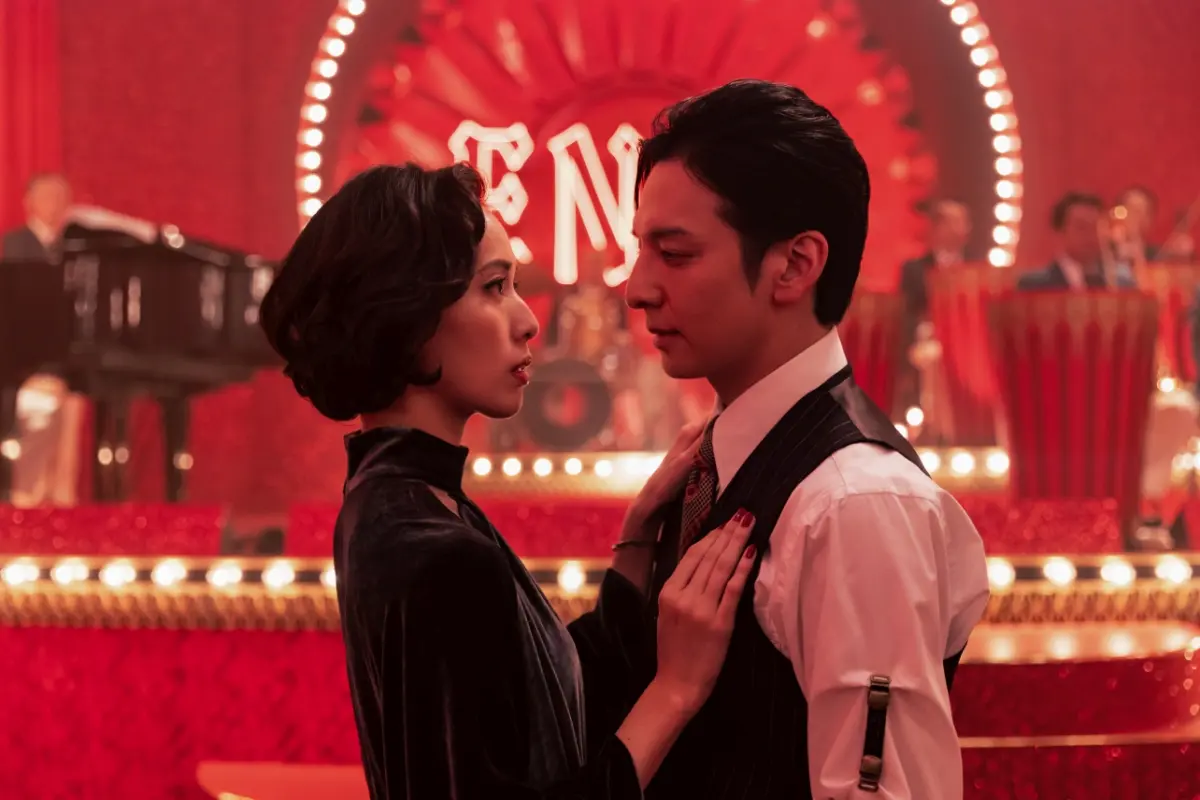
The new Netflix drama Straight To Hell is a scripted take on the life of one of Japan’s most famous fortune tellers, who would go on TV and tell the people she was reading that they would being “going to hell” and other blunt assessments.
Opening Shot: A white stretch limo drives down a city street in Tokyo. The year is 2005.
The Gist: The woman in the limo is Kazuko Hosoki (Erika Toda), who has become exceedingly wealthy as a blunt and honest fortune teller. She goes on TV shows and reads hosts, guests and audience members, and her appearances always get high ratings. Some of her bluntness is for show, but when she tells a female comedian who wants to know if she’ll marry before 30 she’s going “straight to hell,” and that she will kill herself, there’s a large amount of what she considers the truth in that assessment.
Before that TV appearance, Kazuko meets Minori Uozumi (Sairi Ito), an author who wants to make Kazuko’s life into a book. Kazuko respects authors and has liked Minori’s work. As they ride in her limo to a dinner appointment, Minori asks how it all started. “It was hunger,” Kazuko says, and she starts her story.
In 1946, we see Kazuko as a kid, trying to survive in the post-war rubble of the city. When she sees someone trying to pass off barley tea as the American beer Budweiser, she get the idea to try to do that, too, and when she is chased down by someone she sold to, the look she gives the guy indicated that she’d take no BS.
Nine years later, in 1955, the city had rebuilt itself, and hedonism ruled. Kazuko worked at her mother’s oden stand, but she wanted to be an actress. Seeing a poster looking for hostesses at the White Glove club, she goes for an interview, and is hired on the spot. Her only stipulation is that she will not “sell my body.” She becomes a top hostess, wining and dining and dancing with multiple clients and bringing in revenue. But things change for her when she finds out that the club’s manager, who wants to open a club in the city’s ritzy Ginza neighborhood, is using her to get closer to that goal.

What Shows Will It Remind You Of? While Straight To Hell is based on true events, and Kazuko Hosoki really was a famous fortune teller, a disclaimer makes sure to say the series is a work of fiction. In that way, it’s sort of like shows like Wu-Tang: An American Saga.
Our Take: Kazuko Hosoki had a journey to get to where she was in 2005, which is why a fictionalized version of her story proves to be interesting. Before becoming a very successful fortune teller and media figure, she was Gina’s nightlife queen. And there were a number of controversies surrounding her time in the media spotlight, from accusations of fraud to speculation she worked with organized crime.
What we found interesting about the first episode is how slow and quietly things moved much of the time. Yes, there was a well-edited, spirited montage, to the tune of “Sing, Sing, Sing,” that shows Kazuko dancing with various clients. It was a fun indicator of how well she did as a hostess at the White Glove club. But much of the rest of the episode was steeped in darkness, with no music and deliberately slow-moving scenes.
Were not sure if that style choice was done as a time-stretcher, or if it was there to show just how considered Kazuko was about her life and career. The show has sixty years to cover, and it’ll be interesting to see if subsequent episodes move faster than the first one, just because it has to traverse the 1970s, for instance.

Performance Worth Watching: Erika Toda is dynamic as Kazuko Hosoki, and she plays Kazuko over four decades, which is never an easy feat.
Sex And Skin: There’s a scene where Kazuko loses her virginity, but it’s not particular explicit.
Parting Shot: After Kazuko details her suicide attempt after the incident at the White Glove club, Minori Uozumi asks her what happened after that. Kazuko contemplates the response as she sips some red wine.
Sleeper Star: Sairi Itô does a good job as the young Kazuko, especially when we see how vengeful she gets when she finds out that she was used by the club’s manager.
Most Pilot-y Line: None we could find. The first episode was well-written and well-acted, even if it was a bit slow.
Our Call: STREAM IT. Despite some pacing issues, Straight To Hell is a worthwhile look at a pop culture figure that was huge in Japan but unknown in the rest of the world.
Joel Keller (@joelkeller) writes about food, entertainment, parenting and tech, but he doesn’t kid himself: he’s a TV junkie. His writing has appeared in the New York Times, Slate, Salon, RollingStone.com, VanityFair.com, Fast Company and elsewhere.
