
The 1980s slasher boom produced an avalanche of copycat films. They were full of masked killers, high school hallways, one-note authority figures, and unlikable protagonists. By the late ’80s, horror was starting to feel worn down. You’d sit there and recognize the beats before they happened, the kills piled up, the style and credibility stretching thinner each time. While the good ones stood out, the surrounding films seemed rushed with very little intelligence behind them. At the same time, TV shows like Twin Peaks kept the viewers unsettled. Films like Carrie, The Fury, and Videodrome were invading homes via VHS tapes. What made them remarkable was the way things weren’t conveniently wrapped up or explained by the end. Most slashers ignored that evolution entirely.
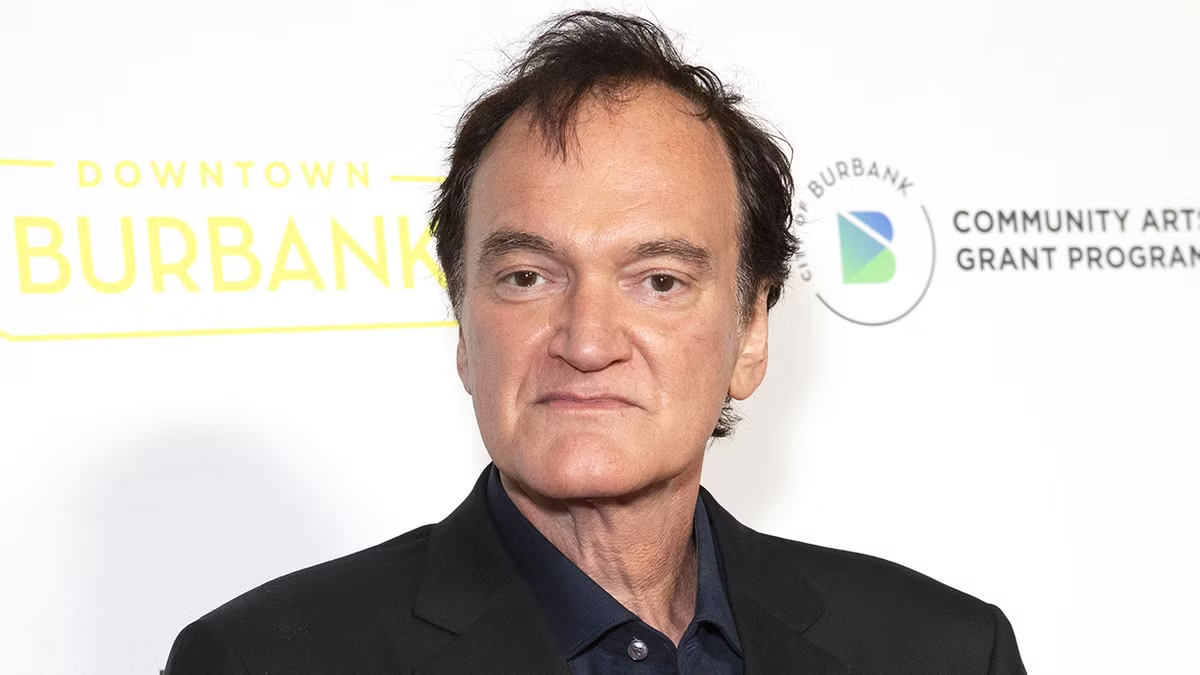
Hello Mary Lou: Prom Night II didn’t. It barely even tried to be part of the same conversation. Quentin Tarantino’s fondness for the film isn’t hard to understand once you watch it without expecting it to follow rules. It isn’t worried about making sense. It drifts, doubles back, and lets scenes play past the point where they’d normally cut. That makes it feel less like a proper sequel and more like something that slipped loose from the schedule. Instead of tightening things up, it stays a bit off-kilter and trusts that discomfort to carry it. Scenes stretch, emotions tilt, and the threat doesn’t always announce itself. It’s not tidy, nor does it want to be. And that refusal is exactly what gives it staying power.
Calling Hello Mary Lou a sequel is technically correct, but spiritually misleading. The film borrows the Prom Night title, nods briefly at its past, and then veers off with zero interest in continuing anything that came before. There’s no obsession with lineage, no reverence for mythology, and no connection at all to Jamie Lee Curtis’ character, Kimberly “Kim” Hammond. The result was a maverick film that ran on its own wavelength.
In Hello Mary Lou: Prom Night II, a former prom queen, Mary Lou Maloney, played by Lisa Schrage, dies at a 1957 prom night and returns as a vengeful spirit. The movie veers away from standard slasher protocols and becomes a bloody, supernatural meltdown. It’s remembered less for plot than for mood, leaning hard into weirdness and refusing to behave like a normal sequel.
With authority figures who hover but don’t protect the students, the movie oozes creepiness rather than worrying about a linear narrative. That choice matters because by disconnecting itself from the original film’s grounded realism, Hello Mary Lou frees itself up to get bonkers. It isn’t interested in being plausible. Instead, it builds slow pressure points that release in bursts, which don’t always make sense in the moment, but feel right emotionally.

This 45% Rotten, but Beloved 1980 Jamie Lee Curtis Slasher Is Now Streaming For Free
After ‘Halloween’ Curtis continued her scream queen era.
Mary Lou Isn’t a Killer So Much as a Disturbance

Unlike your Jason or Michael Myers, Mary Lou Maloney doesn’t stalk her victims in the traditional splatter movie sense. The film throws all the slasher rules out the window, as her presence creates unease rather than the imminent danger of someone chasing victims with farm implements.
There’s something closer to Carrie here than most slashers would dare admit. The violence isn’t just physical. It plays with your head more than it rattles your nerves. For example, when the main character, Vicki (Wendy Lyon), is in detention, the possessed blackboard becomes a liquid, inky portal that pulls her into an alternate, surreal reality. Thus, it’s not about the physical attack, but about turning a safe space into a disturbing vision. Mary Lou weaponizes shame and secrets, leaning into teenage insecurities.
That’s where the faint David Lynch-style starts to creep in. Not because the film is abstract in the same way, say, Eraserhead was, but because it understands that fear doesn’t always need explanation. It needs atmosphere. It needs moments that linger a beat too long. Director Bruce Pittman allows scenes to stall, to breathe, to wobble slightly, and that wobble is where the unease lives.
The Movie is Allowed to Meander

Pittman doesn’t rush Hello Mary Lou toward the kills. Instead, scenes unfold with a looseness that feels deliberate, even when it risks frustration. The movie never rushes to explain itself or signal that everything’s under control. That kind of uncertainty ends up doing a lot of the work.
It creates a hazy, unsettled feel without turning abstract or deliberately confusing. It’s still a slasher. There are rules somewhere. They’re just not always evident. Instead of clean setups and payoffs, Pittman lets moments blur into one another, trusting the mood to carry the scene rather than exposition.
That’s also where Tarantino’s affection tracks. This is a movie that prioritizes sensation over structure. It values how something feels over how neatly it fits. You can see the appeal for a filmmaker who has always gravitated toward films that announce themselves through confidence rather than polish.
Why ‘Hello Mary Lou’ Still Sticks Around
Hello Mary Lou keeps getting rediscovered over the years because it refuses to behave. The synth score pushes hard, giving it a true 80s vibe. The practical effects go big, such as Vicki’s rocking horse going all demonically possessed, complete with red eyes, gritted teeth, and absolute creepiness. The imagery doesn’t apologize for itself. In a decade packed with slashers all chasing the same thing, in the same way, this one went bigger and stranger instead of tighter and further into familiar ground.
Watching it now, it doesn’t feel like a sequel people misplaced so much as a reminder that ’80s horror sometimes tripped into something unsettling by following instinct instead of aiming for respectability. It didn’t aim for coherence, just full impact.
That’s why it still holds up even though it doesn’t get everything right. While so many slashers stay inside familiar lines, Hello Mary Lou keeps drifting away from them and seems perfectly fine doing so. And decades later, that’s still the thing that makes it worth following.

Hello Mary Lou: Prom Night II
- Release Date
-
October 16, 1987
- Runtime
-
97 minutes
Cast
-

-

Wendy Lyon
Vicki Carpenter
-
Louis Ferreira
Craig Nordham
-
Richard Monette
Father Cooper
