
Celebrating its 40th anniversary this year, Ross McElwee’s Sherman’s March offers a superlative example of documentary filmmaking as an act of self-examination. McElwee has always targeted truths that strike close to home; launching his career with the short films “Charleen” and “Backyard,” the native North Carolinian chose to profile individuals who were part of his family and community, filtered from behind the camera with his inquisitions and insights. With his relationship foibles as the film’s focus as much as its intended retracing of the Civil War general’s “march to the sea,” Sherman’s March catapulted him into ranks of America’s great documentarians, earning him the Sundance Film Festival’s 1987 Grand Jury prize, and later, preservation in the U.S. National Film Registry.

Newly restored in 4K for a nationwide theatrical re-release, the film’s anticipation of the confessional cinema of the VHS and digital eras — much less social media’s raison d’etre as a constant stream of self-documentation — makes McElwee’s languid adventure into the heart of his own romantic longing feel even more incisive today than it must have when audiences first saw it back in 1986. Yet his Southern odyssey gains new depth when paired with his latest project, Remake, ostensibly chronicling a purported Hollywood adaptation of Sherman’s March whose production he intended to document.
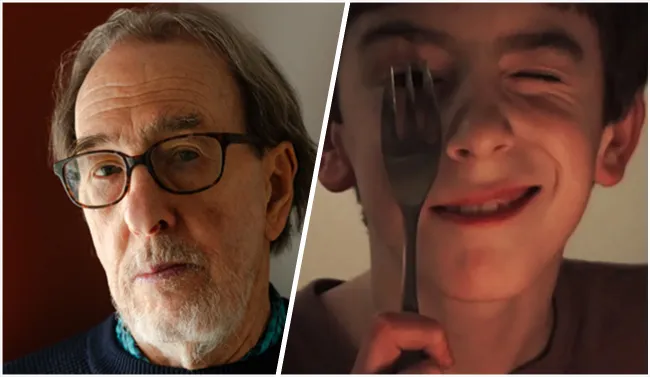
Like its predecessor, Remake began with one goal in mind, but took a turn — one much sharper and more painful, after his 27-year-old son, Adrian, died from fentanyl abuse. Where McElwee’s search for love in Sherman’s March feels beautifully bittersweet, the film’s follow-up carries the devastating weight of a loss he’s determined to pay tribute to even as he attempts to reckon with his role in it. The resulting double feature creates two halves of the same journey — one looking forward at life’s possibilities, and the other mournfully reflecting on an extraordinary past.
Ahead of Remake’s July 10 premiere in theaters, McElwee spoke with Gold Derby about his venerated 1986 breakthrough Sherman’s March, laying out the jigsaw pieces — structural, cinematic and personal — that led to an acclaimed 50-year career and now join the two films inextricably together.

Gold Derby: With the simultaneous 40th anniversary re-release of Sherman’s March and the opening of Remake, watching these two films back-to-back reveals so much about your process. One of the things that immediately jumped out to me was your passivity behind the camera. Is that your disposition, or is it a deliberate technique?
Ross McElwee: I’d say it’s a version of me that’s accurate, but in a nuanced way, exaggerated just for comic intent. In Sherman’s March, I would say that’s true, but it’s not as if I’m playing a character or a role that’s in no way reflective of who I am in real life. I don’t even know what real life means anymore.
I understand that you don’t do any preparation in advance of interviewing a subject or filming a location. How did Sherman’s March codify your approach or technique as a filmmaker?
There were two short films I did before Sherman’s March, and those were the films that locked in my approach. I was trying to find a way as a young filmmaker of taking things I liked about cinéma vérité, direct cinema, and adapting them to something I felt more comfortable with. And so my first experiment with that was to try to film people I knew and had a history with. And that person was Charleen [Swansea] and I made [“Charleen”], a short film about her life. We see her life as a mother, as a teacher, as someone deeply interested in poetry, but someone who above all has a wonderful sense of humor. You hear my voice from behind the camera occasionally and she does directly address me, but it’s in no way about my life, it’s about hers. Then I wanted to try to do a film that could incorporate portraits of other people, but would also mainly be my perspective on what I was seeing at the time. That film was called “Backyard,” and it was in that film that I really started writing narration to go with footage I had shot. “Backyard” was where I codified what was useful about this approach to filmmaking. You have to remember, I didn’t have a sound recordist or producer behind me or an assistant camera, any of that. “Backyard” was a sort of test case, and it seemed to work OK.
How difficult or easy was it to enable these individuals to shine without you being on camera?
It’s not as if I wrote out 12 steps that would lead me to how to do this. It just was intuition. I think part of it was growing up in the South and people feel pretty congenial by and large in the South. I’d always had no trouble moving among different groups of people and finding a way to talk to people I was interested in just as a person. Of course, to do that with the camera, it’s a slightly different enterprise for sure. But it just came easily to me to do it this way. I also liked working alone for the shooting of these films because before that I had really adored the photography of various street photographers that were so popular in New York at that time — Robert Frank, and then of course in France, Henri Cartier-Bresson, who had such a striking way of approaching people and getting these amazing shots. I liked taking what they did with the still camera and trying to do it with a film camera and that seemed to suit me. So I kept doing it and kept finding a way to tie it all together in the editing room, whatever the footage was.

Without doing advanced research of the people or the places that you’re filming, I imagine you end up with a lot more footage than you thought you’d really need.
I think the ratio for Sherman’s March was 10 times more than I needed to actually make the film work in terms of the number of scenes. And it was 16 millimeter, we have to remember, so you didn’t have limitless amount of footage to shoot. A lot has changed since then. Remake, of course, is filmed digitally and that’s a very different enterprise. And that’s also a film that I seriously had to consider what had been shot in the past rather than new footage that I would shoot. So the two kind of come together there, I think, in that Remake [explores] the fact that I’m getting older and it’s much easier to look back on your life than it is to imagine going forward in your life in filming.
In Remake you end up using more florid techniques than you did in Sherman’s March. The sequence where you alternate angles between you and Adrian holding the camera creates a really remarkable moment of intimacy. Were there influences that you were drawing upon as inspiration?
I have to give credit to my editor friend who came in and sort of rescued me through that very difficult passage of how to deal with the footage of Adrian — Joe Bini, who edited something like 20 films with Werner Herzog of all people. I had used those scenes in a montage and it was his idea to break it up and have a camera go back and forth. I think it works brilliantly. So you’re right, there are several times when I do things that have not been done previous to the films. Sometimes, like with the montage that we’re just talking about now, was primarily Joe coming up with this concept and then executing it and me seeing how beautifully it worked. The other time that I had done that was when the double exposure, which is also a kind of experimental film technique, after my brain tumor and I just let that play. That was something I came up with and I had never used that style of cutting before and I thought here it’s appropriate. I’m in a state now — a state of mind and a state of filmmaking and a state of my life — where this kind of departure seemed totally warranted stylistically.

Your level of self-examination in Remake is not only insightful, but understandable in terms of questioning how your documentarian’s approach might have facilitated Adrian’s worldview. Did that aspect come in when you were editing the footage, or was it happening in real time as the film was being made?
Well, what is presented as real time is real time. Some of that footage was used and reused, recycled into Remake came from Photographic Memory, the film I made right before. We tried to limit the amount we did that because it seemed too easy just to harken back to other footage. But the truth was I didn’t have a lot of footage of him once he got to be a certain age, because first thing he wasn’t around; he was with his friends, and then finally he moved to Colorado. So we ended up going back to Photographic Memory. But I think a more important reason why I did that was I realized I really thought that he was on the road to recovery at the moments when I was filming him towards the end of Photographic Memory, and that he was interested in going to film school.
You explain in Remake that he asked you to shoot a scene for him that he was directing.
That’s how we end Photographic Memory, [with] a scene that he wanted me to film to put in his portfolio to apply to film school. And so I was still perhaps naively assuming that eventually he’ll be fine. And now when I look back on that same footage, I feel that may have been some sort of an error on my part of judgment and perception. I think that’s woven into Remake, second-guessing myself, looking back at the way I filmed something 10 years earlier as opposed to how I’m presenting it now with the knowledge that he was no longer with us.
What felt particularly devastating to me was Adrian recounting his drug use. You talk in the film about not knowing if documenting these things is a good thing or not, but in the moment, do you recall what you were thinking?
Well, even as I was filming it, it was very, very moving, difficult. And that’s why you don’t hear much from me behind the camera. I’m sort of speechless in a way, but I think it’s also worth underscoring that, again, Adrian asked me to film that. He wanted that for the film he was making. We had actually talked about his film after he got out of rehab and his plan seemed good. He felt he himself was clean. He wasn’t going to go back to using those drugs and yet people he knew were still using it, and somehow that would be an interesting portrait to make. He didn’t know exactly how it would work, so when he relapsed, he said, “Please bring your camera and let me get this down on film.” And so I had assumed that he was going to be fine and that this would be useful for the film that he would want to make.

How does it feel to look at it now?
As he’s describing so much of the pain he went through, he’s very dispassionate. He’s also very, very articulate about what he’s been through, and it’s both highly subjective and objective at the same time. And it centers largely upon how this woman that he really loved has disappeared and she also was addicted, but she was carted off by her family and put into rehab and they wouldn’t tell Adrian where she was. And so clearly he was pained by that — you can see it in his face.
I think I was somehow on autopilot as I was filming all of this, and my moves behind the camera, zooming in, all of it was kind of happening, but I don’t remember thinking about it at all. Of course after he died and when I looked at the footage, I’m thinking, “This is so moving and so incredible that he could be so articulate and hopeful about where he was headed, and yet look where he’s ended up, where we’ve ended up.” And that was extremely painful. I mean, there was a long time when I couldn’t really even look at any of the footage I’d shot of him. I think it was all difficult, especially [from] when he was a little kid. It was just much more difficult because he was really a delightful child.

Was there any intention for this film to more objectively highlight the cycle of substance abuse that he went through?
Well, that’s not how I edited the film. There have been a number of films that have tried to make themselves useful to either people who have been addicted or loved ones of people who have been addicted whose addicted person has died from an overdose. There’s a big population out there — if you think of people who’ve died from opioid and heroin and fentanyl now, which has really accelerated everything, the [number] is close to a million, maybe more now. And you think of the people they knew, families, it’s got to be two or three million people too. So it’s a significant body of people. I did not make the film thinking there was necessarily going to be therapeutic to those individuals or those groups of people. However, I did hope there would be some way that if they wanted to see this film, they would find some solace in it or something telling them, “You’re not alone. A lot of people have been through this.”
Or perhaps for other people or their loved ones who now are going through similar experiences.
For the people who are still struggling with addiction, that this might be a kind of warning or wake-up call that might be useful, but it’s not that kind of film. It was not intended to be. It’s possible that it’ll find some use. I would be very happy if that turned out to be the truth. And I will certainly do what I can to push it in that direction and have to finish the theatrical distribution of it and then see what’s available out there to help people who might be helped by this film.
Thinking about the two movies in parallel with one another, both of them started as one idea and then at a certain point this other idea kind of takes hold. How has that become a more formalized element of your creative process as one idea moves to the forefront of the original one?
It’s been a way of my filmmaking for a long time. I think it’s one of the gifts of observational cinéma vérité is that that’s how those films operate — one thing leads to another and you have no idea how what you’re filming will turn out to be useful or if it will turn out to be useful and also how it connects to a larger whole, but you simply follow your instincts. I think Fred Wiseman was such a master of that in his films and he basically built an entire career on just making films according to one thing leading to another, and often you don’t see those things coming. Structurally, I think that’s been a part of my filmmaking for some time, trying to think back, but perhaps not as radically as in Sherman’s March and now in Remake. I think there’s a way in which the films in between did follow the edicts of cinéma vérité, of allowing one thing to lead you to another, but within a certain context, sort of more compressed context.

With Remake putting together two things that seemingly had nothing to do with each other, now it’s more of a structural shift.
The remaking of an old documentary by Hollywood and then the death of my son, how did those two things go together? One reason it took me that long to finish the film was trying to solve that problem, but also just the emotional toll that took on me. Just as I’ve said for two years, I wasn’t even able to look at the footage I’d shot of him as a child. It was too painful and much less think about how to somehow corral it, put it into a film that I would make about losing my son. It took years for that to happen. But to answer your questions, yes, I would differentiate between old structures being shifted because of things that happen in your personal life as opposed to just moment by moment things happening.
Your films so often are about memory. On top of the premise that someone would want to make a fictional version of Sherman’s March, how much were your misgivings about that production sort of amplified by these other events?
Well, the misgivings were that it was taking such a long time. The first concept of it was that it would be a theatrical film. That all seemed very valid. I had no idea how they were going to do it, but I was curious if it could be done. And also because I had negotiated the right to make a film about them making the film, it seemed like a worthwhile thing to pursue. As time went on, I think the misgivings became more about the way in which they were thinking about presenting the film — as a kind of sitcom as opposed to something truer to the spirit of Sherman’s March, which is not sitcom-ish, it’s totally different. I was still willing to let them go as far as they could go with it, but by then I had already thrown my lot in with going to France and shooting this other film that they got funding for.
Maybe it’s the wrong time to ask this question after we’ve talked for 35 minutes, but has Remake, or talking about Remake, given you some comfort or catharsis? Or does the process of watching and talking about it only rekindle the pain of the loss that you experienced?
Well, there’s a way at which I feel every time I go to the screening of Remake where it’s just reliving the whole horror of losing him over again. And it’s getting somewhat easier for me to deal with, but not that much. And that’s why I think I’ve got to stop doing as many in-person appearances as I’ve made in the past. But whether it’s therapeutic enough, I don’t know. I can’t answer that yet.
Just to bring it all full circle, after incorporating your search for Burt Reynolds into Sherman’s March, did you ever cross paths later with the actor, or get to show him the film?
No, I never did. As friends of mine have said, “that’s the best film Burt ever appeared in.”
Even so, you still carry the distinction of co-starring in a film with Burt Reynolds. So that’s always something that you can claim for the record.
It’s made my life and enabled me to keep going as a filmmaker. I’ve done that. Now I can do whatever I want to do.
This conversation has been edited and condensed for clarity.
