
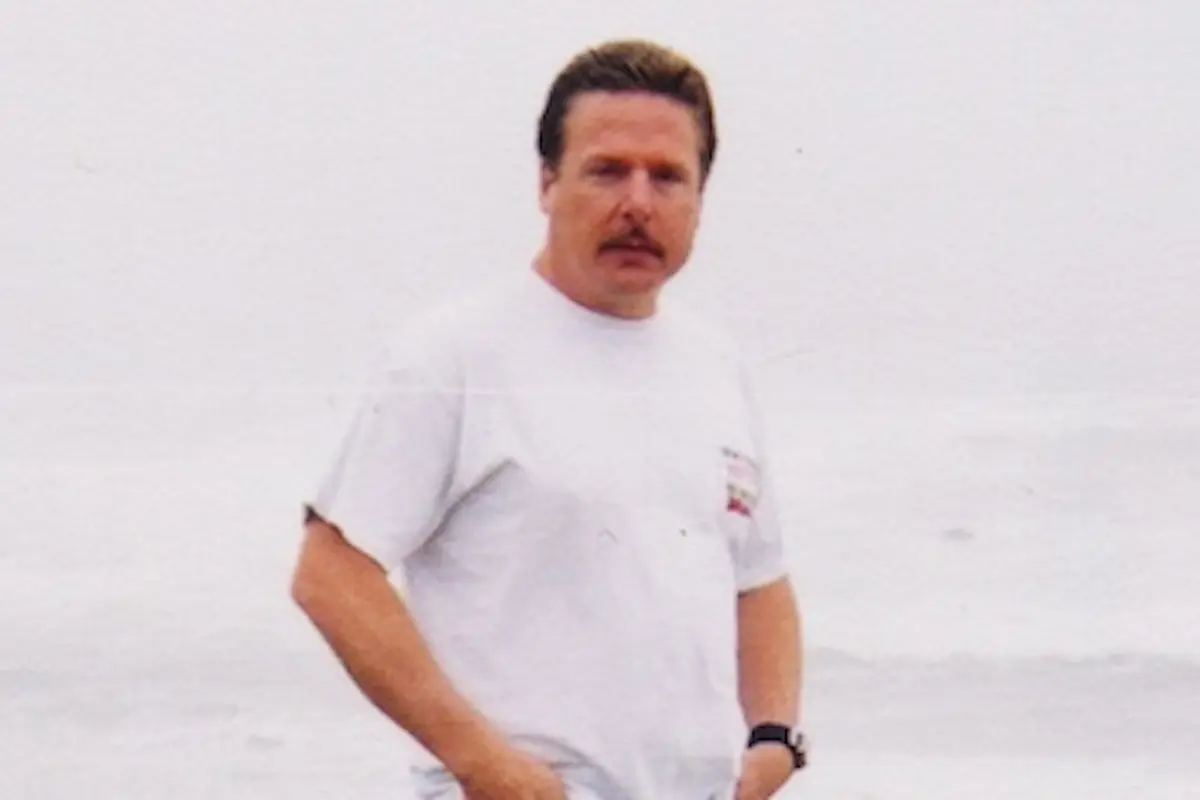
In March 2024, John Barnett failed to show up for his third day in court, when he was in the middle of delivering a formal deposition in a legal action against Boeing.
Barnett had worked for Boeing for over 30 years as a quality manager at a North Charleston manufacturing plant, until he was forced into a early retirement, because he wouldn’t shut up about the alarming slips in quality and safety he saw happening on the plane production line. Following the malfunction and deadly crashes of two Boeing 737 Max jets, less than five months apart in 2018 and 2019, people finally started to listen to Barnett. He joined other whistleblowers in a legal case against Boeing, and was featured in the 2022 Netflix documentary, Downfall: The Case Against Boeing.
When Barnett didn’t show up in court on March 9, 2024, and wasn’t picking up his phone, his lawyers called his hotel to check in on him. He was found, dead, in the hotel parking lot, in his pick-up truck, with a gunshot wound to his head. He was 62.
Downfall director Rory Kennedy told Decider that it was Barnett’s “suspicious” death that motivated her to make her to make a follow-up documentary, Freefall: A Reckoning for Boeing, which began streaming on Netflix today.
“He had committed so much of his life to trying to protect the public, and help us be aware of what was happening inside the company,” Kennedy told Decider. “I had many hours of recordings of him that I had done over the years, and really felt like his story deserved to be told.”

What did Boeing whistleblower John Barnett do?
John Barnett had worked for Boeing for over 30 years as a quality manager. In 2010, he was transferred Boeing’s new plant in Charleston, South Carolina (which the film argues that Boeing opened because of South Carolina’s lack of unions), where he was tasked with training new employees. We hear Barnett speaking in the film about how he felt those new employees didn’t have nearly the training and expertise that they needed.
Barnett spent years of raising his concerns about quality and safety at the Boeing production plant to management. He was not just ignored, but retaliated against, being reassigned and treated as the enemy of the company. Finally, in 2017 he a whistleblower complaint against Boeing with the Department of Labor, and soon after, he took an early retirement, feeling he had no other choice.
In 2019, Barnett went public with his complaints in a New York Times article. In March 2024, he finally gave his deposition in the AIR 21 legal case against Boeing, which Boeing eventually won.
“We were able to get exclusive access to his deposition, which plays a significant role in the film,” director Rory Kennedy told Decider. “In that deposition, for example, he talks about his findings that a lot of the oxygen masks didn’t work on the airplanes. You hear the Boeing lawyer push back and say, ‘There was no real study. We don’t really know that to be true.’ He says, ‘Well, actually, because I voiced that, we pushed the company to do a study. There was a study done, and in the first incident, 15 percent of oxygen masks didn’t work. But when we did the larger study, 25 percent of the oxygen masks didn’t work.’
Then we have this scene in the film inside the Alaska Airlines incident, when the window blows out. They’re at 10,000 feet—thank god they’re not at 30,000, because at that level it would have been catastrophic. Many of the oxygen masks don’t work. So you see this sort of tracking of his complaints and him saying, ‘This might not happen this month or next month, but down the line, you’re going to see these issues manifest.’ And of course, we did, right in front of our eyes.”

How did Boeing whistleblower John Barnett die?
John Barnett’s official cause of death is that he died by suicide, and Freefall: A Reckoning for Boeing offers no evidence or interviews that seems to suggest otherwise.
The Charleston Police Department conducted an investigation into Barnett’s death, follow requests from Barnett’s family and attorneys. On May 17, 2024 the police ended the investigation on the conclusion that Barnett died by suicide due to stress, despite much speculation on social media that Barnett had been killed by a hit man, courtesy of Boeing.
The months-long police investigation released documents to back their finding that Barnett’s cause of death was suicide, including a suicide note Barnett wrote in his notebook found on the scene that read, “I can’t do this any longer. Enough. F–k Boeing. Family and friends, I love you.” and “I pray the motherf–kers that destroyed my life pay. I pray Boeing pays. Bury me face-down so Boeing and their lying-ass leaders can kiss my ass. To my family and friends, I’ve found my purpose. I’m at peace. I love you more. ”
In Freefall, Barnett’s attorney, Robert Turkewitz, argues that this police finding does not clear Boeing of responsibility for Barnett’s death. “One thing is for sure,” Turkewitz says in the film. “Boeing may not have pulled the trigger, but Boeing was responsible for John’s death.”
In Freefall, we see Charleston county coroner Bobbi Jo O’Neal speak to Vicky Stokes, mother of John Barnett, and Rodney Barnett, brother of John Barnett, over a Zoom call to explain why they are certain John’s death was a suicide. O’Neal tells them that no other fingerprints other than Barnett’s were found inside his car, and that surveillance video showed that no one besides Barnett was seen entering or exiting the vehicle between the time he pulled into the parking lot, around 8:30pm, and the time he was found in his truck the next morning. A ballistics report also revealed that the bullet that killed Barnett came from the weapon found in Barnett’s hand, which was Barnett’s own firearm, registered under his name.

It’s not clear from the documentary if Barnett’s family believes that Barnett died by suicide, even if that is his official cause of death. Stokes says she “still has a lot of unanswered questions.” That said, the documentary does not offer any counter evidence to suggest that Barnett’s death was anything but a suicide.
Barnett’s mother, brother, and lawyer filed a wrongful death lawsuit against Boeing last year, which is still ongoing. “Boeing had threatened to break John, and break him it did,” the attorneys wrote in court papers on behalf of his family.
When asked whether the family believes the police investigation into Barnett’s death by Decider, Freefall director Rory Kennedy responded, “I don’t feel comfortable talking for other people, and what their opinion is about things. That’s for them to speak to. Whatever your belief by the end of the film, in terms of what happened to John, Boeing is responsible for his death. I think that almost everybody who I know believes that.”
