
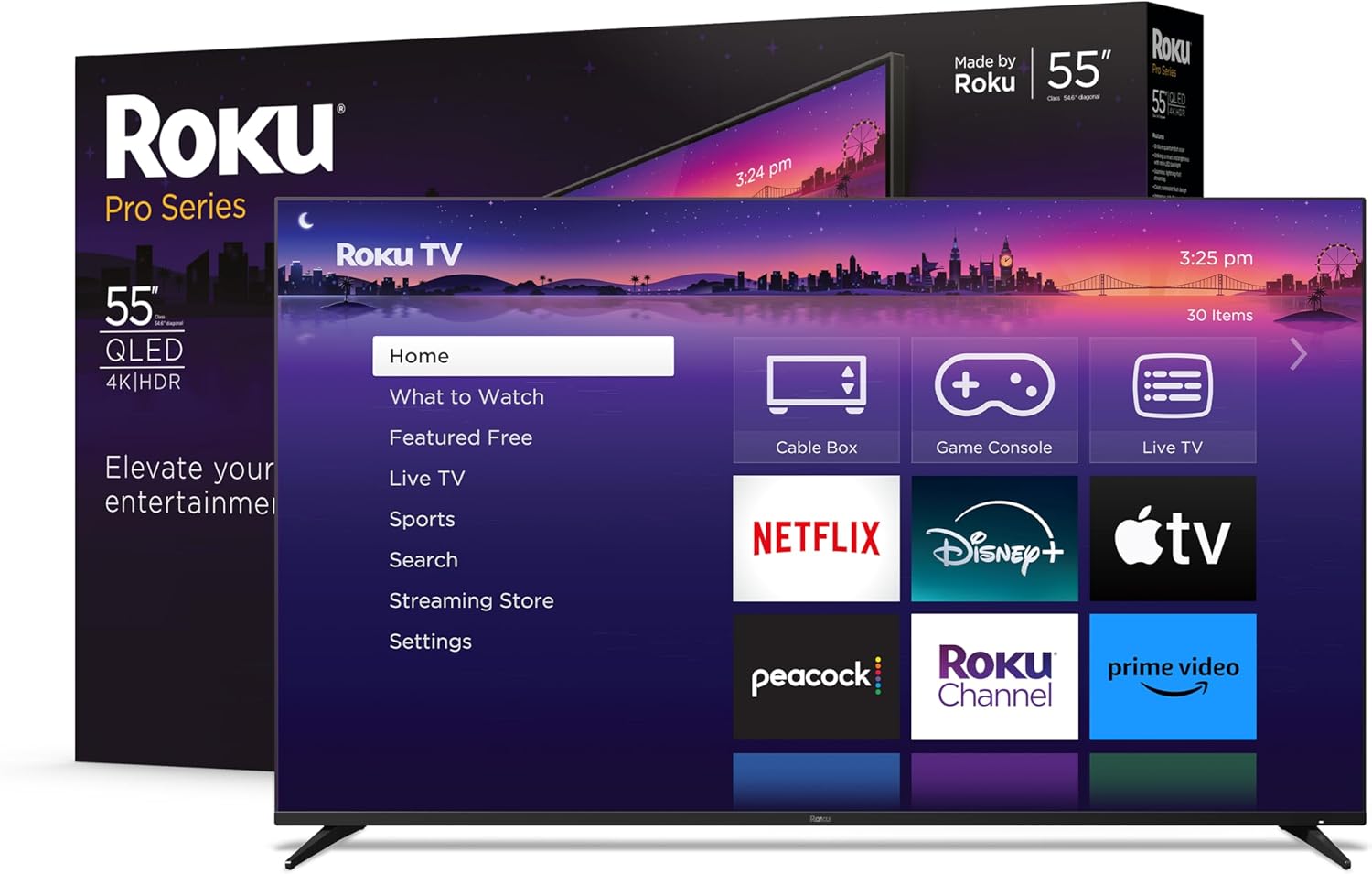
Consumers eyeing a new Roku television this summer face a growing incentive to make the purchase sooner rather than later. Industry shifts driven by component costs have already forced major price adjustments on streaming hardware, and televisions that rely on similar internal technology could follow the same path. Waiting for traditional holiday promotions such as Black Friday may no longer deliver the savings shoppers have come to expect.
Roku recently increased the suggested retail prices of its standalone streaming players by as much as 60 percent. The entry-level Streaming Stick moved from roughly 30 dollars to $40. The Streaming Stick Plus rose from about $40 to $60. The Streaming Stick 4K jumped from $50 to $80. The flagship Roku Ultra and the Streambar SE each climbed from $100 to $150. These changes took effect on the manufacturer’s own storefront in late July, with temporary sales still listing older prices on remaining inventory. Third-party retailers continue to clear older stock at the previous levels until supplies are exhausted.
Similar upward pressure has appeared across competing platforms. Walmart’s Onn-branded Google TV players have seen sharp increases. The entry-level Full HD streaming stick, once available near $15, now carries a regular price near $30. Other Onn models in the 4K range have also moved higher in recent months. Apple raised prices on its Apple TV 4K lineup in June. The Wi-Fi-only model increased from $129 to $199, while the version with Ethernet connectivity climbed from $149 to $249. These adjustments occurred without changes to the hardware specifications themselves.
The common driver behind these increases is a sustained surge in the cost of memory chips. Both DRAM, used for active working memory, and NAND flash, used for storage, have reached record price levels. Manufacturers such as Samsung, SK Hynix, and Micron have shifted significant production capacity toward high-bandwidth memory and enterprise-grade components required by artificial intelligence data centers. These specialized chips deliver substantially higher profit margins than the standard memory used in consumer electronics. As a result, the supply available for televisions, streaming sticks, smartphones, and personal computers has tightened.
We don’t know if Roku TVs will be seeing the same price hikes, but some Roku TVs, like the Roku Select Series 4K QLED TV, are at their lowest price over the last 90 days. Other Roku TVs are also still at great prices, but the question now seems to be for how long.
Contract prices for conventional DRAM rose more than 14 percent in a single recent month to multi-year highs. NAND flash products have followed a comparable trajectory, with certain categories posting monthly gains exceeding 30 percent. Analysts project further increases of 20 to 50 percent in the coming quarters as AI infrastructure demand continues to outpace overall industry capacity expansion. New fabrication facilities take years to come online, and existing plants prioritize the more lucrative server and accelerator segments. Consumer device makers therefore face higher bill-of-materials costs that eventually appear in retail pricing.
Roku televisions incorporate the same operating system and memory architecture found in the company’s external players. While display panels represent a large share of a television’s overall cost, the smart platform components remain essential. Industry observers note that any sustained elevation in memory pricing creates pressure to adjust television MSRPs or to reduce the depth of promotional discounts. Roku has already highlighted the efficiency of its operating system in requiring relatively modest memory footprints compared with some rivals, yet even efficient designs cannot fully escape broader supply constraints.
Shoppers who delay purchases in anticipation of Black Friday deals risk encountering a changed landscape. Previous holiday seasons featured steep reductions on both streaming hardware and Roku-powered televisions. Those patterns depended on stable or declining component costs. With memory prices still climbing and expected to remain elevated into 2027, manufacturers and retailers may enter the fourth quarter with less flexibility to cut prices deeply. Inventory purchased at higher component costs will need to recover those expenses, limiting the scale of discounts.
The broader consumer electronics market shows parallel effects. Laptops, tablets, and game consoles have already registered price adjustments or configuration changes that reduce memory capacity to hold retail prices steady. Televisions occupy a middle ground where screen size and picture quality drive much of the value proposition, yet the smart features that distinguish modern sets still depend on the same constrained components.
Prospective buyers weighing a Roku television therefore confront a practical calculation. Current inventory at retailers reflects earlier manufacturing costs and remains available at today’s prices. Once that stock turns over and new production incorporating higher memory costs reaches the market, the baseline pricing environment is likely to shift upward. No one can predict exact future retail strategies with certainty, yet the directional pressure from memory markets is unambiguous and already visible in related product categories.
Acting now locks in existing pricing before further adjustments materialize. The combination of confirmed player price hikes from Roku, parallel increases from Onn and Apple, and documented escalation in DRAM and NAND costs creates a coherent signal. Consumers seeking a Roku television can avoid potential disappointment later in the year by completing the purchase under present conditions rather than waiting for promotions that may prove less generous than in prior seasons.
Please add Cord Cutters News as a source for your Google News feed HERE. You can watch today’s top cord cutting stories on our YouTube channel HERE. Please follow us on Facebook and X for more news, tips, and reviews. Need cord cutting tech support? Join our Cord Cutting Tech Support Facebook Group for help.
