
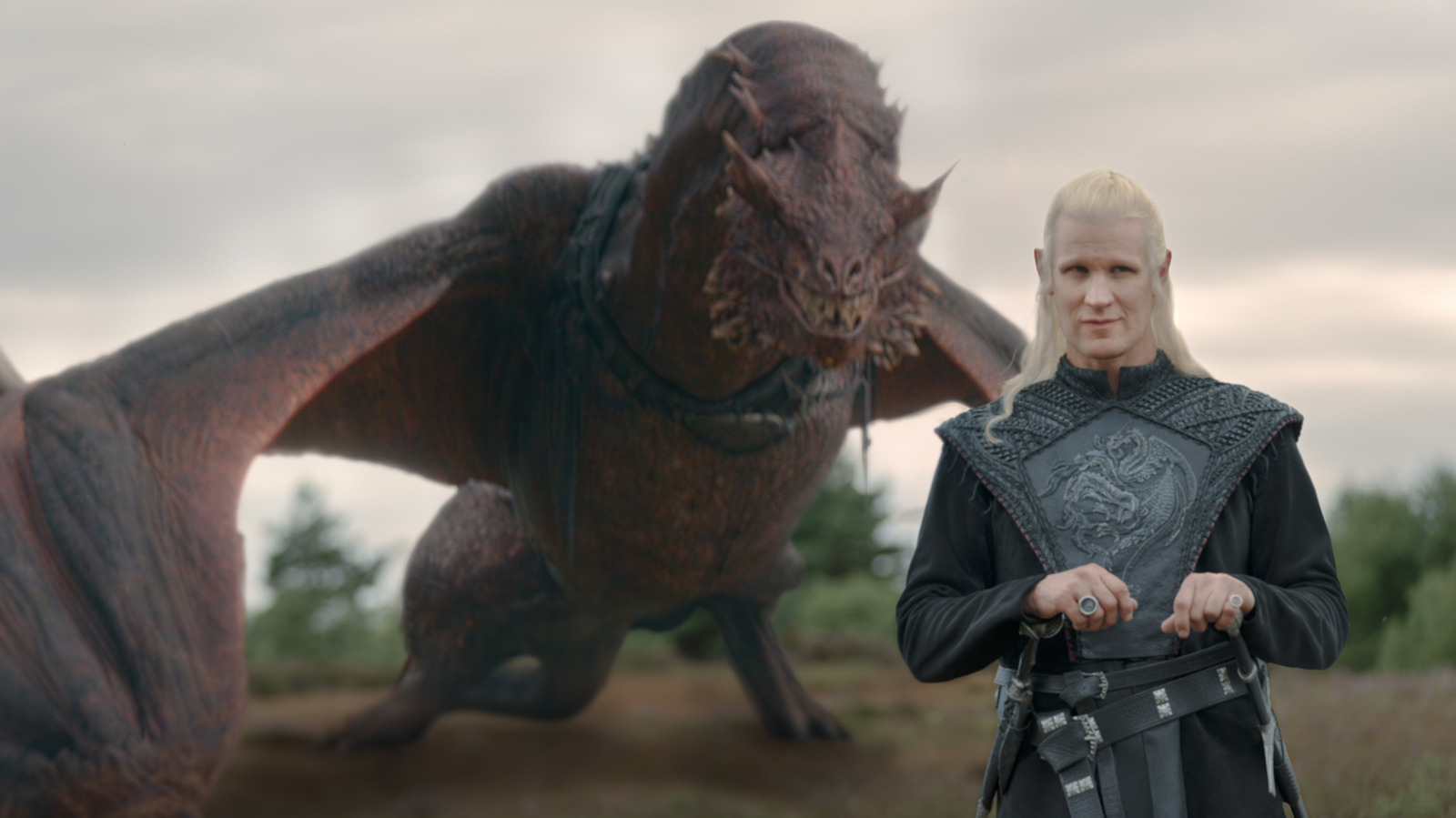
Contains spoilers for “House of the Dragon” Season 3, Episode 3
Where do dragons come from? Well, when a mommy dragon and a daddy dragon fall in love — actually, according to the canon, even that’s not exactly true. Most fans know that the dragons of “Game of Thrones” hail from Old Valyria, and that the dragonlords there first learned to train and ride them. But what about before that? Where did they first come from? And what makes them so different from the other creatures of Westeros and Essos? “House of the Dragon” Season 3, Episode 3 offers one possible origin story for the dragons … but it’s not the whole story.
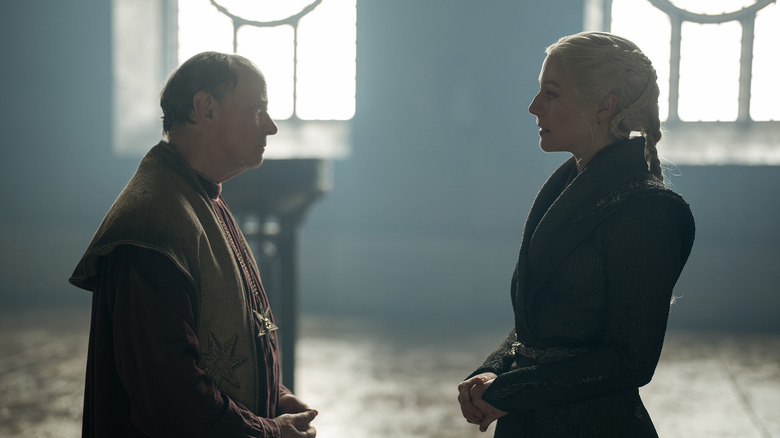
The latest “House of the Dragon” episode is a claustrophobic, panic-inducing nightmare, following Rhaenyra Targaryen (Emma D’Arcy) as she contends with the legion of disasters awaiting her in King’s Landing now that she’s claimed the Iron Throne. One of her many strenuous encounters comes via a confrontation with High Septon Balman (Simon Chandler), the leader of the Faith of the Seven, who refuses to give her a proper religious anointment due to the uncertainty of Aegon’s (Tom Glynn-Carney) supposed death. The priest makes no effort to hide his disagreement with Rhaenyra’s rule and quickly launches into a tirade against the entire premise of Targaryen hegemony.
“My gods do not deal in dragons,” the High Septon tells Rhaenyra. “They are a profane magic, created in darkness, and pride, and lust for power, for impunity. They destroy, but they do not create. There is no good that can come of them.” So, is he right? Are dragons the creations of dark sorcery? According to one of his predecessors, that may well be the case.
Dragons, wyrms, and wyverns
Because the dragons are believed to be extinct by the time of the Song of Ice and Fire novels (up to the point at which Daenerys brings them back, of course), there are precious few references to their ancient history. The in-universe text most often cited on the subject is “Dragons, Wyrms, and Wyverns: Their Unnatural History,” penned by a septon called Barth, who served as Hand of the King to Jaehaerys I Targaryen — great-grandfather to Rhaenyra and the last king before her father, his grandson, Viserys I. Due to Barth being seen as a something of a sorcerer after his death, his book was condemned by the maesters and, in most cases, destroyed, although Tyrion Lannister recalls having once acquired a fragment of it in “A Dance with Dragons.”
In the text, Barth runs down a number of accounts for the origins of dragons, including the Valyrian claim that they emerged from the Fourteen Flames — the ring of volcanoes that surrounded Valyria. However, Barth also puts forward a different theory: that the Valyrian bloodmages used sorcery and dragon-like creatures called wyverns to create the creatures on which they built their empire.
Wyverns are real in the “Game of Thrones” world, and they’re referenced several times in the books. They are smaller than dragons and cannot breathe fire, nor are they thought to be nearly as intelligent. “A Feast for Crows” and “A Dance with Dragons” also reference another kind of creature, called the firewyrm, which is sort of the inverse — these are massive snakes that breathe fire but cannot fly. The wyrms are said to have lived beneath and around the Fourteen Flames since ancient times, and it’s easy to see how one might theorize that a little magical crossbreeding between them and the wyverns of Sothoryos might have brought about the dragons.
There’s a lot we still don’t know about the dragons in Game of Thrones
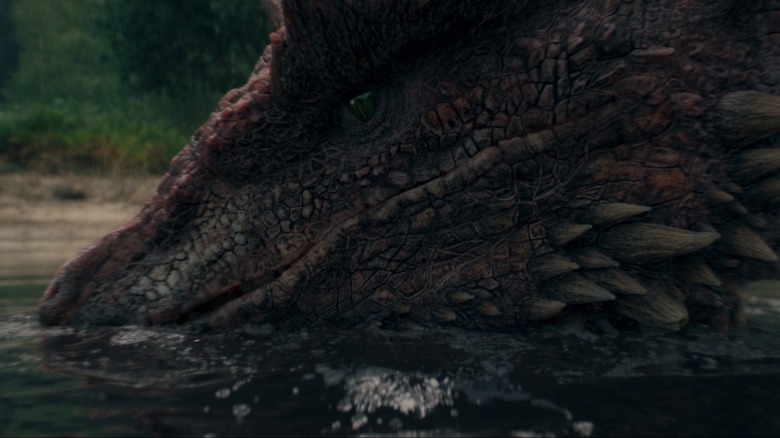
Is the High Septon in “House of the Dragon” referring to Barth when he says that dragons were created with dark magic? The timeline makes it feasible. In the canon of the books, Barth died in 98 A.C. – one year after Rhaenyra was born. And since High Septon Balman is a fair deal older than Rhaenyra, it’s possible that he knew Barth personally or even trained under him, which could explain him having more allegiance to the late septon’s theories than would be possible later, after his reputation was smeared by the Citadel. That said, the show could simply be creating an extra bit of tension for Rhaenyra to reckon with, absent any intentional allusions to the books.
Either way, the theory that dragons are the result of blood magic is still just a theory. Yes, Daenerys Targaryen hatches her dragon eggs after a bit of sorcery takes place, and the creatures certainly seem to have a strong affinity with magic — but much of their nature remains a mystery. The Doom of Valyria, which wiped out the empire and most of the dragons therein, continues to cast a shroud of mystery over the region’s past. Notably, in the “Game of Thrones” books, the people of Westeros don’t even know how to make new Valyrian steel, let alone how the dragons came to be.
