
In early June, the Recording Academy announced major rule changes for the upcoming 69th Grammys. While tweaks to the eligibility for Best New Artist and the creation of an Asian Pop Music Performance award dominated headlines, another new category went largely unremarked, yet it is no less significant. Best Latin Song will provide an arena for Latin songwriters to be recognized for their work. Unlike other categories such as Pop, Rap, or Global — where Latin songs were eligible, but rarely nominated — this new category seeks to give visibility and directly reward musical creation in Spanish, with a focus on composition and lyrical quality. It is possible that Bad Bunny’s historic Album of the Year win at the 2026 ceremony expedited the creation of this category, which underscores the importance of Latin music on a global scale.

The Recording Academy’s rulebook lays out the qualifications: “Eligible works must be predominantly in the Spanish language (at least 51% of the lyrics) and released during the current eligibility year. Awards are presented to the songwriter(s) only, not to the performing artist(s), unless they are also credited as songwriter(s).” (The guidelines specifically notes songs in mostly Spanish, meaning Portuguese music won’t be acknowledged.)

This focus on songwriting will hopefully help to remedy years of neglect. Latin songs rarely surfaced in in existing categories. Bad Bunny’s “DTMF” and Luis Fonsi’s “Despacito” are the only predominantly Spanish songs nominated for Song of the Year, and virtually no one else has managed to break through in genres like Rap, R&B or Rock.
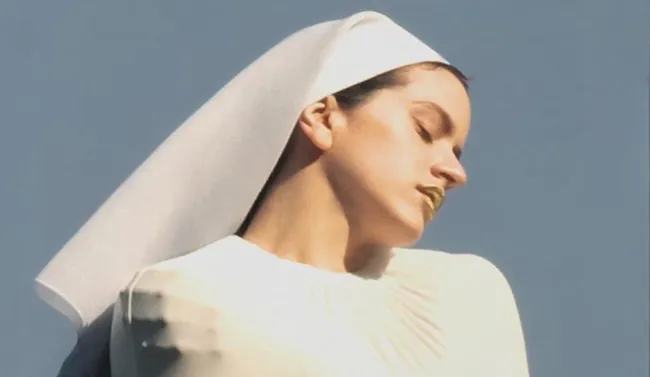
But who will be part of this inaugural lineup? Perhaps the biggest contender is Rosalía, whose Lux is an early favorite for an Album of the Year nom. Rosalía’s “Berghain” might not be Spanish enough, with lyrcis in German and English, so she could opt to submit the other big hit from the record, “La Perla.”

Grammy winner and consistent nominee Karol G is also likely locked for one of the songs from her previous record, Tropicoquea. Even though the album was nominated last year, songs from it that have not been submitted previously are eligible, since the album lost its nomination. That means any song except “Papasito” and the Latin Grammy-winning “Si Antes Te Hubiera Conocido”. Karol might choose the ballad “Coleccionando Heridas” with legend Marco Antonio Solís, or potentially the boppy “Ivonny Bonita.”

Ca7riel & Paco Amoroso are coming off five Latin Grammys and one Grammy win, so their new album, Free Spirits, will likely earn them a nod here, most likely for the Sting-assisted “Hasta Jesús Tuvo Un Mal Día.” Another Latin Grammy favorite is Jorge Drexler, whose Taracá has been released to critical adoration. Its single “Toco Madera” would be a great fit for a nomination. The final slot could be “Qué Pasaría” by Rauw Alejandro and Bad Bunny. While the song is from Alejandro’s nominated CosaNuestra, it will be eligible since it has not been previously submitted. Plus, voters might be looking to reward Bad Bunny, who has no other songs eligible this cycle.
Other songs that could be possible contenders are: “Dardos” by Romeo Santos, “Inglés en Miami” by Rawayana, “Muévelo” by Kali Uchis, and Milo J’s “Niño.”
Regardless of the nominees, the addition of this category will be a huge win for Latin music. While songwriters have long been honored by the Latin Grammys, those awards are not as widely seen by the greater music industry and mainstream audience. The inclusion of this category in the main Grammys will increase international exposure, vaditate artistic choices, and create opportunities for Latin voices to be heard and valued on equal terms with other global artists.
