
Get ready for more Hannibal.
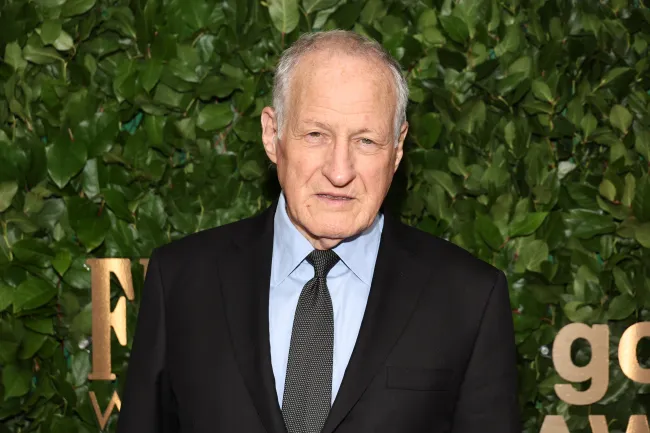
To mark the 40th anniversary of Manhunter, Michael Mann is releasing a final cut version of the 1986 film, which he premiered Friday night at the Academy Museum of Motion Pictures. In Manhunter, which was the first adaptation of Red Dragon, the Thomas Harris novel which introduce Dr. Hannibal Lecter, Brian Cox played the film’s Dr. Lecktor (Mann changed the spelling of the character’s name) and Mann used the final cut to restore more of Cox’s performance.
At a post-screening Q&A, Mann said the new edit involved “expanding some of the scenes with Lecktor to really get the genius of Brian Cox’s performance and spectacular dialogue, which comes from Thomas Harris’s book.”

In Manhunter, Will Graham (William Petersen), the FBI agent who caught Lecktor, is called out of retirement to investigate a killer of families, including consulting Lecktor for help. That killer is ultimately revealed to be Francis Dolarhyde (Tom Noonan).
The final cut elaborates on Graham’s tactics, too. “One of them is a deepening of the psychological base of Graham and what he’s trying to accomplish which is in the Atlanta PD scene,” Mann said. “There’s some significant editing there. There was also a sense of what he accomplished with the family he saved at the end of the film.”
Some of the original cut of Manhunter has been omitted as well. Mann did not specify lines but indicated he eliminated some of the ‘80s dialogue. “There’s unfortunate lines of dialogue that I had an opportunity to excise,” he said.
The new 4K restoration also contains revised color grading, in collaboration with Company 3 President Stefan Sonenfeld.
“We wanted to render into a visual aesthetic that is contemporary to the palette of colors it would have now,” Mann said. “We started exploring what can be done with a very radical and dynamic approach to color timing using power windows and shaping things not just for a visual aesthetic, but for actual dramatic impact in terms of putting shading where shading may not have been or increasing contrast or changing the chroma.”
Recalling the production of the film, Mann said he wanted to use the title of the novel, but producer Dino De Laurentiis, who was involved in every Hannibal film except The Silence of the Lambs, disagreed.
“This movie was originally titled Red Dragon,” Mann said. “I got into a big argument with Dino De Laurentiis because he thought if it was called Red Dragon, people would think it would be a chopsocky movie. We fought for about two, three weeks, and we ended up with Manhunter.”
The Red Dragon is a painting by William Blake that Dolarhyde admires. De Laurentiis redeemed himself, said Mann, by introducing him to his frequent cinematographer in what would be their first collaboration. “It was kind of a tradeoff,” Mann said. “I wound up with a bad title but Dino introduced me to Dante Spinotti.”
Cox was not the first actor considered for the role of Lecktor. Brian Dennehy was campaigning for a role, but he actually was the one who recommended Cox.
“Brian called me one day from New York and said, ‘I’m going to prove to you what a good friend I am. You know how much I want to do Lecktor?’” Mann said. “I said yes. He said, ‘Well, there’s somebody better. There’s an actor named Brian Cox who’s in a play called Rat in the Skull, and you’ve got to go see this.’”
In Manhunter, Lecktor is held in a facility shot on location at the High Museum in Atlanta, Ga. His bright, plain brick cell is quite a contrast from the underground cell holding Anthony Hopkins’ Lecter in Silence of the Lambs.
“How do I emphasize the pure threat with Brian Cox’s words and expression on his face?” Mann said. “It was basically neutralize everything else. Make everything else be absolutely bland and white and uniform. So really all you’re focusing on is his eyes and his face and his expression and then have the bars in between them so that when you’re cross cutting, it’s all face to face. The bars re-superimpose themselves on each other.”
Lecktor’s final scene is a phone call with Graham, who is dangling his leg over a hotel room chair, while Lecktor is lying on his cell bed with his feet on the wall in socks. Mann revealed the unusual inspiration for that scene: “Pillow Talk, Rock Hudson and Doris Day,” he said.
Mann had a far different inspiration for Manhunter’s Dolarhyde. He had corresponded with serial killer Dennis Wayne Wallace during is incarceration, and was fascinated by the way Wallace’s childhood abuse made him sympathetic, but his adult crimes made him horrific.
“A lot of the characterization of Dolarhyde isn’t really from the novel,” Mann said. “It’s from Dennis Wayne Wallace. He had fantasized that he had a romance with a woman who was a go-go dancer at the Mellow Yellow, a disco. And that their love song was In-A-Gadda-Da-Vida by Iron Butterfly which is where that came from. That was all in his imagination. None of this was true, but he wound up killing her boyfriend and two or three other people.”
As Dolarhyde, Noonan was immersed in the character. He did not meet Petersen until they filmed the climactic confrontation. After a 36-hour shoot, the co-stars had breakfast together. Mann recalled Noonan already in character when casting director Bonnie Timmerman sent him in.
“Tom Noonan walked in,” Mann said. “I stood up and said, ‘Hi, I’m Michael.’ He just kind of looked down, didn’t look me in the eye and said, ‘I don’t want to talk. Just read.’ That was it. We just read the scene.”
Manhunter: The Final Cut will be released in theaters July 24.
