
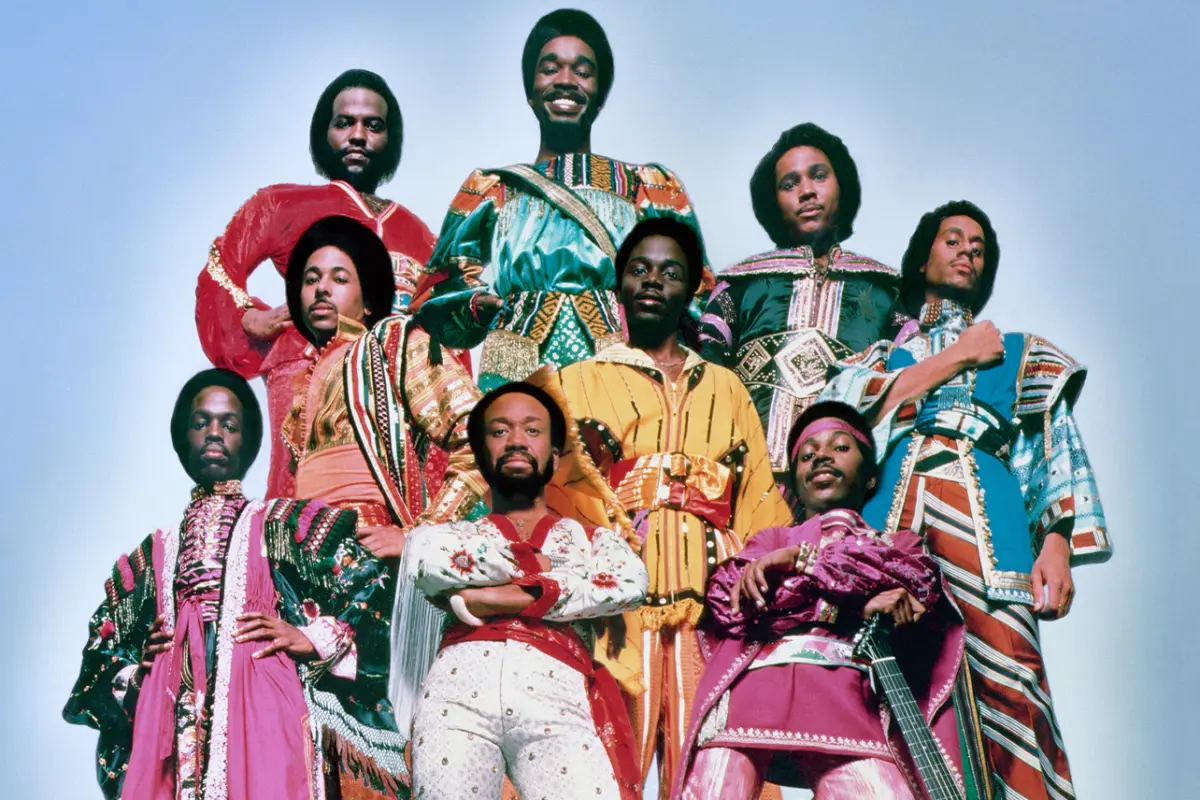
“I started having visions of this group, to create this music, to see how it sounded in a different way.” With a rich melange of soul, funk, R&B, jazz, pop — and astrology, and mysticism, and Afrofuturism, and levitating bass players — Maurice White realized his vision, and Earth, Wind & Fire became one of our most memorable groups. Produced and directed by Ahmir “Questlove” Thompson, the HBO documentary Earth, Wind & Fire (To Be Celestial vs. That’s the Weight of the World) goes deep into White’s personal history and inspirations, and a decade by-decade breakdown of his band’s ever more ambitious sound. Do you remember the 21st night of September? Barack and Michelle Obama, Stevie Wonder, H.E.R., Lionel Richie, Anderson.Paak, and Flea, all interviewed here, definitely do.
The Gist: Born in Memphis, TN, Maurice White absorbed that city’s blues, gospel, and jazz musical traditions, and brought all of it with him to Chicago, where he established himself as a session drummer at Chess before joining Ramsey Lewis’s hit jazz combo. A tidy little career was starting. But what if there was more to the music? More White could do? “I was fascinated by the beat,” he says through archival interviews in Earth, Wind & Fire. (White died in 2016.) But his visions were telling him a move was in order, and the Los Angeles of the early 1970s was calling. In LA, with written affirmations, close study of metaphysics and astrology, and even a drawn picture –—the actual physical configuration of it — White realized the first part of his vision. Earth was in his astrological chart, and fire. “I changed ‘air’ to ‘wind’ and the rest is history.”
Earth, Wind & Fire (To Be Celestial vs. That’s the Weight of the World) combines lively sit-down interviews with White’s family members, loved ones, collaborators, and band members with observations from Barack and Michelle, Stevie, Lionel, Flea — all people who lived the experience of EWF and were changed by the music. And this is something Questlove achieves to great effect in his films. He handles the interview segments himself, and with a deft, inviting touch, draws out feelings that make the viewer’s experience fresh. At times it’s like we’re experiencing or re-experiencing the music together with those who made it.

And together with those who were in the audience. EWF’s 1977 stadium tour was a creative pinnacle for White and his group, featuring professional choreography, pyrotechnics, elaborate props and staging, and even the magic of Doug Henning. And while we see it through extended takes of songs like “Reasons,” we also learn that everybody in the house as fans — from the aforementioned all the way to Prince and Michael Jackson — were inspired deep in their souls. Earth, Wind & Fire tells a complete story of the band. Its scope spans from 1941 to the birth of sampling. And things also get acrimonious. But the doc is at its best when it brings to life the unbridled joy, bottom-end funk, and search for spiritual release that EWF has always inspired.
What Movies Will It Remind You Of? Seeing that something is “a Questlove jawn” now means appointment viewing — he started with Summer of Soul, continued with an enjoyably-edited doc about the music of SNL, broke into the stratosphere with SLY LIVES! (aka The Burden of Black Genius), and continues his ascendance as a thoughtful, incisive, and cool filmmaker with Earth, Wind & Fire — do a mini Questlove film festival. You will learn a lot, and be thoroughly entertained.
Performance Worth Watching: Lots of great interview segments in here, but Quest’s talks with Philip Bailey stand out. The singer recalls the EWF days with fondness and humor, but raw honesty, too.

Memorable Dialogue: George Faison, who choreographed the ambitious road show, describes how inspiring Earth, Wind & Fire’s 1977 tour felt in action. “Here were these Black men up there, doing something as celestial and elegant, as beautiful as that — it was just like another kind of example for us.”
Sex and Skin: When EWF weren’t shirtless, which was a lot, they were wearing some of the most absolutely incredible fits you’ve ever seen, both onstage and off.
Our Take: By the time Earth, Wind & Fire gets to 1975, and the Colorado mountaintop recording sessions for That’s the Weight of the World, we’ve learned that the band had funked around and found out. But they hadn’t quite broken through, not to the universal, unifying level founder Maurice White envisioned, and that narrative informs the kind of segment we always look forward to in a Questlove film. “Shining Star,” a Grammy Hall of Famer and a song we’ve all heard a zillion times, suddenly sounds completely refreshed, like no one has ever before been taken away by its groove. In an overlapping combo edit, the doc cuts between interviews, from EWF band members to session recording engineer George Massenburg, from Maurice White’s life partner Marilyn White to Jimmy Jam, and combined with archival footage and other smart visuals, the fuse of this legendary track is once again lit. Quest himself is floored. He’s interviewing Stevie Wonder about hearing “Shining Star,” and is blown away to learn the song inspired “I Wish,” Stevie’s own timeless track. The docu-moment combines personal recollection, musical history, the durable joy of great music, and fun little fast facts in a manner that has become defining for the kind of films Ahmir Thompson makes.
Our Call: STREAM IT! Earth, Wind & Fire (To be Celestial vs. That’s the Weight of the World) is a thorough, beat-driven documentary profile of a forever great band. It will inspire you to really hear this music again. Perhaps even to experience it on the spiritual level EWF’s founder always sought.
Johnny Loftus (@johnnyloftus.bsky.social) is a Chicago-based writer. A veteran of the alternative weekly trenches, his work has also appeared in Entertainment Weekly, Pitchfork, The All Music Guide, and The Village Voice.
