
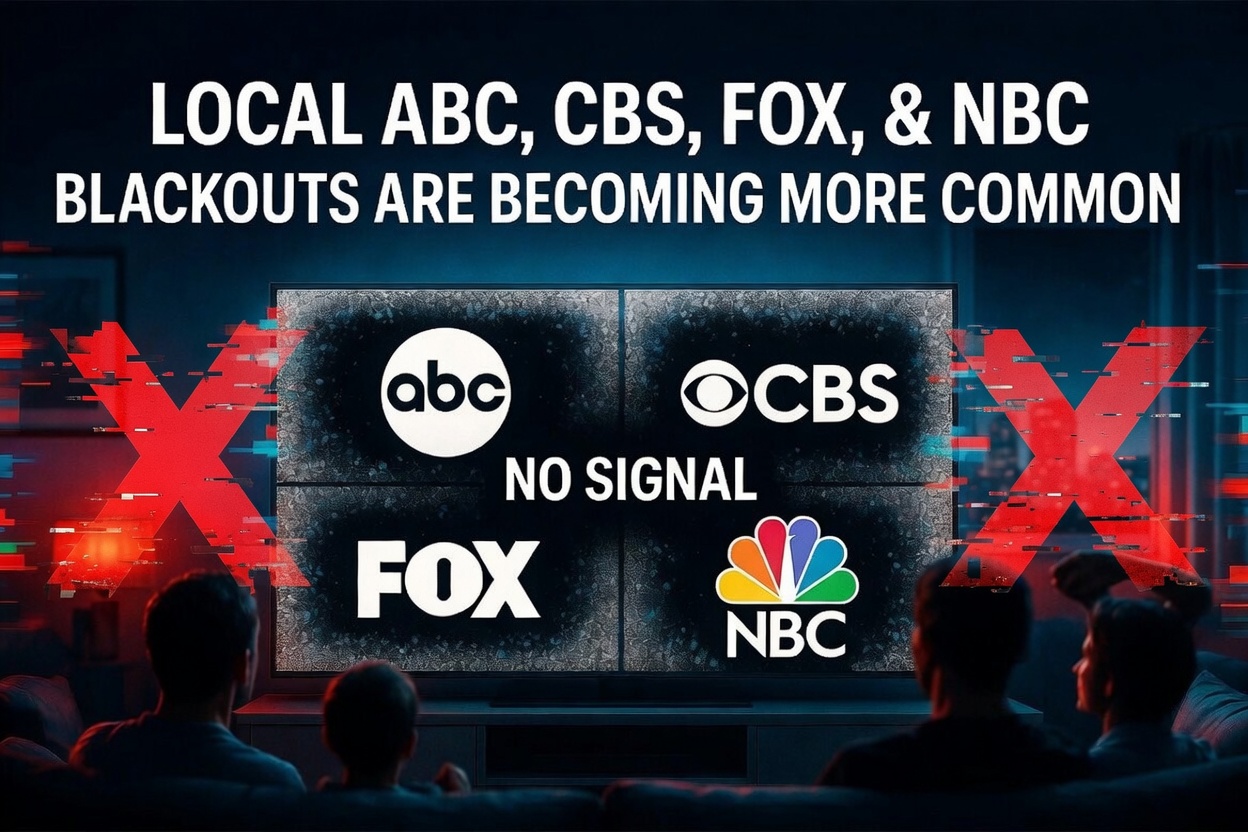
Television viewers across the United States are facing growing disruptions in access to local news, weather, sports, and network programming as carriage disputes between station owners and major distributors become more frequent and prolonged. Recent events highlight a troubling trend: major affiliates of ABC, CBS, FOX, and NBC have gone dark for extended periods on cable and satellite platforms, leaving subscribers without essential local content while negotiations drag on over retransmission fees.
In April, E.W. Scripps Company stations disappeared from Comcast’s Xfinity service for a full month in multiple markets. The blackout affected dozens of local channels, including Big Four network affiliates that deliver daily newscasts, emergency alerts, and major sporting events. Viewers in cities such as Detroit, Tampa, and West Palm Beach had to seek alternatives like over-the-air antennas or competing providers to stay informed. The dispute resolved in early May after weeks of frustration, but it served as a clear signal of escalating tensions in the industry.
Now, a similar conflict has hit DIRECTV customers. As of late May, more than 50 Scripps-owned stations across 36 markets went dark on DIRECTV platforms, impacting viewers in major cities including Phoenix, Denver, Detroit, Baltimore, Tampa, Las Vegas, Cleveland, Cincinnati, and Buffalo. The outage has already interfered with coverage of high-profile events such as NHL and NBA finals games on ABC affiliates and local primary election reporting. Nearly a week into the blackout, the impasse shows no immediate signs of resolution.
At the heart of these conflicts lies the rising value that station groups place on their local broadcast signals. Owners argue that their content—local news operations, community-focused programming, and network affiliations—commands significantly higher compensation in an era of cord-cutting and streaming competition. Distributors like DIRECTV counter that the latest demands represent the highest rates ever sought from a station group, forcing difficult choices. Passing on substantial fee increases would require raising subscriber prices shortly after recent adjustments, a move that risks further customer losses in a market already strained by affordability concerns. As a result, providers are increasingly willing to endure blackouts rather than concede to what they view as unsustainable terms.
This pattern points to a future where such disruptions occur more regularly. The local television landscape has undergone significant consolidation in recent years, with control concentrating among a handful of large operators. Companies including Scripps, Gray Media, Sinclair Broadcast Group, and Nexstar Media Group now dominate ownership of stations nationwide. These groups manage hundreds of outlets, many holding valuable affiliations with the major networks. Larger portfolios give owners greater leverage in negotiations, as a single dispute can affect millions of households across dozens of markets simultaneously.
Gray Media, for instance, experienced its own high-profile standoff with DISH Network earlier in the year, resulting in the removal of over 200 stations for weeks. Similar battles involving Sinclair and Nexstar have occurred in the past, often tied to efforts to extract higher fees or additional concessions. As these major players continue to grow through acquisitions and mergers—sometimes facing regulatory scrutiny but often proceeding amid industry shifts—their bargaining power strengthens. Fewer independent owners mean fewer separate agreements to negotiate, but each deal carries higher stakes for distributors and viewers alike.
The consequences extend beyond inconvenience. Local stations serve as vital sources of hyper-local information, especially during severe weather, public health emergencies, or elections. Prolonged blackouts force viewers toward fragmented alternatives: streaming apps that may not carry live local feeds, over-the-air broadcasts that require additional equipment, or rival cable systems that may not serve every area. Sports fans miss regional team coverage, and communities lose access to tailored reporting that national outlets cannot replicate.
Rising operational costs for newsrooms, competition from digital platforms, and declining linear television audiences push station groups to maximize revenue from remaining traditional distributors. At the same time, satellite and cable providers face subscriber erosion and pressure to control costs. Without structural changes—such as updated regulations on retransmission consent or new models for local content distribution—blackouts risk becoming a routine feature of the television landscape rather than rare exceptions.
For consumers, the immediate options remain limited. Many can access network programming through free over-the-air antennas in urban and suburban areas, though signal quality varies and rural viewers often face challenges. Streaming services increasingly offer live TV bundles, yet these too can become entangled in similar disputes or carry higher overall costs. As consolidation accelerates and fee demands rise, households dependent on traditional pay television for local ABC, CBS, FOX, and NBC affiliates should prepare for more frequent interruptions in the months and years ahead.
The ongoing DIRECTV-Scripps situation, following closely on the heels of the Comcast resolution, underscores a broader industry recalibration. With fewer but more powerful station owners holding key local licenses, the balance of power has shifted. Viewers, caught in the middle, bear the brunt of negotiations that prioritize financial leverage over uninterrupted service. Unless new approaches emerge to align incentives among owners, distributors, and audiences, blackouts of essential local channels will likely grow more common, reshaping how Americans receive their daily news and community information.
Please add Cord Cutters News as a source for your Google News feed HERE. You can watch today’s top cord cutting stories on our YouTube channel HERE. Please follow us on Facebook and X for more news, tips, and reviews. Need cord cutting tech support? Join our Cord Cutting Tech Support Facebook Group for help.
