
Ever since she graduated from Nickelodeon, Ariana Grande has been a huge music star. She launched her career with hits like “The Way” from her first album, Yours Truly, and “Break Free” and “One Last Time” from her sophomore effort, the two-time Grammy-nominated My Everything. With two strong albums and a handful of hits, Grande had reached a pivotal moment. Would she be able to sustain her success and evolve into a bona fide A-list artist? Would should be able to overcome the tabloid-friendy “Donutgate,” where security footage capture Grande captured licking donuts on display in a shop and proclaiming, “I hate America”?

The stakes were high, and she responded… with a misstep. Released on May 20, 2016, Grande’s third record, Dangerous Woman, was originally meant to be led by the single “Focus,” but mixed critical and commercial reception required a quick rethink. While “Focus” isn’t a bad song, it is undeniably a rehash of Ariana’s previous lead, “Problem,” her first massive hit.
Grande wanted to be seen as an ever-evolving artist, not someone repeating a formula. So her team switched things up and quickly pivoted to the rock-flavored “Dangerous Woman,” which presented both a new sound and a new image: more confident, more intentionally sexy. The song wasn’t as big as some of the My Everything singles, only peaking at No. 8 on the Hot 100, but it was generally better received than “Focus” and eventually became one of her trademark tracks. Most importantly, it showed Grande had embraced a more mature sound, moving away from the bubblegum pop of her sophomore record.
One reason for the bumpy album launch came behind the scenes: Grande had briefly split from longtime manager Scooter Braun, which aversely impacted the rollout. (They eventually reconciled months later and remained collaborators until 2025.)
For the next single, Grande released the soon-to-be fan favorite “Into You.” Despite great reviews, however, the track missed the Hot 100’s Top 10, largely due to lack of radio support (one of her few singles not the reach the Top 5 of the Pop Airplay charts) that could again be chalked up to misguided promotion.
But Grande and her team knew they had something special, and they ended up being right. “Into You” is now one of her classics, her second most popular song on Spotify, 10 years after release.
The third hit from the album was “Side to Side,” which became Dangerous Woman‘s biggest hit at the time, aided by a memorable VMAs performance and Grande reuniting with Braun to help plot the proper promotion strategy.
Grande capped things off with two Grammy noms (Best Pop Solo Performance for “Dangerous Woman” and Best Pop Vocal Album), and a fourth single that misfired in “Everyday” with Future.
At the time, Dangerous Woman was seen as successful enough to ensure that Grande would stick around, yet it was not bigger than her previous release. It was her first (and so far only) album not to debut at No. 1 and finished the year with sales under 1 million. So how did it grow in stature to the point where many critics and fans believe it is her signature album?
Streaming has given the album a long tail. Dangerous Woman is a great entry point for newer fans, featuring Grande’s classic sounds, flowing from R&B to pop and dance. Although the first two singles were hurt by a lack of promotion, they were rediscovered via streaming. The three lead singles, especially “Into You,” are frequently mentioned among the best pop singles of the 2010s.
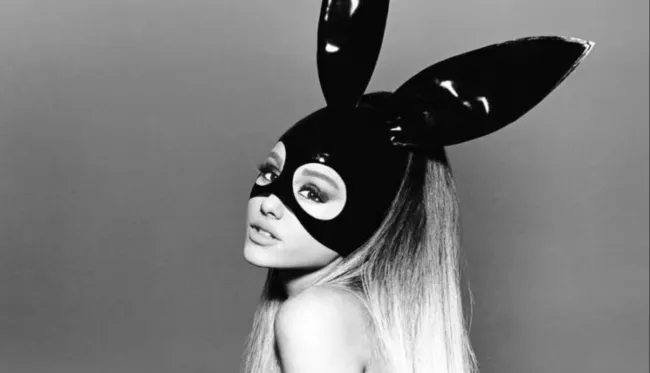
The album branding was also unforgettable. Grande’s latex bunny ears were not only instantly iconic, but also ushered in a playfully mature look that would be essential for her more explicit efforts that followed.
External factors also raised the profile of Grande and the album. It’s impossible to talk about Dangerous Woman without noting the tragic events a year after its release. Twenty-two of her fans were killed during the May 22, 2017 Manchester terrorist attack at one of her tour stops. Such a traumatic incident might have caused an artist to quit touring. But Grande was spurred to action, hosting One Love Manchester, a star-studded fundraiser concert for victims. Grande later dedicated her Sweetener album closer, “Get Well Soon,” to the victims.
A decade later, the album’s sales have topped 4.5 million. It’s her second-most-streamed album ever after 2019’s Thank U, Next (which Dangerous Woman is currently outstreaming daily and will likely surpass eventually). The album wasn’t only important for the hits; it also positioned Grande as a riser against all tribulations. From management drama to iconic pop songs that stood the test of time, to even a tragic life-altering terrorist attack, the era was a challenge to navigate, but Grande’s grace and talent managed to shine through.
