
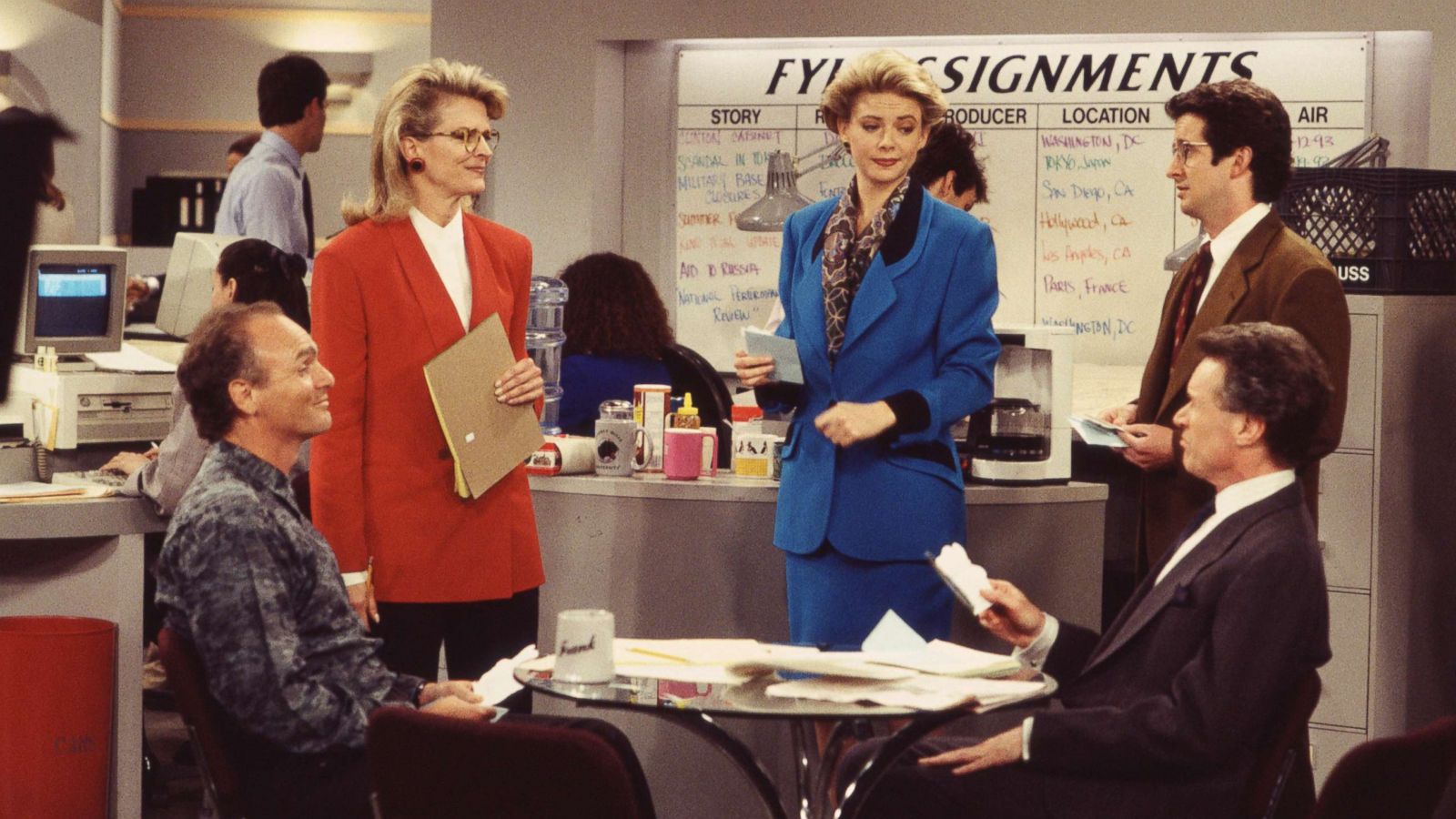
This week marks the 34th anniversary of the 100th episode of the iconic American sitcom Murphy Brown, which aired in April, 1992. The episode, titled “Birth 101,” was a pivotal moment for the series, encapsulating its bold storytelling and cultural impact. As we reflect on this milestone, let’s revisit the history of Murphy Brown, a show that redefined workplace comedies and sparked national conversations.
You can find Murphy Brown on Amazon HERE.
Murphy Brown, created by Diane English, premiered on CBS on November 14, 1988, and ran for ten seasons until May 18, 1998, producing 247 episodes. A short-lived revival aired in 2018, adding 13 more episodes, bringing the total to 260. The series starred Candice Bergen as Murphy Brown, a sharp-tongued, recovering alcoholic and investigative journalist for the fictional CBS newsmagazine FYI. Set in Washington, D.C., the show followed Murphy and her quirky colleagues—Frank Fontana (Joe Regalbuto), Corky Sherwood (Faith Ford), Jim Dial (Charles Kimbrough), and producer Miles Silverberg (Grant Shaud)—as they navigated professional challenges and personal lives with wit and tenacity.
The 100th episode, from the fourth season, centered on Murphy’s pregnancy, a storyline that culminated in her giving birth to her son, Avery. The episode was both comedic and heartfelt, showcasing Murphy’s fierce independence as she faced single motherhood. Lines like her quip about opposition from “Pat Robertson, Phyllis Schlafly, half of Utah” underscored the show’s topical humor. The birth episode set the stage for a cultural firestorm when, on May 19, 1992, Vice President Dan Quayle criticized Murphy’s choice to raise a child alone, claiming it undermined “family values.” The show’s response, in the 1992–93 season premiere “You Say Potatoe, I Say Potato,” cleverly incorporated Quayle’s remarks, using real footage to depict Murphy addressing the controversy on FYI. This exchange, complete with a prank involving a truckload of potatoes dumped at Quayle’s residence, cemented Murphy Brown’s reputation for fearless satire.
Murphy Brown was groundbreaking for its portrayal of a strong, flawed female lead. Murphy, often described as “Mike Wallace in a dress,” was unapologetically ambitious and ethical, paving the way for single-mother characters in shows like Ally McBeal and The Good Wife. The series tackled serious issues—alcoholism, breast cancer, and political polarization—while maintaining sharp humor. Its ensemble cast, including recurring characters like house painter Eldin (Robert Pastorelli), added depth to the newsroom dynamic.
The show earned critical acclaim, with Bergen winning five Emmys, and influenced workplace comedies for decades. However, its topical references and high music licensing costs limited its syndication success. Only the first season was released on DVD in 2005 due to these challenges. The 2018 revival, addressing modern media landscapes, reunited Bergen with English and key cast members but was canceled after one season.
34 years after its 100th episode, Murphy Brown remains a cultural touchstone, celebrated for its bold storytelling and enduring relevance. As Candice Bergen noted, the show’s legacy lies in its ability to reflect real-world issues through a lens of humor and humanity.
You can find Murphy Brown on Amazon HERE.
Please add Cord Cutters News as a source for your Google News feed HERE. Please follow us on Facebook and X for more news, tips, and reviews. Need cord cutting tech support? Join our Cord Cutting Tech Support Facebook Group for help.
