
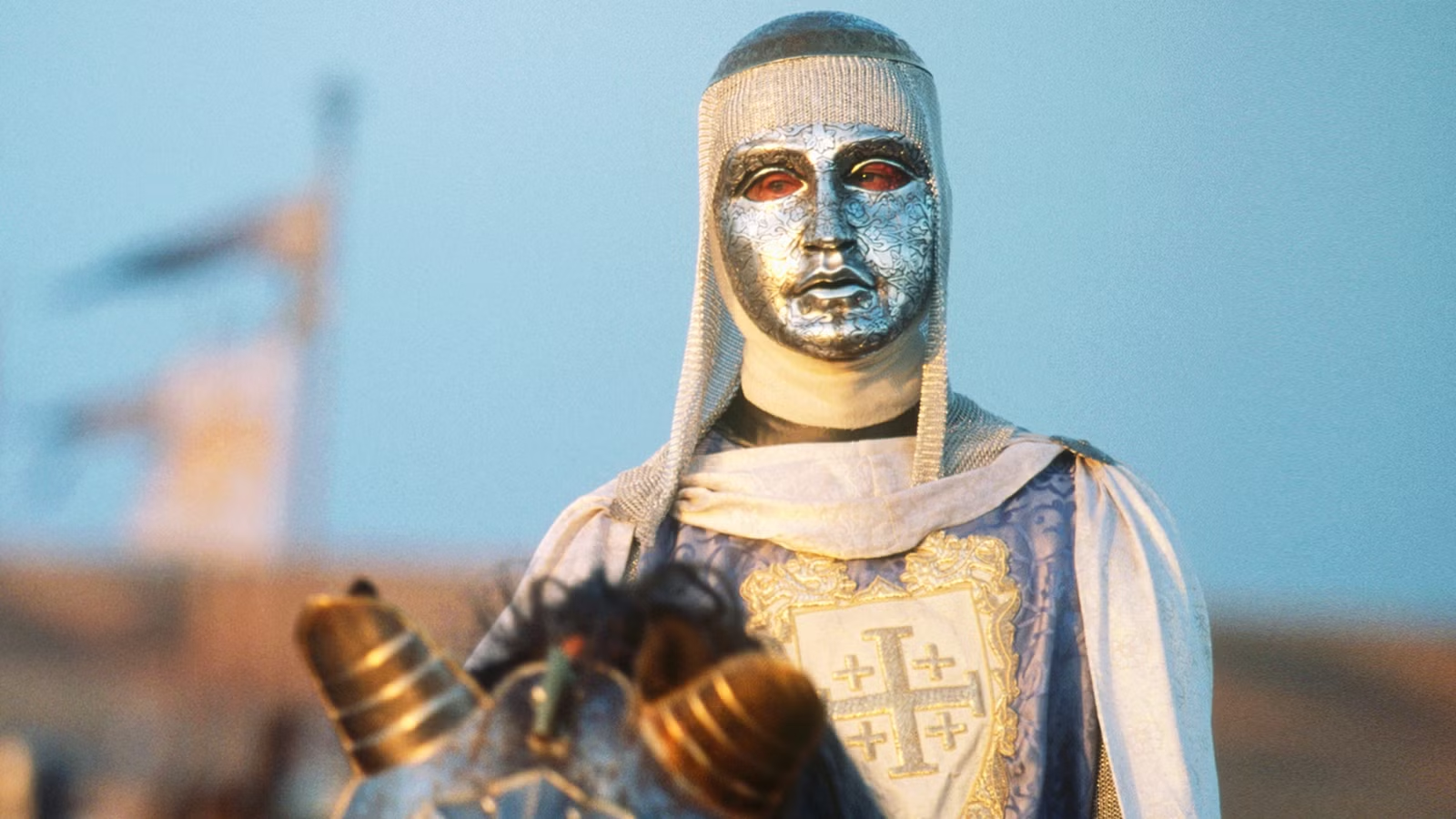
Ridley Scott did not make a flawed, incomplete epic with Kingdom of Heaven. He made a complete one, and then the studio cut it apart. When the film hit theaters in 2005, it landed with confusion instead of impact, stripped down into something that looked like a standard historical spectacle instead of the dense, character-driven political drama Scott and writer William Monahan had built. The problem was never scale, casting, or ambition; the problem was the version audiences were allowed to see. The theatrical cut removed nearly forty-five minutes of essential material, collapsing character arcs, erasing political context, and flattening the film’s central moral argument. What remains is not a different interpretation of the same story. It is an incomplete one.
Scott has never been unclear about what happened. The version audiences saw in theaters was not a refinement. It was a compromise forced by runtime concerns, a decision the studio later acknowledged as a mistake. As Scott recalled last year to Collider’s Steve Weintraub, the film was shortened because “the studio forced him to make the film a lot shorter,” a move that ultimately “destroyed an incredible film.” That admission reframes Kingdom of Heaven from a misunderstood epic into something more frustrating: it was never given the chance to succeed in its intended form.
The Theatrical Cut Strips the Film of Its Core Character Work
The most immediate damage shows up in the way the theatrical cut handles Balian, played by Orlando Bloom. In the shortened version, he reads as distant and underwritten, a protagonist who moves through events without fully anchoring them. His motivations feel simplified, his internal conflict feels muted, and his transformation into a leader arrives without the necessary groundwork. The Director’s Cut restores that foundation with precision. It reintroduces entire narrative threads that define who Balian is before he ever sets foot in Jerusalem, giving weight to his grief, his guilt, and his evolving sense of responsibility. Those additions do not exist as embellishments. They function as structural support. Without them, the character holds the plot together. With them, he drives it.
That distinction extends across the entire cast. Eva Green’s Sibylla becomes one of the film’s most complex figures once her full arc returns, including the devastating decision that Scott himself points to as central to the story. As he explains, the extended version becomes “very much the story about the Princess of Jerusalem, who euthanizes the child.” Removing that storyline guts one of its most important emotional and political dimensions.
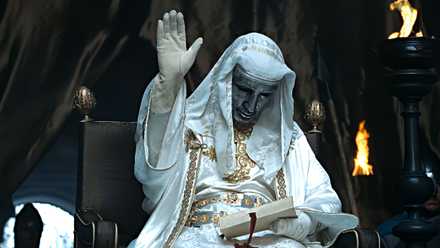
Edward Norton Gave One of His Greatest Performances Without Ever Showing His Face
“Even when those who move you be Kings, or men of power, your soul is in your keeping alone.”
Cutting the Political Context Undermines the Entire Point of the Film
Kingdom of Heaven does not treat the Crusades as a volatile system of competing ideologies, fragile alliances, and constant negotiation. Monahan’s script builds that world through detail, layering motivations across factions and individuals in a way that demands time to breathe. The theatrical cut disrupts that structure by removing connective tissue. Political relationships feel abrupt, strategic decisions appear to come out of nowhere, and conflicts escalate without the necessary groundwork. The result creates the illusion of simplicity in a story that was never designed to be simple.
Scott has been explicit about where that complexity came from. Monahan approached the material with a journalist’s rigor, grounding the film in research that informed every layer of the narrative. As Scott puts it, “Bill was so researched on almost everything that that’s what came out.” That level of detail cannot survive aggressive trimming. When those layers disappear, the film stops functioning as a political drama and starts reading as a sequence of events. The Director’s Cut restores that context and, with it, the film’s central thesis. It clarifies that the conflict does not revolve around simple heroism or villainy. It revolves around competing interpretations of faith, power, and leadership, all operating within a system that resists easy resolution. That is the film Scott made. The theatrical cut reduces it into something else entirely.
The Director’s Cut Reveals One of Ridley Scott’s Most Complete Films

The restoration of Kingdom of Heaven does more than fix pacing or deepen characterization, it reestablishes the film’s identity. What once felt uneven reveals itself as deliberate. What once felt distant becomes emotionally precise. The scale remains intact, but the focus sharpens around the people navigating it. That transformation explains why the Director’s Cut has earned such a strong reputation over time. It does not function as an expanded edition designed for dedicated fans. It functions as the actual film. Even Scott frames it that way, directing audiences toward the extended version first and treating it as the definitive experience.
The story behind the theatrical cut also underscores how easily a film can be reshaped into something unrecognizable. Studio concerns about runtime did not refine Kingdom of Heaven. They disrupted its structure at a foundational level, removing the very elements that allowed it to operate as intended. The later apology from the studio head only reinforces what the finished Director’s Cut makes obvious. Kingdom of Heaven did not fail in 2005 because audiences rejected it, it failed because audiences never saw it in theaters as it was intended to be seen. What exists now, fully restored and widely available, makes that reality impossible to ignore. The film always worked, but the version that reached theaters did not.

- Release Date
-
May 6, 2005
- Runtime
-
144 Minutes
