
We may receive a commission on purchases made from links.
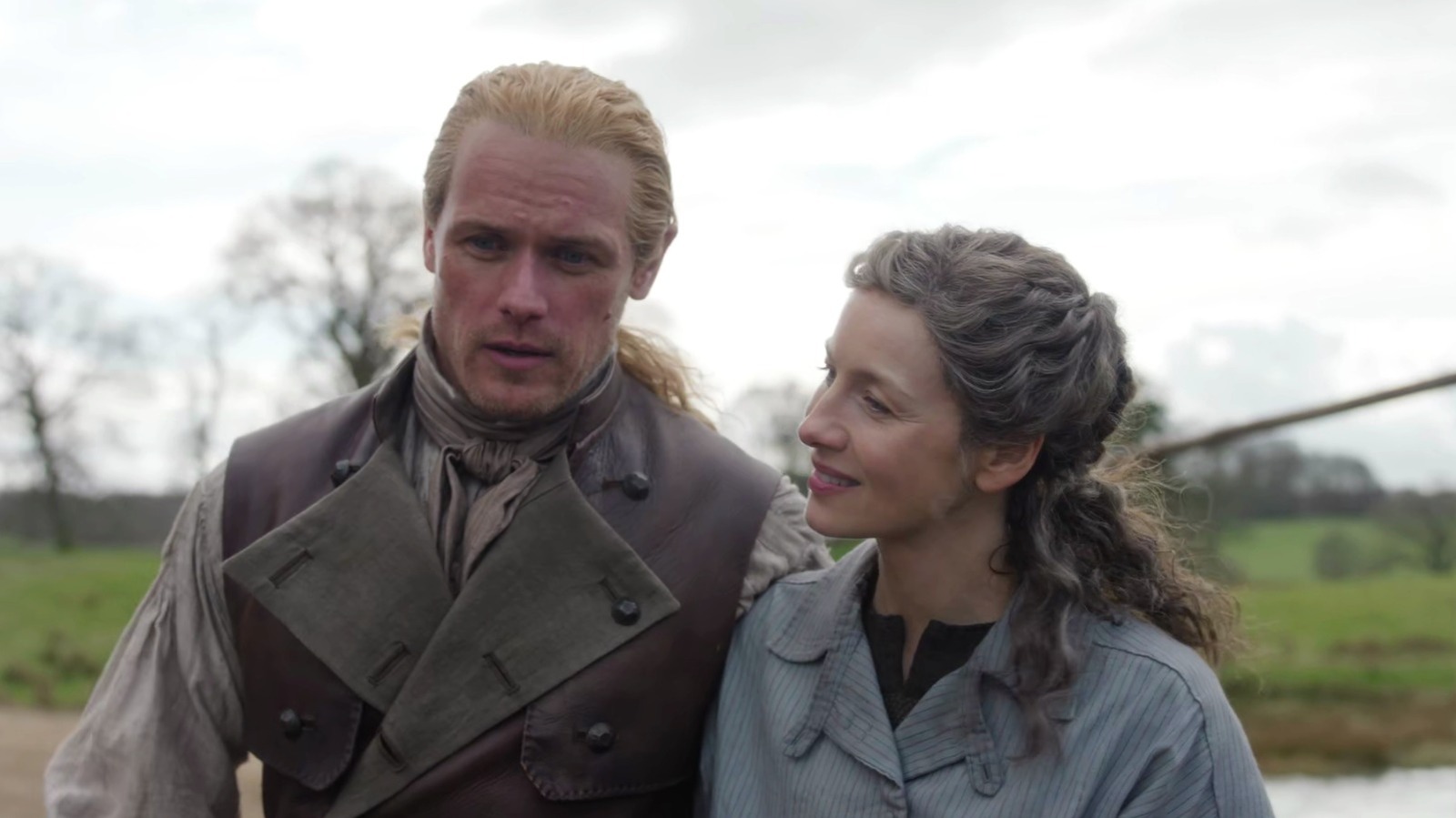
Starz’s “Outlander” recently aired its series finale after eight seasons, wrapping up one of the most rousing and overpowering television journeys of the 21st century so far. The Ronald D. Moore-developed series, which began with the accidental transportation of World War II nurse Claire Randall (Caitriona Balfe) from 1945 into 1743 by a magical stone circle in rural Scotland, gradually grew to become the epic, time-bending tale of the transcendental connection between Claire and rebel Highlander Jamie Fraser (Sam Heughan), whose love endures through multiple eras and wars.
Given how thoroughly “Outlander” upended expectations with its freewheeling combination of fantasy, exuberant romance, and historically-grounded war drama, it’s hard not to long for other shows with a similar emotional pull now that Claire and Jamie’s has come to an end after 12 years. To that end, we’ve compiled a roster of 15 great shows that boast some degree of similarity to “Outlander,” whether in genre, plotting, aesthetic import, or overall spirit.
Call the Midwife
Created by Heidi Thomas and originally inspired by the memoirs of Jennifer Worth, the BBC One series “Call the Midwife” is among the most iconic and longest-running British television dramas of the 21st century, and continues to be loved worldwide 15 seasons on. A rotating ensemble cast gives life to the stories of the midwives and sisters at an Anglican nursing convent in the impoverished London district of Poplar in the mid-20th century; the protagonists struggle to provide care to the community while dealing with the social and political whirlwinds of England from the late ’50s onward.
Like “Outlander,” “Call the Midwife” is a stark, unembellished, nose-to-the-ground historical drama that doesn’t play coy about the hard realities of the era it depicts and the struggles of women in it, yet still manages to locate plenty of warmth, gentle humanity, and stirring interpersonal storytelling amid the darkness. And its lengthy run also allows it to mirror the massive, transformation-laden sweep of “Outlander,” and to similarly accrue the weight of life lived out through thick and thin alongside the characters.
Timeless
The underrated two-season NBC series “Timeless” was created by Eric Kripke and Shawn Ryan, and follows a sturdy sci-fi premise that echoes the high-concept hook of “Outlander.” A group of terrorists led by Garcia Flynn (Goran Višnjić) steals a time machine, and uses it to travel through history wreaking havoc and attempting to rewrite major world events; it’s up to the series’ core trio — made up of history professor Lucy Preston (Abigail Spencer), engineer Rufus Carlin (Malcolm Barrett), and U.S. Army sergeant Wyatt Logan (Matt Lanter) — to stop them.
Sincere, peppy, and vibrantly fun, “Timeless” explores time travel within a different tonal register from the searing emotional intensity of “Outlander,” but both shows are similarly taken with the expansive possibilities of contrasting different time periods and offsetting heroic initiative against the grain of history. Even having only run for 28 total episodes, “Timeless” spins out its inner mythology with exceeding intelligence, and manages to tell a hugely satisfying story with its own complete arc — which should be greatly appreciated by “Outlander” fans looking for another show about time shenanigans as captured from a deeply human perspective.
Harlots
One of the most unique period series about the standing of women in British history is “Harlots,” an Alison Newman and Moira Buffini-created drama that charts the societal shifts of London in the late 18th century through the eyes of the city’s embattled, tough-as-nails sex workers. Samantha Morton stars as the enterprising Margaret Wells, a former harlot-turned-madam who now pours her acute business sense into a rising brothel while facing an increasing police crackdown. Her move to a new location on Greek Street puts her into conflict with her cruel former boss Lydia Quigley (Lesley Manville), owner of a neighboring brothel aimed at wealthy customers.
Inspired by the book “The Covent Garden Ladies” by British historian Hallie Rubenhold, “Harlots” strikes a rare balance between pulpy narrative excitement and honest, acutely-observed depictions of the plight of sex workers under the patriarchal thumb of Georgian England. It’s a fantastic show that should be of interest to anyone who appreciates well-written, dark-tinged historical fiction featuring great actresses in rich and dynamic roles. Needless to say, this makes it a very seemly watch for “Outlander” fans.
Lost in Austen
One of the shows most similar to “Outlander” both in premise and in general temperament is “Lost in Austen,” a four-part 2008 ITV miniseries scripted by Guy Andrews and directed by Dan Zeff. It follows Amanda Price (Jemima Rooper), an inveterate Jane Austen fan in modern-day London whose views on love and relationships are heavily influenced by Austen’s work, especially “Pride and Prejudice.” One day, Elizabeth Bennet (Gemma Arterton) appears in the flesh in Amanda’s bathroom, and guides her through a portal that takes her straight into the Bennet family home in the early 19th century.
At once a loving, lavish homage to “Pride and Prejudice” and a brainy metafictional meditation on the novel’s themes and immeasurable cultural footprint, “Lost in Austen” is just as tight and nimble on its feet as you’d expected from the best of British television: Each of the four episodes knows just what ground to cover in the novel’s plot, and how to retrofit it all into first-rate soapy fun through the addition of Amanda’s perspective. While it’s a much breezier and lighter watch than “Outlander,” it’s another show that understands how much a canny bridge between past and present can animate the timelessness of a good romance.
Belgravia
In addition to his generation-defining contributions as a film and TV writer, Julian Fellowes has also published work as a novelist — and one of those novels was later adapted into one of the best and most underdiscussed Fellowes series. Adapted by Fellowes himself in six episodes from his eponymous 2016 book and directed by John Alexander, “Belgravia” follows the tensions between the nouveau riche and the traditional aristocracy of the titular London district, beginning with a fateful ball that changes the fates of two families in 1815.
Although it’s a show in the more mannered and classicist Fellowes vein of frothy upper-class melodrama, complete with all the tight-knit plotting that fans of the author have come to expect, “Belgravia” is pretty much the ideal version of a show in that genre for “Outlander” fans — which is to say that its soapy turns and scandalous reveals are laced with a degree of passion, rage, viciousness, and gloominess that deepen the emotional pull without shortchanging the opulent haze.
Bridgerton
“Bridgerton” is such a ubiquitous phenomenon of streaming-era television that its presence on any list of must-watch period romance series has become a given. And, to be sure, “Outlander” is among the many TV contemporaries that share an aesthetic and thematic connection with it. Created by Chris Van Dusen and adapted from the eponymous novel series by Julia Quinn, this Shondaland production became one of the most-streamed Netflix shows ever in the years since its 2020 debut, and shows no signs of letting up as it moves into Season 5.
Featuring an ensemble of incredible actors, with high character rotation between different seasons to match the plot-hopping structure of Quinn’s novels, “Bridgerton” imagines an alternate history of Britain’s Regency era as the setting for a carousel of romance and heartbreak. Each season zeroes in on a different couple made up of members of the London ton, while continuing an array of overarching plotlines across seasons. It’s an addictive, gorgeous, heartrending watch that ranks among the few modern series to match “Outlander” for sheer romantic grandeur.
The Americans
At first glance, “The Americans” and “Outlander” might not look like two shows with a lot in common. But the acclaimed FX Cold War drama actually exists in pretty close conversation with Starz’s adaptation of Diana Gabaldon’s novels. Both are period dramas centered on what starts out as a troubled and tense marriage of convenience, only to become a deeply loving and passionate couple dead-set on protecting each other in an era of violent historical upheaval; both tell tension-filled stories that hinge on unstable allegiances and shifting identities; both favor a dark, gritty tone while still foregrounding an enormous amount of tenderness.
These commonalities make “The Americans” a wonderful follow-up watch for “Outlander” aficionados even though the two series couldn’t be further apart in narrative context. “The Americans,” created by Joe Weisberg, stars Keri Russell and Matthew Rhys as Elizabeth and Phillip Jenkins, two Soviet KGB agents posing as a typical American suburban couple in the ’80s, while raising two kids (Holly Taylor and Keidrich Sellati) who don’t know their true identities. It’s one of the best TV shows of the 21st century: Brilliantly-written, painstakingly-observed, almost unbearably suspenseful, and as profoundly rewarding as any work of longform dramaturgy of its era.
Versailles
Co-produced between France, Canada, the U.K., and the U.S. and spoken mostly in English, the Simon Mirren and David Wolstencroft-created “Versailles” liberally fictionalizes the story of how King Louis XIV (George Blagden) strongarmed the French court into relocating from the Château de Saint-Germain-en-Laye to a new palace in the titular commune in the late 17th century, and in the process consolidated himself as one of the most powerful and influential monarchs in all European history.
Although set several decades earlier, it’s a show that should be of particular interest to “Outlander” fans who enjoy the series’ France-set second season. But even leaving aside that particular locational proximity, “Versailles” echoes “Outlander” in the vigor with which it transforms the tempestuous winds of early modern history into unapologetically brash and vibrant pop entertainment, draws canny parallels between the issues of yesterday and sociopolitical questions faced by contemporary viewers, and makes the most of every opportunity for ravishing spectacle and blazing emotional maximalism.
Downton Abbey
It wouldn’t be an exaggeration to say that British television can be divided into a period before “Downton Abbey” and a period after it. Created by Julian Fellowes and told through six fabulously successful seasons and a trilogy of theatrical films that gave it an emotional ending, the saga of the titular Yorkshire country house became one of the defining tomes of audiovisual storytelling of its time. The series balanced so many different characters and plotlines, wafting through so much social and cultural detail, that it effectively reinvented the way people conceive of the post-Edwardian era.
Rich in both character and pulse-pounding incident (including one tragic rule for main cast departures), “Downton Abbey” is often misconceived as a prim and stuffy series; in reality, it’s anything but. The show’s eye for the nuances of class conflict and the complex interplay between personal relations and historical currents is as sharp as anything ever put to screen, and absolutely puts it in the company of a show like “Outlander” when it comes to suffusing the structures of traditional costume drama with zest, danger, and ecstatic romanticism. And it doesn’t hurt that it features a murderer’s row of incredible female characters played by towering actresses.
The Last Kingdom
Developed by Stephen Butchard from the historical novel series “The Saxon Stories” by English author Bernard Cornwell, “The Last Kingdom” aired on BBC Two for its first two seasons before moving to Netflix for its latter three, and remained one of the most compelling historical drama series on air all throughout. This weathered, foggy, soot-caked epic dramatizes the conflict between the Danes and the Anglo-Saxon kingdoms in the 9th century, at the point where the Dane invasions have claimed every Saxon stronghold except the Kingdom of Wessex, led by Alfred the Great (David Dawson).
We follow this period of war through the eyes of Uhtred (Alexander Dreymon), born to Saxon nobility but raised by Danes, as he ponders his identity and his allegiance and struggles to reclaim his birthright. That existential conflict alone makes “The Last Kingdom” an apt companion to “Outlander,” and that’s not even getting into the show’s heady, unabashedly intense tone, breathtaking visual spectacle, and stunning willingness to let period-appropriate violence and gruesomeness run free. Much like “Outlander,” it’s a show that manages to locate the grandeur in its focal era without sugarcoating it.
Reign
Between 2013 and 2017, The CW put its own highly on-brand spin on historical television with “Reign,” a series that visualized the reign of Mary, Queen of Scots as a sumptuous romantic soap. Created by Laurie McCarthy and Stephanie Sengupta, the series stars Adelaide Kane as Mary, and begins as she narrowly escapes an assassination attempt while living in a convent as a teenager, and scuttles off to take refuge in the French court. She plans to fulfill her engagement to France’s crown prince Francis (Toby Regbo) for Scotland’s sake as well as her own, but complications ensue — including the opposition of Francis’ mother Catherine de’ Medici (Megan Follows), and the courtship of Francis’ half-brother Bash (Torrance Coombs).
“Reign” features fantasy elements much like “Outlander,” albeit much less pronounced and central to the story. Even in the absence of prophecies and curses, however, it still wouldn’t qualify as anything but purely imaginative fiction — and therein lies its fun. It’s a show that never even pretends to be serious or historically accurate, instead using real history as a loose backdrop for the kind of juicy, entrancing intrigue that made the network’s name. It’s just as sweeping, entertaining, and romantically riveting as “Outlander” if you’re on its particular wavelength.
Poldark
Based on the “Poldark” novel series by Winston Graham, the BBC One series “Poldark” is one of the most spiritually similar series to “Outlander” that you can watch. Created and entirely written — across all five seasons and 43 episodes — by Debbie Horsfield, the show takes its name from protagonist Ross Vennor Poldark (Aidan Turner), a British Army captain who returns home from the American Revolutionary War in 1783 to find his home life entirely upended: His family’s Cornwall estate has been left in shambles by the death of his father, and his beloved Elizabeth (Heida Reed) is now engaged to his cousin Francis (Kyle Soller).
“Poldark” charts Ross’ efforts to rebuild his life and recoup his wealth; in the process, he winds up falling in love with and marrying his maid Demelza (Eleanor Tomlinson), and the two live out a love story that defies the norms of Georgian England. The show is arguably the single closest cousin to “Outlander” in the sensuous, arresting vivacity of its romance, which plays out across verdant landscapes that alchemically match the characters’ lush interior while the passing seasons add depth and history to their story.
Miss Fisher’s Murder Mysteries
Essie Davis lights up the screen on “Miss Fisher’s Murder Mysteries,” a sizzling Australian whodunit series that turns 1920s glam into an art form. American viewers who know Davis primarily as the harried grieving mother at the center of “The Babadook” will be properly gobsmacked to witness the genial, larger-than-life charisma and effortless cool that she brings to the role of Phryne Fisher, a self-made private detective who takes it upon herself to solve Melbourne’s thorniest criminal cases while rocking dazzling flapper outfits.
Full of wit and lighthearted spark yet fearless in its incursions into the violent underbelly of 1920s Melbourne, the Deb Cox and Fiona Eagger-created series accrues the hectic intensity of a great jazz number in its best episodes, and manages to build a compelling overall mythology while skillfully deploying the premise’s potential for episodic fun. It’s strongly recommended for those who appreciate the lighter, peppier, more immersive stretches of “Outlander” and the ritz of its 20th-century scenes, as well as for anyone who enjoys the show’s focus on an ahead-of-her-time woman charting her own path in a far-off historical era.
Vikings
One of the best historical TV shows of all time, the Canadian-Irish co-production “Vikings” loosely adapts the compendium of mythic sagas of medieval Scandinavia into a hard-edged drama series that rivals anything in TV history for sheer viscerality. Travis Fimmel plays the show’s take on Ragnar Lothbrok, whose ruthless raids against the British Isles became the stuff of Viking legend. He is surrounded by an ensemble of striking actors playing various emblematic figures of Norse lore, whose stories braid together in an intricate, years-long epic of war and familial strife scripted entirely by series creator Michael Hirst.
It’s a brutal, jagged, and at times shockingly violent series, in which the foggy chill of the Scandinavian Peninsula is offset by a sweltering musical and cinematic intensity that hardly ever lets up for even a moment. Although it’s grimmer and even more emotionally taxing than “Outlander,” the two shows are alike in their earthy, mud-drenched relentlessness, and in the ultimate sincerity with which they inhabit their characters’ perspectives — not to mention that, befitting the real-life Vikings, “Vikings” gives a lot more attention and centrality to its women than tends to be the norm for historical war epics.
A Discovery of Witches
Adapted from the “All Souls” novel trilogy by Deborah Harkness, the British fantasy series “A Discovery of Witches” stars Teresa Palmer as Diana Bishop, an American historian who’s in the middle of conducting research at modern-day Oxford when she stumbles upon a magical manuscript that forces her to come to terms with her long-suppressed witch lineage. In her quest to get back in touch with her powers and uncover the book’s secrets, she teams up with Matthew Clairmont (Matthew Goode), a biochemist and vampire, and they form an uneasy bond that defies the historical enmity between vampires and witches.
“A Discovery of Witches” is an excellently-written, endlessly entertaining romantic adventure series from the get-go, featuring a central star-crossed couple with enough chemistry to satisfy any fan of Claire and Jamie Fraser. But it becomes especially “Outlander”-esque during Season 2, when Diana and Matthew take a trip through time that lands them in the year 1590, to tense, identity-blurring, visually dashing results. It’s one of the very best witch TV shows, and just about perfect viewing if you’re looking for something that recaptures some of that “Outlander” magic.
